Not so long ago, "fitness" was something a person would set aside time for -- maybe an hour before or after work to go for a run or visit the gym. It was a distinct routine that didn't necessarily impact the rest of one's day, behavior at work, or on the road. But as "fitness" has become the more holistic "wellness," making healthy choices has expanded far beyond the gym and now encompasses not just exercise, but diet, mental health, and all variety of other habits.
"You no longer need to convince people that a healthy lifestyle is key to a good life," says Ellie Krieger, a nutritionist, New York Times bestselling author, and host of the Public Television cooking series Ellie's Real Good Food (as well as former host of Food Network show Healthy Appetite). "Now, eating well and being active is not just something people do; more and more we are seeing that it is integral to their identity no matter where they are -- at home, at work, or attending a meeting."
Wellness has broken out of its traditional designated spaces -- the gym or the spa -- into guest rooms, hotel lobbies, meeting rooms, and even the hotel bar. From Delos' Stay Well Meeting Rooms (found at the MGM Grand Las Vegas Hotel and Casino) to customized fitness activities and healthy cocktails, wellness has become an all-encompassing offering for group travelers, and planners are working to devise ever more creative ways to meet these demands.
"We really see wellness as something that's evolved beyond a lifestyle trend -- the wellness market is now a $3 trillion market," says Bob Jacobs, vice president of brand management for Westin North America, which has deepened its meeting wellness offerings at properties around the country in recent years.
Wellness Everywhere
According to Spafinder Wellness 365's annual "State of Wellness Travel Report," which surveys North American and European travel agents, 79 percent of respondents report that demand for healthier business meetings (those incorporating healthy food, fitness, and spa experiences) is rising. Additionally, between 71 and 80 percent of respondents report a significant growth in awareness of wellness travel among consumers, travel agents, the tourism industry, and hospitality industry.
"We used to see spas and gyms buried in the basements of hotels -- they weren't taken all that seriously," says Betsy Isroelit, senior director of global media relations for Spafinder Wellness, Inc. "The opposite is true now. It's become so mainstream with everyday people. It's de rigueur."
Isroelit points out that this marks a shift from just a couple years ago. In 2014, Spafinder discussed healthy hotels as a trend to watch, but "now it's much more than a trend -- it's everywhere. All of our research and the research we are seeing from other organizations indicates that this focus on wellness, wellness travel, and wellness at meetings is not slowing down."
If anything, she says it's "trickling down," having begun at higher-end properties or among more exclusive subsets of the population, and now it has broadened into something much more inclusive and ubiquitous -- encouraged by organizations that see not just health, but business benefits to active workers and meeting attendees.
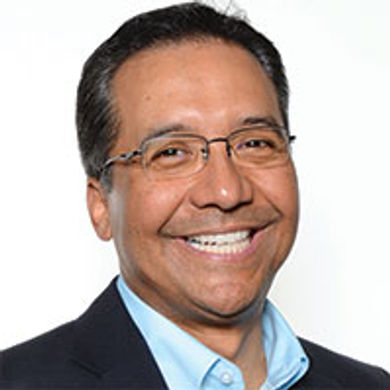 Michael Dominguez
MGM Resorts International
"It is important to distinguish between wellness and health," says Michael Dominguez, senior vice president and chief sales officer of MGM Resorts International. "Health has always been what we control with our body -- what goes into it and the demands we place on the body. Wellness is about the surrounding environment and our mental capacity to engage and innovate. The demand for ROI of meetings and accomplishing objectives places an even greater emphasis on hotels today to create environments that lead to these outcomes."
MGM Resorts has been on the forefront of this evolution of meeting wellness. In 2012, the MGM Grand Las Vegas Hotel & Casino introduced Stay Well Rooms. Partnering with design firm Delos, which has pioneered what it calls Wellness Real Estate, the property offered guests rooms with healthy features developed with the assistance of Columbia University and The Cleveland Clinic -- offerings such as advanced air purification, aromatheraphy, and even Vitamin C-infused showers (to neutralize chlorine). Guests loved it, and the original 42 Stay Well rooms expanded to 171.
In 2014, MGM moved into Stay Well Meetings, adding features such as circadian lighting (which emulates natural light), biophilia (incorporating calming, natural design elements into event spaces), and air purification. The offerings extend beyond the meeting spaces themselves and include a guided meditation from wellness guru Deepak Chopra, access to online programs from The Cleveland Clinic related to sleep, stress, and nutrition, and a Stay Well Meetings App that provides tools for activity, nutrition, and jet lag.
"We are looking at growing the programming to multiple properties within the MGM Resorts' Luxury Portfolio including what will be Park MGM," adds Dominguez.
Younger Attendees
A key element driving this shift in wellness is the age of attendees, and planners must keep generational differences in mind when developing their wellness programs. According to Spafinder Wellness 365's "State of Wellness Travel Report," released earlier this year, younger travelers (aged 49 and younger) ranked wellness elements as more important than older travelers. This was true of every aspect of wellness on which respondents were surveyed -- healthy food, fitness classes, spiritual healing, and more.
While Baby Boomers (aged 50 and older) pointed to the more traditional luxury spa resorts as their preferred type of wellness property, Millennials and members of Generation X preferred eco/adventure resorts and yoga retreats. Respondents were asked to rank wellness property elements from 1-10, ranging from "not important at all" to "extremely important," and every wellness element measured received a higher score from younger travelers than older, reflecting how interest in wellness is growing broadly in younger travelers.
One element that was highly rated by all ages was "healthy cuisine/specialty diets" (8.0 for Boomers and 8.3 for 49 and under), and healthy eating remains an important offering for Westin. It has collaborated with SuperFoodsRX, who design the brand's menus, for years. The partners recently introduced a Sleep Well menu with offerings designed to help guests sleep better. Westin also joined forces with The Juicery, adding fresh juices to menus, as well.
"In the meeting environment, it means not just offering healthy food at breaks and meals, but having a story behind it," says Jacobs. "That can mean having a juice crafted right in front of you or a make-your-own granola station for attendees before they leave the hotel, so they have something good to eat when they get to the airport."
Wellness is even creeping into happy hour, with Westin adding a Crafted at Westin program of artisanal cocktails with local, healthy ingredients.
"We've talked a lot about how people are moving from going to happy hour and spending the evening sitting and drinking, to doing more fitness activities -- moving from 'networking' to 'sweatworking,'" says Jacobs.
This can mean adding a pre-meeting running activity (as the Westin Fort Lauderdale offers each week, finishing with a cocktail), crossfit, or or aerial yoga session (which the Westin Beaver Creek recently added).
Jacobs notes that most of Westin's hotels have wellness programs for their own associates as well, so "when it comes to hosting a meeting at Westin, [planners] know that wellness is top of mind for just about everybody on staff who they deal with because they are living and breathing it every day."
Questions or comments? Email [email protected]
This article appears in the August 2016 issue of Successful Meetings.
Properties Meet New Demands
As MGM expands its wellness offerings, the Stay Well approach has expanded beyond MGM. In June, Delos announced that it will be introducing Stay Well Guest Rooms at six Marriott International properties throughout the country: Charlotte Marriott City Center, Atlanta Marriott Marquis, Richmond Marriott Short Pump, Residence Inn Orlando Lake Nona, Courtyard Orlando Lake Nona, and Tampa Marriott Waterside Hotel & Marina.
"The growing demand for healthy travel is rapidly increasing, and we have received a tremendous number of requests to open more Stay Well rooms since first debuting the product in Las Vegas," Delos Founder and CEO Paul Scialla said in a statement.
While Delos and MGM have pioneered the Stay Well concept for nearly half a decade, Westin dates its wellness efforts to 1999, when it introduced the Westin Heavenly Bed, providing specially designed mattresses and pillows aimed at providing guests with a restorative sleep. Since then, its wellness offerings have only gotten more expansive, creative, and tailored for meeting groups.
"Our brand recognized that it's important to people, especially when they travel," says Westin's Jacobs.
He stresses that Westin's approach to wellness begins with the idea that guests' wellness routines are disrupted when they are on the road, so it's up to the brand to make traveling healthy as seamless as possible.
Speaking to Spafinder Wellness 365's findings, Westin recognized early on that gyms should not be stuck in the hotel basement, and sought to create a more "health-club like experience," as Jacobs describes it, making the fitness centers larger and closer to what one would find at a high-end gym (chilled water in the fridge, complimentary magazines, free headphones). That evolved into the RunWESTIN program, in which each property develops its own three- and five-mile running maps for guests, as well as a Gear Lending program, in partnership with New Balance.
"You can leave your workout gear at home and borrow ours -- you don't have to worry about bringing them or taking home sweaty gear," says Jacobs. "For business travelers and consultants on the road all the time, they've really come to rely on that."
In March, Westin refreshed the promotional strategy for its wellness brand to reflect this more active interest in health. Its new visuals are aimed at appealing to a new understanding of wellness as not some separate activity, but an all-encompassing lifestyle.
"It's not just the Zen relaxation," says Jacobs. "We've brought that more active look and feel into our new visual identity -- it has a more raw, real, active look."
More Active Activities
Westin's brand refresh speaks to the greater level of activity attendees are demanding. This has meant that planners are having to get more creative in the type of wellness activities they offer, and tap into local experts -- or those onsite -- to help offer instruction or tools so attendees can know what they are doing.
Spafinder calls these "High-Adrenaline Meetings" -- activities like ziplining, rappelling, or survival courses that nudge participants out of their comfort zones as they get active. These sorts of outings provide a number of business benefits that go beyond personal fitness, according to Isroelit, such as creating a more cohesive team, raising individual energy levels and focus, and fostering creative thinking. In its report, Spafinder gives the example of Cirque du Soleil's new SPARK sessions, in which the performers encourage participants to attempt their own acrobatic challenges.
"I am seeing more yoga classes at conferences, and in-room yoga mats and video classes in hotel rooms," says Krieger. "Also, now healthy options -- smoothies, grain bowls, local produce-driven entrees -- are more of a norm on hotel and conference menus."
With this in mind, Westin has encouraged its individual properties to develop their own programs. This has meant a new Bike Concierge at Westin Peachtree, a new Surf Concierge program at Westin Los Angeles Airport (see sidebar), and more. They are also empowered to customize programs for individual groups.
Though less intensive than ziplining or surfing, yoga, meditation, and mindfulness exercises have also grown in popularity at meetings, making de-stressing and mental health as essential as physical health. Spafinder gives the examples of Salesforce.com's mindfulness programs at its 2015 Dreamforce conference, and the yoga and meditation classes held at the 2015 IMEX America conference.
"The meetings industry is shifting toward providing a more holistic experience," says Linda Chin, general manager of Ink48 and city director of operations for Kimpton NYC. She adds that guests who come to the New York properties she is overseeing "have been increasingly interested in their overall personal wellness while traveling."
To help meet these demands, Kimpton Hotels of New York City -- consisting of the Hotel Eventi, The Muse, and Ink48 -- recently introduced a number of new wellness-focused amenities aimed at attendees' minds as well as bodies. The properties have partnered with the Shinnyo Center for Meditation and Well-Being, so groups can take advantage of treatments such as Guided Meditation or Jazz Meditation. Kimpton Hotel Eventi has a new sleep specialist, who provides guests with sleep-aiding amenities such as a pillow menu, sound machine, calming room spray, and even a discounted sleep analysis.
"[Mindfulness] enhances our life experience and gives us inner resources for dealing with difficulties as well," says Michelle Frye, spa director of the Miraval Life in Balance Spa at The Monarch Beach Resort, in Dana Point, CA. "It's no coincidence that collective attention to body, mind, and spirit positively impacts the successful outcome of company meetings."
The property, which recently completed a $40 million renovation, now offers a Miraval Life in Balance Spa -- the first hotel partnership of the Miraval Group, the brand behind the pioneering Miraval Resort & Spa in Tucson, AZ. The spa at the Monarch Beach Resort (formerly a St. Regis) has made "mindfulness" one of its central offerings, such as Mindful Meetings, in which groups take part in mindfulness exercises. It also offers Miraval Breaks, in which participants take part in meditation or yoga sessions, wellness lectures, and even cooking classes amidst their meetings.
"All of our activities, presentations, and workshops are customized to speak directly to a particular type of group and may be designed to focus on a theme such as team building, leadership, communication, risk taking, creativity, spirituality, physical and emotional health, and wellness," says Frye.
Miraval Resort & Spa in Tucson has been providing this type of wellness service for a number of different organizations. For example, Miraval recently served as the destination for a Vision Retreat of Endoscopy-America, Inc.'s marketing leadership.
"Our whole team loved [Miraval Resort & Spa] and so many commented on how they would love to come back and bring their spouse or girlfriends for a weekend," says Michelle Brandt, manager of support services for Union Pacific Railroad -- another company that recently took advantage of the property's wellness offerings. "The resort was so Zen-like, which I felt made for a good conference."
Properties Meet New Demands
As MGM expands its wellness offerings, the Stay Well approach has expanded beyond MGM. In June, Delos announced that it will be introducing Stay Well Guest Rooms at six Marriott International properties throughout the country: Charlotte Marriott City Center, Atlanta Marriott Marquis, Richmond Marriott Short Pump, Residence Inn Orlando Lake Nona, Courtyard Orlando Lake Nona, and Tampa Marriott Waterside Hotel & Marina.
"The growing demand for healthy travel is rapidly increasing, and we have received a tremendous number of requests to open more Stay Well rooms since first debuting the product in Las Vegas," Delos Founder and CEO Paul Scialla said in a statement.
While Delos and MGM have pioneered the Stay Well concept for nearly half a decade, Westin dates its wellness efforts to 1999, when it introduced the Westin Heavenly Bed, providing specially designed mattresses and pillows aimed at providing guests with a restorative sleep. Since then, its wellness offerings have only gotten more expansive, creative, and tailored for meeting groups.
"Our brand recognized that it's important to people, especially when they travel," says Westin's Jacobs.
He stresses that Westin's approach to wellness begins with the idea that guests' wellness routines are disrupted when they are on the road, so it's up to the brand to make traveling healthy as seamless as possible.
Speaking to Spafinder Wellness 365's findings, Westin recognized early on that gyms should not be stuck in the hotel basement, and sought to create a more "health-club like experience," as Jacobs describes it, making the fitness centers larger and closer to what one would find at a high-end gym (chilled water in the fridge, complimentary magazines, free headphones). That evolved into the RunWESTIN program, in which each property develops its own three- and five-mile running maps for guests, as well as a Gear Lending program, in partnership with New Balance.
"You can leave your workout gear at home and borrow ours -- you don't have to worry about bringing them or taking home sweaty gear," says Jacobs. "For business travelers and consultants on the road all the time, they've really come to rely on that."
In March, Westin refreshed the promotional strategy for its wellness brand to reflect this more active interest in health. Its new visuals are aimed at appealing to a new understanding of wellness as not some separate activity, but an all-encompassing lifestyle.
"It's not just the Zen relaxation," says Jacobs. "We've brought that more active look and feel into our new visual identity -- it has a more raw, real, active look."
More Active Activities
Westin's brand refresh speaks to the greater level of activity attendees are demanding. This has meant that planners are having to get more creative in the type of wellness activities they offer, and tap into local experts -- or those onsite -- to help offer instruction or tools so attendees can know what they are doing.
Spafinder calls these "High-Adrenaline Meetings" -- activities like ziplining, rappelling, or survival courses that nudge participants out of their comfort zones as they get active. These sorts of outings provide a number of business benefits that go beyond personal fitness, according to Isroelit, such as creating a more cohesive team, raising individual energy levels and focus, and fostering creative thinking. In its report, Spafinder gives the example of Cirque du Soleil's new SPARK sessions, in which the performers encourage participants to attempt their own acrobatic challenges.
"I am seeing more yoga classes at conferences, and in-room yoga mats and video classes in hotel rooms," says Krieger. "Also, now healthy options -- smoothies, grain bowls, local produce-driven entrees -- are more of a norm on hotel and conference menus."
With this in mind, Westin has encouraged its individual properties to develop their own programs. This has meant a new Bike Concierge at Westin Peachtree, a new Surf Concierge program at Westin Los Angeles Airport (see sidebar), and more. They are also empowered to customize programs for individual groups.
Though less intensive than ziplining or surfing, yoga, meditation, and mindfulness exercises have also grown in popularity at meetings, making de-stressing and mental health as essential as physical health. Spafinder gives the examples of Salesforce.com's mindfulness programs at its 2015 Dreamforce conference, and the yoga and meditation classes held at the 2015 IMEX America conference.
"The meetings industry is shifting toward providing a more holistic experience," says Linda Chin, general manager of Ink48 and city director of operations for Kimpton NYC. She adds that guests who come to the New York properties she is overseeing "have been increasingly interested in their overall personal wellness while traveling."
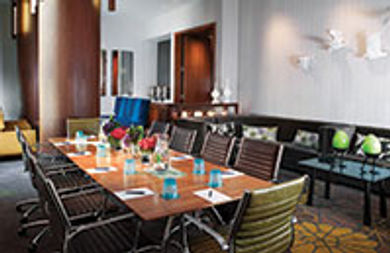 Properties such as the Kimpton Hotel
Eventi are putting healthy offerings
on the menu for meetings
To help meet these demands, Kimpton Hotels of New York City -- consisting of the Hotel Eventi, The Muse, and Ink48 -- recently introduced a number of new wellness-focused amenities aimed at attendees' minds as well as bodies. The properties have partnered with the Shinnyo Center for Meditation and Well-Being, so groups can take advantage of treatments such as Guided Meditation or Jazz Meditation. Kimpton Hotel Eventi has a new sleep specialist, who provides guests with sleep-aiding amenities such as a pillow menu, sound machine, calming room spray, and even a discounted sleep analysis.
"[Mindfulness] enhances our life experience and gives us inner resources for dealing with difficulties as well," says Michelle Frye, spa director of the Miraval Life in Balance Spa at The Monarch Beach Resort, in Dana Point, CA. "It's no coincidence that collective attention to body, mind, and spirit positively impacts the successful outcome of company meetings."
The property, which recently completed a $40 million renovation, now offers a Miraval Life in Balance Spa -- the first hotel partnership of the Miraval Group, the brand behind the pioneering Miraval Resort & Spa in Tucson, AZ. The spa at the Monarch Beach Resort (formerly a St. Regis) has made "mindfulness" one of its central offerings, such as Mindful Meetings, in which groups take part in mindfulness exercises. It also offers Miraval Breaks, in which participants take part in meditation or yoga sessions, wellness lectures, and even cooking classes amidst their meetings.
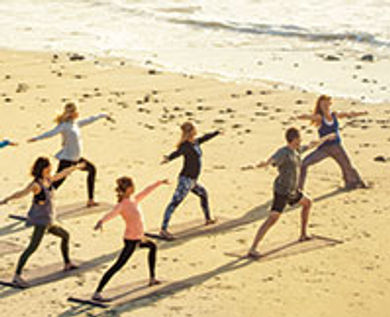 Miraval Life in Balance Spa
at The Monarch Beach Resort
offers a wealth of activities
aimed at encouraging mental,
as well as physical, health
"All of our activities, presentations, and workshops are customized to speak directly to a particular type of group and may be designed to focus on a theme such as team building, leadership, communication, risk taking, creativity, spirituality, physical and emotional health, and wellness," says Frye.
Miraval Resort & Spa in Tucson has been providing this type of wellness service for a number of different organizations. For example, Miraval recently served as the destination for a Vision Retreat of Endoscopy-America, Inc.'s marketing leadership.
"Our whole team loved [Miraval Resort & Spa] and so many commented on how they would love to come back and bring their spouse or girlfriends for a weekend," says Michelle Brandt, manager of support services for Union Pacific Railroad -- another company that recently took advantage of the property's wellness offerings. "The resort was so Zen-like, which I felt made for a good conference."
Airport Hotels Boast Surprising Wellness Offerings
With interminable security lines, frequent delays, and bland food, air travel these days conjures up the opposite of "wellness." Airport hotels don't fare much better, inspiring thoughts of irritated, stranded travelers and last resorts. With that in mind, it was a pleasant, somewhat surprising experience in June when I explored the wellness offerings at two airport properties, Westin Denver International Airport (Westin DIA) and Westin Los Angeles Airport (Westin LAX).
Westin DIA, which opened in 2015, is a very brief walk from the airport, and entering the airy, glass building, which takes its shape from pilot wings, felt particularly welcoming after a flight. Like a number of hotels, Westin DIA offers poolside yoga as part of its wellness program. But it takes place before a wall of windows overlooking the highways surrounding the airport. Watching a light smatter of traffic go by while doing yoga has a more calming effect than you might expect.
After Westin DIA, it was over to Westin LAX, which features a conspicuous surfboard propped up behind the check-in desk. The board is a nod to Westin LAX's new surf program, which is suitable for small groups and takes advantage of the property's proximity to the beach (Westin LAX sits just 2.4 miles from popular surfing beach El Porto). Westin LAX has teamed up with local surf instructors, and after a beginner's lesson, an instructor accompanied me out into the waves. Surfing, it turns out, is hard. The waves were rough for a beginner, and though I was able to stand up on the board twice, I did wipe out so badly once that I surfaced to find both my contact lenses had been taken by the ocean. Nevertheless, the instructors were friendly and helpful and it was an excellent introduction to the sport.
After an afternoon surfing in the L.A. sun you may feel you've earned a drink. The Crafted at Westin cocktail menu features local, fresh ingredients and interesting combinations. I recommend the Carrot Ginger Fizz, which is made with liqueurs, fresh carrot juice, and sparkling wine. You wouldn't think carrot juice and sparkling wine go together -- but then you wouldn't think surfing and airport hotels do either.
-- Josh Lieberman
Younger Attendees
A key element driving this shift in wellness is the age of attendees, and planners must keep generational differences in mind when developing their wellness programs. According to Spafinder Wellness 365's "State of Wellness Travel Report," released earlier this year, younger travelers (aged 49 and younger) ranked wellness elements as more important than older travelers. This was true of every aspect of wellness on which respondents were surveyed -- healthy food, fitness classes, spiritual healing, and more.
While Baby Boomers (aged 50 and older) pointed to the more traditional luxury spa resorts as their preferred type of wellness property, Millennials and members of Generation X preferred eco/adventure resorts and yoga retreats. Respondents were asked to rank wellness property elements from 1-10, ranging from "not important at all" to "extremely important," and every wellness element measured received a higher score from younger travelers than older, reflecting how interest in wellness is growing broadly in younger travelers.
One element that was highly rated by all ages was "healthy cuisine/specialty diets" (8.0 for Boomers and 8.3 for 49 and under), and healthy eating remains an important offering for Westin. It has collaborated with SuperFoodsRX, who design the brand's menus, for years. The partners recently introduced a Sleep Well menu with offerings designed to help guests sleep better. Westin also joined forces with The Juicery, adding fresh juices to menus, as well.
"In the meeting environment, it means not just offering healthy food at breaks and meals, but having a story behind it," says Jacobs. "That can mean having a juice crafted right in front of you or a make-your-own granola station for attendees before they leave the hotel, so they have something good to eat when they get to the airport."
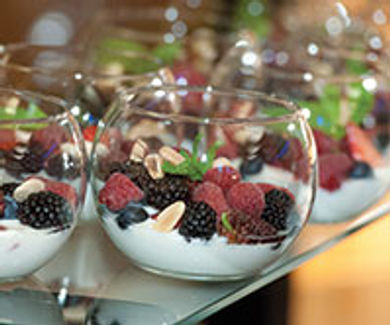 MGM Grand's Stay Well Meetings
include menus of healthy snacks,
such as yogurt bowls
Wellness is even creeping into happy hour, with Westin adding a Crafted at Westin program of artisanal cocktails with local, healthy ingredients.
"We've talked a lot about how people are moving from going to happy hour and spending the evening sitting and drinking, to doing more fitness activities -- moving from 'networking' to 'sweatworking,'" says Jacobs.
This can mean adding a pre-meeting running activity (as the Westin Fort Lauderdale offers each week, finishing with a cocktail), crossfit, or or aerial yoga session (which the Westin Beaver Creek recently added).
Jacobs notes that most of Westin's hotels have wellness programs for their own associates as well, so "when it comes to hosting a meeting at Westin, [planners] know that wellness is top of mind for just about everybody on staff who they deal with because they are living and breathing it every day."
Questions or comments? Email [email protected]
This article appears in the August 2016 issue of Successful Meetings.