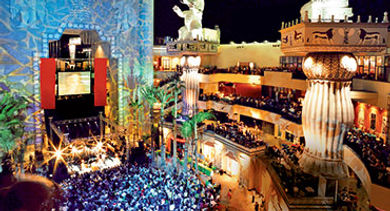
When Jennifer Haire, CMP, considers a city in which to hold her 1,500-person annual Court Technology Conference, the local destination marketing organization is one of her first stops. The reason is simple, says Haire, director of association and conference services for the Williamsburg, VA-based National Center for State Courts: A good destination marketing organization (DMO) has the same objectives as a good planner. "We both want as many attendees as possible to come, and to have a great experience," she notes.
A well-run DMO, whether it is a city convention and visitors bureau or a national tourism office, can be a planner's best partner. "I rely on them to assist with site visits, build micro websites, give us discount coupons, and assist in marketing the conference and the city," says Haire. "In the RFP process, I expect them to give me the best package and let me know distances of hotels from each other and the convention center, and transportation options to and from the airport and within the city, including cabs and Uber."
And yet, as Haire acknowledged in an educational session at the February DMAI Showcase, planners and DMO staff do have different goals and ways they measure their success, and that can result in a failure to communicate. So the first step in this important partnership is making sure each understands the other's needs.
How Planners Measure Success
"I measure success based on the revenue the show brings in, the amount of attendance, and the educational feedback, as well as the success of the social and networking events, the trade-show hall -- everything that encompasses the meeting," Haire says. "But my biggest measurable is my revenue and budget."
That's no surprise, as Haire's conferences are a vital funding source for her independent nonprofit organization, which was founded in 1971 at the urging of the Supreme Court's then-Chief Justice Warren E. Burger. Envisioned as a provider of research, education, consulting, and information services to help support and improve judicial administration in U.S. state courts, the NCSC has over the years added education for court managers and provides services abroad to support the rule of law around the world.
Dana Saal, owner of Saal Meeting Consulting, also says many of the associations she works for "rely on their annual meetings for funding. So the main thing I am judged on is the bottom line."
At the same time, Haire is quick to point out that reaching budget and revenue goals alone doesn't make a meeting successful, particularly if you want to attract attendees that next year. "I want to make sure my meeting is successful," she says. "We don't want to spend as little as possible. My key is what gives me the best bang for my buck and gives my attendees the best experience. A lot of planners won't pay for use of the convention center, but I don't mind. I'll pay for good A/V, for stage design, for speakers even if they cost $20,000 to $50,000." That, she notes, is what will bring attendees back to the next year's show.
How DMOs Measure Success
 The perception of DMOs not serving
small groups is out of date,
says LATCB's Mary Gallagher
From the DMO perspective, it is important to understand that "a positive attendee experience" is also the overarching goal, says Mary Gallagher, CMP, director of convention sales, Eastern region, for the Los Angeles Tourism & Convention Board. "From the DMO side, it could result in further business down the road. It could also result in a visitor coming back on their own dime and own time," adds Gallagher, who joined Haire on the DMAI panel.
That said, a happy attendee is not how DMOs ultimately are judged, Gallagher admits. Whether a meeting is citywide or limited to one hotel, DMO sucesss is measured by "room-night production, because that is what impacts economic development," she adds. As Cindy Hoddeson, director of meeting and incentive sales for the Monaco Government Tourist Office, puts it, "We need to show our success, and tracking room-nights is the way we can do that."
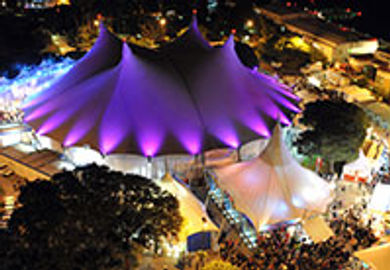 In destinations like Monaco,
DMOs can help planners get government
permission to create special event venues
Whether they are part of a city, county, state, or national government, DMOs ultimately answer to the taxpayers and to their members or partners -- the hotels, restaurants, destination management companies, A/V companies, and other meeting and •convention vendors.
"Many planners do not understand how important it is for the DMO to be brought in at the beginning, before they contract with the hotel," says Shawna Suckow, founder and president of the Senior Planners Industry Network (SPIN), an association for meetings professionals with at least 10 years experience. "If DMOs are not involved, they do not get credit, and that is a big problem. Many are measured by room-night production, and funded based on that."
One important offering is cash on the table. Hoddeson notes that the funding and offsets she can provide are available only to groups that started with the Monaco Government Tourist Office. "We can only apply them if it is driving business to Monaco," and that's not a feasible argument if a hotel contract has already been signed, she adds.
Monaco's offerings range from discounts on space rental at the convention center to free cocktail receptions for incentive groups. Depending on the size of a citywide group, some DMOs will put up cash, such as givebacks based on attendee numbers, or funding to be applied to food and beverage bills.
Still, direct financial support is one area where size really does matter. "The smaller groups won't get the same concessions," says Gallagher. "For the most part the smaller groups don't warrant spending tens or even hundreds of thousands of dollars. Some of the larger self-contained groups will get some concessions, but not the same as citywides."
That said, whether you are an executive who plans a couple of sales meetings a year, a professional planner working for an association that depends on an annual show for funding, or an employee of a third-party planning firm that organizes hundreds of meetings and events a year, DMOs have something to offer. Even ignoring potential cash incentives offered mostly to very large groups, "planners leave money on the table if they do not get us involved at the beginning of the process," says Cavers. "We can add value."
One of the most obvious ways is by providing marketing materials that attract trade show attendees and excite corporate employees going to sales, training, and other internal meetings. These generally include online offerings such as customized mini-websites and other digital materials designed to promote the destination and help attendees take advantage of free time; well-produced print materials such as brochures and maps to help build excitement; and sending representatives to an association's previous-year show to announce the destination and stir attendees' interest.
"I think of convention and visitors bureaus as promoters of the destination," says Siewert. "DMOs do a great job offering services to promote the destination. They are often underutilized by planners who do not take advantage of the freebies they offer."
Beyond that, DMOs offer a direct link to the local government of the destination. "We know who the players are in the community," Hutchinson says. "We can facilitate conversations with our mayor, with our county commissioners, our city council members. If [planners] need a speaker on a specific topic, we know the folks at our local colleges who can come in. If they need to close a street down for a big reception or a large street party, we can help facilitate that."
What DMOs Cannot Offer
One final area in which DMOs do a good job is getting nominally competing hotels to work together to best support groups large enough to need several properties, Siewert notes. That said, the DMO can't help when it comes to negotiating with the hotels and other destination partners.
"As a DMO, we have to stay neutral," says Gallagher. "If [a planner] comes to me and says 'Your InterContinental's rate is X and the JW Marriott is at Y, but I need them both to be at Z, because that's what the Westin is offering,' I cannot share that. It can come from the customer to the hotel, but not from us."
Another important fact for planners to know is that there are two different types of DMOs: those that are funded by hotel taxes or other public sources, and those that are funded by their members -- the hotels, DMCs, and other vendors. The latter group can only recommend members to planners, so it behooves planners to know what type of DMO they are dealing with.
Questions or comments? Email [email protected]
This article appears in the May 2016 issue of Successful Meetings.
What Planners Want From DMOs
"First, I expect them to be a filter," says Saal, a meetings-industry veteran and member of SPIN who uses DMOs to distribute her RFPs to hotels and other venue and service providers. "I do not want to get responses from every one of their members. Second, let me know which properties and venues would be a good fit for my group, and which would not. Third, help me be creative."
According to Suckow, DMOs are beginning to do a much better job at filtering supplier options. "Planners with 20 years in the business remember the days when, if you sent an RFP to a CVB, they had to send it to all of their members," she says. "They'd get so many calls from hotels, restaurants, linen vendors -- it left a bad taste in their mouths." That's not totally in the past, Suckow admits, noting that one DMO she worked with on a recent SPINCon, the group's annual conference, left her spammed by vendors.
Still, it behooves planners to work with DMOs, particularly in large destinations. "There is no way any planner is going to know all 450 of our hotels, all our restaurants and other attractions as well as we do," notes Fred Shea, senior vice president of sales and services for Visit Orlando.
As for narrowing down hotel prospects, Monaco's Hoddeson says that while she has to be unbiased when it comes to recommending the principality's hotels, she can help planners find which ones best fit their needs, giving the example of a group that needs a meeting space with high ceilings or that is pillar-free. "We have to be honest," she says. "If we do not have our reputations, what do we have?"
Creativity can mean helping planners like Saar find interesting and off-the-beaten-path restaurants, party venues, and entertainment options to excite and impress their attendees. But it can also mean reaching out to local universities and corporations to help planners find local experts who might be good speakers or panel members, Gallagher says.
As a planner for a large third-party planning company, Scott Siewert, CRP, Certified ROI Professional and divisional vice president, sales, for Atlanta-based USMotivation, has different priorities, and rarely contacts a DMO until after the city has been chosen and the hotel booked. For one thing, he says firms like his tend to know the cities and hotels they use well, so they don't need the DMO to act as a filter or to help them find suitable venues. But depending on the size of the group, DMOs' focus on room-night production is also part of it, he notes.
"If you have a small meeting or incentive group, you are not going to get much attention," Siewert says. "That is the wrong way to look at it. They should look at the long-term big picture -- every group should count." He adds that a good example for DMOs to follow is hotel chains' national sales offices, which often have a special group dedicated to small-group business.
The Los Angeles Tourism & Convention Board's Mary Gallagher argues that small-group perception is out of date. "It is important to know that we are not just trying to capture citywides," she says. "It is all of those meetings -- the incremental business we get from the self-contained meetings, the smaller meetings with maybe 25•50 people, the board groups -- that is what is going to move the needle on occupancy in the destination." And Visit Orlando's Shea notes that his central Florida destination already has a team dedicated to smaller, in-house groups.
Finally, when all the booking has been done and the contracts signed, Haire says that she wants a DMO partner to remain an active partner. "Once we have booked, don't just walk away," she says, noting that an association like the NCSC books four to five years out. "Keep me updated on what's going on in the city. Make sure I'm aware, as we start promoting, that you're there with me."
Good communication is key, Gallagher stresses: "That's the foundation of any relationship. Keep communication open before, during, and after. If I do my job right and the destination works for a group, in theory it will come back."
What DMOs Want From Planners
"We need to understand, as a first step, what the planner's meeting is all about," says Al Hutchinson, president and CEO of the Mobile Bay CVB. "What are their objectives? What are they trying to achieve in their meeting? What, at the end of the day, is that planner's criteria for success -- is it the total attendance at the meeting, is it having a great off-site, give-back opportunity for the delegates, is it having additional certified training for their conventioneers? We need to have a full and thorough knowledge of what success looks like to the planner. That is what separates an A-plus DMO from one that's less."
That means DMOs need planners to send out RFPs that go well beyond just the dates, rates, and space required, says Kelly Cavers, senior vice president, group sales, for Discover the Palm Beaches, the official tourism marketing organization for Palm Beach County, FL. "It's a matter of understanding the true needs of the planner and then digging in a little bit deeper to understand the features the destination has that they could utilize."
These days many planners and delegates are interested in getting a sense of what the city they are in has to offer, Hutchinson adds. "One of the strengths of Mobile is that we're a very walkable city -- from the hotels to the convention center, the hotels to restaurants, the hotels to attractions, museums, and shopping experiences. They want to really feel the culture of the community, experience the different amenities the city has to offer."
Also very important to DMOs is the group's meeting history, Hutchinson says. "Planners should provide RFPs that are as inclusive and as through as possible," he notes. "Where has your group met for a minimum of the last three years, what hotels did you meet in, how did your attendance look, how was your hotel pick-up? If you used the convention center, how was money spent, what was the food and beverage revenue, is there a rental revenue history?"
What DMOs don't like is "if planners go around them when booking a hotel and then ask for free services," notes Suckow. DMOs will provide them anyway, as they want the planner and attendees to be happy in their city and to patronize their members, but it will be with a "bit of a grimace," Suckow says. "And you will certainly not get funding."
No DMO executive Successful Meetings spoke to would admit to the "grimace," but one CVB rep did say that planners' attitudes can be, "What's in it for me if you get credit?"
The Heart of London
A custom walking tour and contest helped London & Partners win a major European medical conference
When some 33,000 heart specialists gathered in London last summer for the European Society of Cardiologists Conference 2016, London & Partners worked with several of the association's sponsors to create a special walking tour to welcome them. The one- to two-hour London Heart Trail took attendees past some top tourist destinations along the River Thames with an appropriately heart-healthy activity that served to welcome the attendees, provide a fun use of free time, and raise both funds and awareness for an on-topic cause, the British Heart Foundation.
"It created a great way for the conference delegates to get out and see London, says Chris Lynn, vice president, North America and emerging markets • business tourism, for London & Partners, the metropolis' destination marketing organization. "This trail gave the average conference delegate a quite efficient way to step beyond the conference and touch a piece of London that is iconic, but also educate the wider population."
Open to the public as well as attendees and marketed with the assistance from Mayor of London Boris Johnson and the cast of the West End musical
Annie Jr., the Heart Trail ran from the Coca-Cola London Eye to City Hall, passing iconic tourist sites like the Tower Bridge, Tate Modern museum, and Shakespeare's Globe Theatre. It was built around a custom app created by
Wildgoose Events, a London-based interactive teambuilding firm in the process of opening a U.S. office.
A treasure hunt was included, using social media to allow walkers to enter a drawing for prizes by discovering a word found by answering six questions from the Heart Trail. One example of a clue is: "Locate the statue of Sir Laurence Olivier outside the British Film Institute. What character is he portraying in the statue? Use the second letter of this name as your answer."
The Heart Trail was part of the "city activation" London & Partners promised when bidding for the conference, Lynn says, noting that even with 33,000 attendees, the average Londoner "wouldn't know what's going on. This ties in media and becomes newsworthy, so there is a legacy of getting people to think about heart disease." While the conference itself ran from Aug. 29 to Sept. 2, the London Heart Trail was open for a month before and after.
Firms like
Wildgoose Events can create apps "on any scale, whether it be five people or 33,000," Lynn said. "It is great way of exploring the city and driving that teambuilding dynamic. Because of the technology, you can drive a lot of [sponsor] messaging, and even develop it around the theme of a company."
He adds that London & Partners offers "the same level of service to all the groups we work with, whether they're large or small."
What Planners Want From DMOs
"First, I expect them to be a filter," says Saal, a meetings-industry veteran and member of SPIN who uses DMOs to distribute her RFPs to hotels and other venue and service providers. "I do not want to get responses from every one of their members. Second, let me know which properties and venues would be a good fit for my group, and which would not. Third, help me be creative."
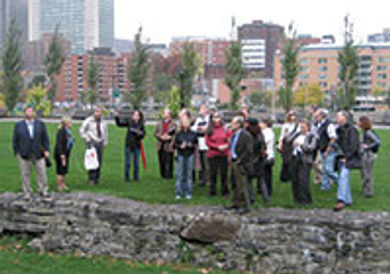 Planner Dana Saal worked with the DMO
to create a "field session" using
the old city walls of Vieux Montreal
According to Suckow, DMOs are beginning to do a much better job at filtering supplier options. "Planners with 20 years in the business remember the days when, if you sent an RFP to a CVB, they had to send it to all of their members," she says. "They'd get so many calls from hotels, restaurants, linen vendors -- it left a bad taste in their mouths." That's not totally in the past, Suckow admits, noting that one DMO she worked with on a recent SPINCon, the group's annual conference, left her spammed by vendors.
Still, it behooves planners to work with DMOs, particularly in large destinations. "There is no way any planner is going to know all 450 of our hotels, all our restaurants and other attractions as well as we do," notes Fred Shea, senior vice president of sales and services for Visit Orlando.
As for narrowing down hotel prospects, Monaco's Hoddeson says that while she has to be unbiased when it comes to recommending the principality's hotels, she can help planners find which ones best fit their needs, giving the example of a group that needs a meeting space with high ceilings or that is pillar-free. "We have to be honest," she says. "If we do not have our reputations, what do we have?"
Creativity can mean helping planners like Saar find interesting and off-the-beaten-path restaurants, party venues, and entertainment options to excite and impress their attendees. But it can also mean reaching out to local universities and corporations to help planners find local experts who might be good speakers or panel members, Gallagher says.
As a planner for a large third-party planning company, Scott Siewert, CRP, Certified ROI Professional and divisional vice president, sales, for Atlanta-based USMotivation, has different priorities, and rarely contacts a DMO until after the city has been chosen and the hotel booked. For one thing, he says firms like his tend to know the cities and hotels they use well, so they don't need the DMO to act as a filter or to help them find suitable venues. But depending on the size of the group, DMOs' focus on room-night production is also part of it, he notes.
"If you have a small meeting or incentive group, you are not going to get much attention," Siewert says. "That is the wrong way to look at it. They should look at the long-term big picture -- every group should count." He adds that a good example for DMOs to follow is hotel chains' national sales offices, which often have a special group dedicated to small-group business.
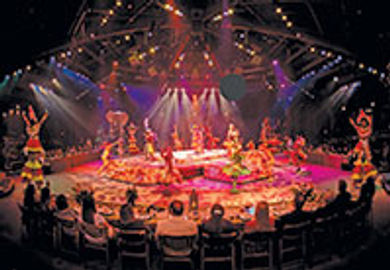 A private event held at Festival
of the Lion King in Disney's Animal
Kingdom in Orlando
The Los Angeles Tourism & Convention Board's Mary Gallagher argues that small-group perception is out of date. "It is important to know that we are not just trying to capture citywides," she says. "It is all of those meetings -- the incremental business we get from the self-contained meetings, the smaller meetings with maybe 25•50 people, the board groups -- that is what is going to move the needle on occupancy in the destination." And Visit Orlando's Shea notes that his central Florida destination already has a team dedicated to smaller, in-house groups.
Finally, when all the booking has been done and the contracts signed, Haire says that she wants a DMO partner to remain an active partner. "Once we have booked, don't just walk away," she says, noting that an association like the NCSC books four to five years out. "Keep me updated on what's going on in the city. Make sure I'm aware, as we start promoting, that you're there with me."
Good communication is key, Gallagher stresses: "That's the foundation of any relationship. Keep communication open before, during, and after. If I do my job right and the destination works for a group, in theory it will come back."
What DMOs Want From Planners
"We need to understand, as a first step, what the planner's meeting is all about," says Al Hutchinson, president and CEO of the Mobile Bay CVB. "What are their objectives? What are they trying to achieve in their meeting? What, at the end of the day, is that planner's criteria for success -- is it the total attendance at the meeting, is it having a great off-site, give-back opportunity for the delegates, is it having additional certified training for their conventioneers? We need to have a full and thorough knowledge of what success looks like to the planner. That is what separates an A-plus DMO from one that's less."
 DMOs can be far more useful to
planners by digging deep into their goals
That means DMOs need planners to send out RFPs that go well beyond just the dates, rates, and space required, says Kelly Cavers, senior vice president, group sales, for Discover the Palm Beaches, the official tourism marketing organization for Palm Beach County, FL. "It's a matter of understanding the true needs of the planner and then digging in a little bit deeper to understand the features the destination has that they could utilize."
These days many planners and delegates are interested in getting a sense of what the city they are in has to offer, Hutchinson adds. "One of the strengths of Mobile is that we're a very walkable city -- from the hotels to the convention center, the hotels to restaurants, the hotels to attractions, museums, and shopping experiences. They want to really feel the culture of the community, experience the different amenities the city has to offer."
Also very important to DMOs is the group's meeting history, Hutchinson says. "Planners should provide RFPs that are as inclusive and as through as possible," he notes. "Where has your group met for a minimum of the last three years, what hotels did you meet in, how did your attendance look, how was your hotel pick-up? If you used the convention center, how was money spent, what was the food and beverage revenue, is there a rental revenue history?"
What DMOs don't like is "if planners go around them when booking a hotel and then ask for free services," notes Suckow. DMOs will provide them anyway, as they want the planner and attendees to be happy in their city and to patronize their members, but it will be with a "bit of a grimace," Suckow says. "And you will certainly not get funding."
No DMO executive Successful Meetings spoke to would admit to the "grimace," but one CVB rep did say that planners' attitudes can be, "What's in it for me if you get credit?"
A Pharma Planner's Perspective on Working with DMOs
In order to work together effectively, planners and destination marketing organizations (DMO) must communicate openly and actively, and seek to educate each other, says Saira Banu Kianes, CMP, founder and president of Banu Event Solutions & Training. "Educating our partners is very important to me," Kianes says. "It is how we look good."
A member of the Senior Planners Industry Network (SPIN) with three decades of experience, Kianes has in recent years specialized in pharmaceutical and clinical meetings, which are heavily regulated under the U.S. Open Payments regulations. These rules, which require companies to report virtually anything of value given to physicians -- even flash drives and cookies can make the cut, to say nothing of meals and conference travel -- to the government, means she has strict guidelines to follow when planning her meetings and events, which tend to range between 65 and 250 people.
"So when [I send out requests for proposals] I give the DMOs I work with very specific information detailing the clients' needs and goals," Kianes says. "I see convention and visitors bureaus as planners' partners, as our eyes and ears. I rely on them to tell me what I should see -- which hotels, which venues -- when I am on a site inspection."
At the same time, Kianes says, she expects the DMOs to understand her business and its needs. "When a planner sends a pharmaceutical RFP to a convention and visitors bureau, they should know that if there are physicians attending we can't send them to five-star hotels, to properties with "resort and spa" in their name, or to gaming properties," she says, adding that other industries, such as finance, also have restrictions they must follow. "CVBs should ask what the end goal of the meeting is, not just send the RFP out to all its members."
Kianes adds that she is happy to educate the DMO representatives she works with. She says: "If you don't know, ask me, 'Why is your food and beverage budget so low?' Ask me what I can and can't negotiate. At the end of the day, making clients happy is both of our goals."
By the same token, Kianes continues to educate herself, taking the Healthcare Meeting Compliance Certificate (HMCC) course offered recently by Meeting Professionals International (MPI) in Alexandria, VA. "I learned a lot," Kianes says, adding, "I was surprised to see that the class was heavy with suppliers." That included several hoteliers, but also representatives of the Philadelphia and the Alexandria, VA, convention and visitors bureaus.
"A lot of CVBs out there spend so much money on marketing their capabilities, but do not spend money on training," Kianes. "That's why I was so surprised when I saw so many CVB [staff] there."
What DMOs Can Offer
One important offering is cash on the table. Hoddeson notes that the funding and offsets she can provide are available only to groups that started with the Monaco Government Tourist Office. "We can only apply them if it is driving business to Monaco," and that's not a feasible argument if a hotel contract has already been signed, she adds.
Monaco's offerings range from discounts on space rental at the convention center to free cocktail receptions for incentive groups. Depending on the size of a citywide group, some DMOs will put up cash, such as givebacks based on attendee numbers, or funding to be applied to food and beverage bills.
Still, direct financial support is one area where size really does matter. "The smaller groups won't get the same concessions," says Gallagher. "For the most part the smaller groups don't warrant spending tens or even hundreds of thousands of dollars. Some of the larger self-contained groups will get some concessions, but not the same as citywides."
That said, whether you are an executive who plans a couple of sales meetings a year, a professional planner working for an association that depends on an annual show for funding, or an employee of a third-party planning firm that organizes hundreds of meetings and events a year, DMOs have something to offer. Even ignoring potential cash incentives offered mostly to very large groups, "planners leave money on the table if they do not get us involved at the beginning of the process," says Cavers. "We can add value."
One of the most obvious ways is by providing marketing materials that attract trade show attendees and excite corporate employees going to sales, training, and other internal meetings. These generally include online offerings such as customized mini-websites and other digital materials designed to promote the destination and help attendees take advantage of free time; well-produced print materials such as brochures and maps to help build excitement; and sending representatives to an association's previous-year show to announce the destination and stir attendees' interest.
"I think of convention and visitors bureaus as promoters of the destination," says Siewert. "DMOs do a great job offering services to promote the destination. They are often underutilized by planners who do not take advantage of the freebies they offer."
Beyond that, DMOs offer a direct link to the local government of the destination. "We know who the players are in the community," Hutchinson says. "We can facilitate conversations with our mayor, with our county commissioners, our city council members. If [planners] need a speaker on a specific topic, we know the folks at our local colleges who can come in. If they need to close a street down for a big reception or a large street party, we can help facilitate that."
What DMOs Cannot Offer
One final area in which DMOs do a good job is getting nominally competing hotels to work together to best support groups large enough to need several properties, Siewert notes. That said, the DMO can't help when it comes to negotiating with the hotels and other destination partners.
"As a DMO, we have to stay neutral," says Gallagher. "If [a planner] comes to me and says 'Your InterContinental's rate is X and the JW Marriott is at Y, but I need them both to be at Z, because that's what the Westin is offering,' I cannot share that. It can come from the customer to the hotel, but not from us."
Another important fact for planners to know is that there are two different types of DMOs: those that are funded by hotel taxes or other public sources, and those that are funded by their members -- the hotels, DMCs, and other vendors. The latter group can only recommend members to planners, so it behooves planners to know what type of DMO they are dealing with.
Questions or comments? Email [email protected]
This article appears in the May 2016 issue of Successful Meetings.