Having seesawed between bloated excess and sour-puss budgets in years past, the size of today's travel incentive program has finally gotten "just right," according to planners.
"Five years ago, when things were pretty tough, I would say that the average incentive was probably shorter, with activities that would have been at [attendees'] own expense," says Joanie Miskowiec Phillips, SMMC, director of purchasing and industry relations for Minneapolis-based MotivAction, LLC. That was then. Now: "They're maybe a night longer, with higher-end entertainment or higher-end activities, which are included in the budget," according to Phillips.
Another difference is that, in the past, "programs were very active, with a full day of activities and evening functions," according to Mark Graber, vice president of strategic accounts and business development for New York City-based Madison Performance Group. "A lot of people in this day and age are looking for a little bit of downtime, to reconnect with the guest or the spouse they've brought. They really appreciate the free time available, and not just jam-packing the incentive with minute-to-minute activity."
Today's incentive is more bespoke than ever before. "Personalization is key -- how to take your activity or event group dinner and make the theme and events weave in your corporate message, logo, and team structure," says Kelly Parisi, senior manager of solutions development for Spear One in Irving, TX.
Rhonda Brewer, vice president of sales at Maritz Travel, in St. Louis, MO, strikes a similar note: "The change from a few years ago is that there needs to be some customization to an individual and to a group."
The Way of the Millennial
While incentive programs extend to a diverse multigenerational workforce, Millennials are having a tremendous impact on what's being offered. "Millennials are not looking for tried and tested," says Kevin M. Hinton, CIS and chief excellence officer for the Society for Incentive Travel Excellence (SITE) International. "They want to be challenged. It is important for planners to uncover Millennials' distinctive passion points, and engage them in a way that speaks to their personal drivers." He notes Millennials' preferences for personalized workouts, healthy foods, and holistic wellness as behaviors that are shaping the travel industry.
 Kevin Hinton, SITE International
Phillips agrees: "A lot of clients are incorporating a fitness instructor or a 5K run."
In today's incentive travel program, she adds, everything is interactive, even the tour. She points to a speedboat ride down London's River Thames to give groups a James Bond experience.
Frank McVeigh, president and CEO of McVeigh Associates Ltd. in Amityville, NY, says his company is seeing an increase in such adventurous activities as zip-lining, hiking, and mountain climbing. But these activities are not so much about adrenaline as providing attendees with new experiences.
"'Impact travel' is a new buzz phrase -- a blend of past CSR [corporate social responsibility] activities and 'go local' movements," McVeigh says, giving the examples of "a Native talking stick ceremony and dance during an Alaskan cruise, or a private tender from the ship to a motu in Bora Bora for a gala dinner in a thatched-roof venue."
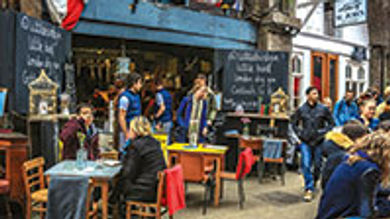 Touring London's local markets
provides incentive winners with
a memorable culinary experience
Touring London's local markets
provides incentive winners with
a memorable culinary experience Hinton agrees that new experiences are key. While "sun-and-fun types of destinations" are always popular, they are having to make room for destinations "where groups can get more involved with the community and culture, either in the form of CSR activities or dining experiences that include local food, wine, or beer." For example, instead of a restaurant dine-around, attendees may get more out of being hosted at the home of locals.
Whatever the circumstances, says Phillips, "It's not just handing over a check -- it's building a park or cleaning a park or painting a school. People get the most out of CSR when they see or interact with the person who's benefiting from it."
In fact, SITE research suggests that seven out of 10 incentive programs include a CSR activity. While all experts agree that corporate social responsibility is now a fully integrated element of the travel incentive program, they also warn planners not to include it on the fly. CSR programs, says Hinton, "need to be planned well in advance and carefully selected."
Come to the Table
The importance of memorable experiences extends to the incentive travel F&B as well. "Quality food has always been important," says Phillips, "but now it's important to have an interesting meal, to expose people to new things."
Wine tastings and craft beer demonstrations are also popular. "We have groups that want to truly embrace the culture and experience the destination through local cooking lessons, mixology, and dance lessons," says Brewer.
Interactive classes -- particularly cooking classes -- are especially popular. For McVeigh, it's banquet chefs who demonstrate a spice rub for the group or a catch-of-the-day lesson. Mixology classes, creating your own mac and cheese, and customizing your dessert are also well-received options.
The Bucket List
"A few years ago it was sometimes hard to get companies to consider something out of the ordinary," recalls Wayne Wallgren, principal of Dallas-based WorldWide Incentives Inc. "A lot of our repeat clients have become more interested in offering new or less-conventional activities."
Indeed, for incentive travel participants who get to check off a "bucket-list" item, there's no better way to build loyalty and help someone feel motivated, according to Hinton. For this reason, he adds that incentive planners are seeking new and unique ways to immerse participants in the local geography and cultures with more educational opportunities and networking experiences.
Brewer agrees that incentive travelers want their experiences to be different than what they can do on their own.
"Personalized and customized experiences will continue to grow, along with such once-in-a-lifetime opportunities as cooking with a celebrity chef or golfing with a pro," she says. Of course, planning such creative experiences means that corporate and third-party meeting planners are "pushing DMCs hard to come up with the next greatest idea."
Finally, luxury -- or as close to luxury as the budget will allow -- has made a return to incentive programs. According to Wallgren, "We are getting more interest in what I will call premium or more upscale properties, all-inclusive (depending on the destination), and suite levels."
Merchandise Runs the Gamut
The experts have varied opinions on the current trends in room amenities, pillow gifts, and merchandise.
"In the past, brands might have been important to winners, but the younger generation prefers to choose more personal gifts, often set up right at check-in," says Hinton. "Companies can offer a wide range of choices, including anything from beverages and flowers for the room to custom goodies."
Wallgren agrees that the new tendency is to "consider things that are more thoughtful or personal."
For incentives in Puerto Vallarta, Mexico, McVeigh gives the example of designing a personalized tile design to be created at a local ceramic tile factory. He also offers a "merchandising experience" where Bose, Maui Jim, and Nike have vendors on site, so attendees can select their gifts in person.
For ease of use, Parisi suggests using hotels offering "inclusions that feel value-added for the program, such as complimentary afternoon tea, fitness classes, or room amenities." For example, at the Four Seasons Costa Rica at Peninsula Papagayo, chips, guacamole, and beer magically appear in the room in the afternoon, which Parisi calls "great for attendees and great for planners."
Embracing Technology
Gone are the days of turning off smartphones to relax and get in the moment -- technology is as crucial during incentive events as it has traditionally been at meetings. "I don't know a hotel right now that doesn't have substantial Wi-Fi, so now it's just negotiating the cost for that," says Phillips.
Brewer adds that the "need for good, fast Wi-Fi, included and available throughout the resort, is greater than ever."
Beyond Wi-Fi, incentive planners must consider tapping into other technology that can enhance the incentive event -- such as social media or apps. For example, Madison Performance Group has developed apps to help planners and attendees have a more interactive incentive experience.
"We've invested in building out an attendee app, which allows us to communicate with and also know the location of the attendees," says Izzy Nicosia, vice president of travel operations for the company. "In certain cases, like a South African incentive, where you have attendees spread out in 30 or 40 different lodges across various parks, being able to know where these people are staying -- and the attendees having the ability to communicate back to headquarters or back to other employees who are also attending the incentive at various lodges -- allows an open communication not only for the internal logistic and operational side but for the attendees' perspective as well."
Madison Performance Group's Marc Graber calls this fostering "corporate cultural beliefs that makes attendees feel part of that group." Such an app can also extend the impact of an incentive trip, raising interest in the event months before the program even begins.
Top Trending Destinations
If you think that travel incentives are edging away from European cities anytime soon, think again. "For Europe, the classic destinations of Rome, Paris, and London are still on top; but of course, Vienna, Barcelona, Prague, and Switzerland are also popular," says Brewer.
And with favorable exchange rates, many groups who are looking at their first European trip seem to look towards Spain for value or Italy for popularity, according to Parisi. Well-seasoned European travelers seek destinations like Budapest, Prague, or Croatia (which also tend to be budget-friendly). Among southeastern European destinations, Poland and Slovenia are also popular, according to Hinton.
In Asia-Pacific, Vietnam is beginning to show up on lists, while Australia, New Zealand, and Hawaii are still widely appreciated. Hinton notes that winter destinations like Iceland, Canada, the Swiss-Italian Alps, and U.S. ski destinations like Colorado and Utah are starting to gain momentum, "specifically for younger generations."
But for adventure and novelty, "clients seem to be expanding their definition of the Caribbean," says Parisi, "pushing south into Central America."
If last year was Costa Rica, she says that this year is Panama, which Parisi calls, "our most-asked-about destination of the year. It feels new, adventurous, and like somewhere attendees haven't been." Plus, the Panama Canal is on the bucket list for many attendees.
SITE members will have the opportunity to experience Panama at the SITE Global Conference, Nov. 5-7, 2016, to be held at the Westin Playa Bonita Panama City. Those taking part in the conference can choose from more than 25 distinct tours (including five different tours to see and learn about the Panama Canal).
"Clients are looking to try something new after sticking to familiar Caribbean spots," says Parisi. "Destinations like Curaçao and St. Maarten are now on the table."
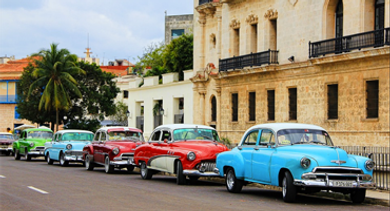
Another destination that has incentive planners buzzing is Cuba, for which U.S. commercial airlift began in August -- for the first time in 50 years.
"Cuba is hot!" says McVeigh. "Our first program will take place in Havana in November 2017."
Questions or comments? Email [email protected]
This article appears in the October 2016 issue of Successful Meetings.
The Catch of a Lifetime
The maze of bays and tributaries off of Alaska's southeastern coastline, on the state's lower peninsula, offers great teambuilding and adventure incentive options for meeting attendees and incentive qualifiers looking to test their mettle in the great outdoors.
One of the more established properties in the region for hosting incentive groups is the Waterfall Resort.
Arriving by floatplane over Prince of Wales Island, groups immediately feel the immensity of Alaska's wilderness. There is an endless panorama of untouched woodlands, meadow brooks, and sheered mountain ranges. Quaint miniature cottages act as the guest quarters and are dwarfed by the facility's two main processing warehouses. Once a thriving local cannery, the buildings are now used to clean, fillet, and freeze all of the guests' bounty during their stay -- ready to be shipped home.
Upon arriving, guests receive their fishing licenses at check-in along with full-body rain gear. They are then designated a boat, each outfitted with a grizzled guide, deep-sea spinning reel/rod combos, and a packed lunch box of fried chicken, gourmet sandwiches, and freshly baked cookies. The fleet itself is formidable. As groups course out of the harbor, they are part of a long convoy of 25-foot North River cabin cruisers.
Waterfall boasts the largest private fleet in Alaska. When encountering especially rough seas, incentive groups will truly appreciate having a heated cabin with air-suspension seats.
Chuck Baird, director of corporate development at Waterfall Resort, works with incentive groups from a myriad of industries. "What seems to bring these programs back year after year is not just the remarkable scenery and sportfishing but the bonding done in the process," says Baird. "If you can imagine Alaska at its finest -- people enjoying the activities and the sportfishing -- they go away with a lot of memories."
--
Ben GershmanHead here to see a video of the author catching a live salmon with his bare hands.
Embracing Technology
Gone are the days of turning off smartphones to relax and get in the moment -- technology is as crucial during incentive events as it has traditionally been at meetings. "I don't know a hotel right now that doesn't have substantial Wi-Fi, so now it's just negotiating the cost for that," says Phillips.
Brewer adds that the "need for good, fast Wi-Fi, included and available throughout the resort, is greater than ever."
Beyond Wi-Fi, incentive planners must consider tapping into other technology that can enhance the incentive event -- such as social media or apps. For example, Madison Performance Group has developed apps to help planners and attendees have a more interactive incentive experience.
 Izzy Nicosia
Madison Performance Group
Izzy Nicosia
Madison Performance Group"We've invested in building out an attendee app, which allows us to communicate with and also know the location of the attendees," says Izzy Nicosia, vice president of travel operations for the company. "In certain cases, like a South African incentive, where you have attendees spread out in 30 or 40 different lodges across various parks, being able to know where these people are staying -- and the attendees having the ability to communicate back to headquarters or back to other employees who are also attending the incentive at various lodges -- allows an open communication not only for the internal logistic and operational side but for the attendees' perspective as well."
Madison Performance Group's Marc Graber calls this fostering "corporate cultural beliefs that makes attendees feel part of that group." Such an app can also extend the impact of an incentive trip, raising interest in the event months before the program even begins.
Top Trending Destinations
If you think that travel incentives are edging away from European cities anytime soon, think again. "For Europe, the classic destinations of Rome, Paris, and London are still on top; but of course, Vienna, Barcelona, Prague, and Switzerland are also popular," says Brewer.
And with favorable exchange rates, many groups who are looking at their first European trip seem to look towards Spain for value or Italy for popularity, according to Parisi. Well-seasoned European travelers seek destinations like Budapest, Prague, or Croatia (which also tend to be budget-friendly). Among southeastern European destinations, Poland and Slovenia are also popular, according to Hinton.
In Asia-Pacific, Vietnam is beginning to show up on lists, while Australia, New Zealand, and Hawaii are still widely appreciated. Hinton notes that winter destinations like Iceland, Canada, the Swiss-Italian Alps, and U.S. ski destinations like Colorado and Utah are starting to gain momentum, "specifically for younger generations."
But for adventure and novelty, "clients seem to be expanding their definition of the Caribbean," says Parisi, "pushing south into Central America."
If last year was Costa Rica, she says that this year is Panama, which Parisi calls, "our most-asked-about destination of the year. It feels new, adventurous, and like somewhere attendees haven't been." Plus, the Panama Canal is on the bucket list for many attendees.
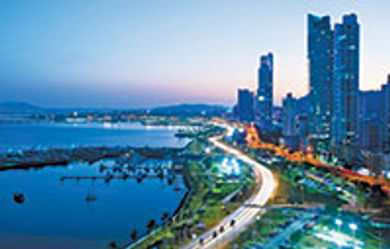 Panama City is gaining increased interest
from incentive planners
Panama City is gaining increased interest
from incentive plannersSITE members will have the opportunity to experience Panama at the SITE Global Conference, Nov. 5-7, 2016, to be held at the Westin Playa Bonita Panama City. Those taking part in the conference can choose from more than 25 distinct tours (including five different tours to see and learn about the Panama Canal).
"Clients are looking to try something new after sticking to familiar Caribbean spots," says Parisi. "Destinations like Curaçao and St. Maarten are now on the table."
Another destination that has incentive planners buzzing is Cuba, for which U.S. commercial airlift began in August -- for the first time in 50 years.
"Cuba is hot!" says McVeigh. "Our first program will take place in Havana in November 2017."
Questions or comments? Email [email protected]
This article appears in the October 2016 issue of Successful Meetings.