
In the highly specialized world of medical meetings, last Sept. 30 was a landmark date. That was when the U.S. government published the first set of data reported by pharmaceutical companies and medical device manufacturers under the Physician Payments Sunshine Act, also known as Open Payments. The figures detailed the amount of money the companies spent on all meetings attended by doctors, a total that came to a staggering $3.5 billion spent on 546,000 individual healthcare providers and 1,360 teaching hospitals. In all, some 4.4 million records were submitted in compliance with the law.
Yet, despite years of work by the pharmaceutical companies to figure out exactly what information is required and how best to comply, fully 1.7 million of that first batch of submitted records (39 percent) were rejected by the government. The reasons for this were many and, often, excrutiatingly esoteric: an attendee's name missing a middle initial; a doctor failing to mention all of the states in which he or she is licensed; or the use of a home address rather than business address when registering for a conference. Each mistake must be investigated, corrected, and resubmitted.
And that's on top of other restrictions, some self-imposed by the industry's own PhRMA Code on Interactions with Health Care Professionals, including strict caps on meal costs and room rates. Then there's the problem of many doctors being reluctant to attend meetings where every penny spent on them will be reported and put on a publicly searchable database. No physician wants to be the one singled out on the local news for being "wined and dined" to an exorbitant tune.
If you're a planner who doesn't work in the medical niche and thus can ignore the various rules and regulations, you've likely just sighed with relief. But while most non-medical organizations are not required by law to gather and analyze data on their meetings, there is a seemingly universal, if unofficial, mandate to do just that in order to run more efficient and profitable gatherings. In this regard, many planners and third-party planning firms that have worked with the pharmaceutical industry say that there are more than a few lessons other industries can learn from their specialty. Here are five of the most important.
1. Managing Meetings Spend
One big benefit of this data is simply learning what your company is spending on its meetings and events. As Judy Johnson, president emeritus of Rx Worldwide Meetings, notes, "With this information, pharmaceutical firms can get answers to questions like, what are our meetings really costing us? What is the cost per attendee? Could it be done in a webinar? I think that other industries could definitely look at some of the cost containment."
In fact, smart pharmaceutical firms have even turned complying with the Sunshine Act into a competitive advantage, argues Issa Jouaneh, vice president and general manager at American Express Meetings & Events.
"Clearly, most organizations recognize the value that meetings and events drive for the company in terms of increased sales and revenue, marketing, the ability to connect with more of their prospects and their clients, and the ability to engage, train, and educate their employees," Jouaneh says. "Thinking of it as part of that process, and as part of the changes that they've had to make from a compliance perspective, a few of the leading organizations have now started to ask, 'Given that this is our new reality, how do we take advantage of it? How do we look at these changes that we are making and drive new and improved and more efficient processes internally, so that we can deliver on the objective at a lower cost? Equally, how do we leverage these new processes to be able to extend, enrich, or improve the effectiveness of the meetings, or broaden the audience?'
"Look at compliance as an opportunity," Jouaneh adds, noting that there are organizations "that have seen material improvement in the operation of their meetings and significant savings to the corporation. We've seen anywhere from 10 percent to 30 percent improvement in savings rates for companies that have standardized and looked to reinvent and redesign their processes."
One basic way to do this is to gain control of the number of suppliers your company is using. Gavin Houston, CEO Americas for Ashfield Meetings & Events, points to a pharma client that had far too many suppliers planning and running its meetings -- 70, to be precise. That many suppliers can lead to wasteful duplication, particularly of administrative costs, and makes it very hard to clearly track what the company is spending. It also wastes the opportunity for negotiating discounts from hotel suppliers whose properties are used frequently.
"Compliance in this industry is actually a big driver for strategic meeting management (SMM)," says Houston, whose company works solely with pharmaceutical and medical device clients. "It has been used by medical meeting planners as a means to secure buy-in from upper management. If you look at SMM programs in other industry sectors, people are really talking about it from a cost savings perspective. Sure, they're doing that within pharma, but actually one of the biggest drivers in the last five years has been Open Payments. If you say, 'There's a compliance issue here unless we consolidate vendors and put some standardization around them, and on top of that you're going to get some cost savings,' then senior management is going to say, 'Of course, sign me up.' "
Which isn't to say that non-pharmaceutical companies need to drill down as deeply into tracking every dollar spent on every attendee as pharmaceutical firms do, Houston notes. He points out that the ambiguity of the regulations and lack of specific guidance on what data is actually required by the Sunshine Act has led a lot of pharma firms to set up systems that collect far more data than is completely necessary or useful.
"Don't spend hours and hours of time capturing and administering data that you're not going to use," Houston advises. "You've got to encourage meeting stakeholders to think about what they want to capture first, and then what they want to use it for. Go with that in mind, because otherwise you're going to start tying yourself up in knots by over-administering data you're not really going to do much with."
Si-Yeon Kim, chief compliance and risk officer for American Express Global Business Travel, agrees. "There's a real level of granularity that people are pursuing in the pharma space that may not be the right level for other industries," she says. "Ultimately, you do want to be able to capture and track the big-ticket items. Sometimes when you're dedicating too many resources, especially internal resources or an entire compliance department to digging in the weeds, you're going to miss the big picture. Strike a balance between the big picture and the detail."
4. Robust Technology Is a Must
To manage the kind of tracking that pharmaceutical companies are required to do, a robust technology solution is vital. Even taking into account Houston and Kim's warning not to get so caught up in the details that you can't see the forest for the trees, an integrated tool that manages everything and can report on anything is no longer a luxury; it's a necessity. That is one of the key lessons that can be learned from pharmaceutical companies' experience, says Issa Jouaneh.
Technology makes it possible to collect information in a clear and disciplined manner on questions such as on what a company is spending its meetings budget, which hotels and hotel companies it is using, how much it is spending with each one, whether preferred supplier agreements that offer better prices at specific hotel chains' properties are in place, and whether they are actually being used by the company's planners, he says. That, in turn, makes it both possible and easy to analyze the data and to determine if the company's meetings-approval process is actually being followed.
"Technology provides access and consistency in terms of the reporting of information and the ability to aggregate that information for analysis or for compliance purposes," Jouaneh says. "It really facilitates that process."
That said, not everyone feels the pharmaceutical industry is as far along on the technology front as it should be.
"A lot of money and effort has been put into building the tools to be able to monitor reports, but nobody studied the industry itself," says Pat Schaumann, director of health-care meeting compliance for Meeting Professionals International (MPI). "They were good at what they did, [but] I think it was reactive to Open Payments, and there wasn't enough due diligence on sitting down and understanding the meaning of industry terms like category of spend, transfer of value."
Nor is Schaumann sanguine that pharma firms' technology is flexible enough to deal with the many countries that have or are creating some kind of compliance reporting requirement. This is not a minor point, she adds, as roughly one-third of the nearly 200 countries are doing this, and each one will have different rules, regulations, and reporting requirements. Which means pharmaceutical companies have to be able to pull out information about every foreign doctor who attends a meeting or conference and make a separate compliance report about each.
Beyond this, different countries' regulations can have an impact on the details of the meeting. For example, if a half-dozen attendees at a meeting of 200 medical professionals come from countries that ban them from accepting any meals, the planners must ensure they don't eat any food provided for other attendees. That could mean barring them from meals (and the attendant network and information-sharing opportunities), charging them for meals, or even reconsidering whether to have a speaker during meals.
On the other hand, Jouaneh says that "global oversight and in-country capabilities to execute the end-to-end process from sourcing to payments" is a key area in which planners in other industries can learn from the pharmaceutical industry and meeting planning companies that understand it.
He adds, "That governance structure needs to exists globally, but it's fundamental to have the in-country capabilities to be able to deliver on that end-to-end process, [while] understanding local culture and local business practices."
One area where pharmaceutical firms do excel in using technology effectively is the standard online request for proposal (RFP). While this tool has the ability to simplify and expedite the RFP process, many hotel suppliers have been frustrated when corporate planners send out so many they are practically spamming, and by the generic nature of many of the RFPs they receive.
"Pharmaceutical companies have done a very good job making very specific, customized questions for the venues to see if it can accommodate the requirements of that meeting," Wynne says. "I think other industries would do a much better job in providing more detailed information, and providing some historical reference to what their expectations are. A venue will ask, 'Where have you historically held this meeting?' They're asking that for a few reasons, not just for pricing. They truly want to put their best foot forward, and make sure that their property is a good match. If you previously held your meeting at, say, a DoubleTree [by Hilton] type of product and now you're looking to go to The Ritz-Carlton, that indicates, maybe that property is not the best fit, unless your budget has dramatically increased."
By sending out eRFPs that offer specific details about the event in question, who the attendees will be, and what special requirements there are for tracking attendees and monitoring spending -- for example, that no attendee can be offered room upgrades -- the pharmaceutical firms make it easier for hotels to determine if they are a good fit for the event, and let them more effectively shape their proposals to the clients' need.
5. Compliance, Ethical Conduct, and Perception
For pharmaceutical firms, compliance is a far more important issue than it is for most companies. After all, they are dealing not with internal procurement departments, but federal (and sometimes state) laws, as well as consequences that can range from bad publicity to stiff fines to corporate integrity agreements that can place even stricter and more costly reporting requirements upon them.
At the same time, it's worth noting that the pharmaceutical business is hardly the only industry under scrutiny. Most notable are the financial and insurance industries. While both are government regulated, neither has to deal with a formal structure like the Sunshine Act impacting its meetings and events specifically. But planners only have to think back to the fallout after insurance giant AIG was found to be hosting a five-star incentive trip days after receiving an $85 billion government bailout, or when the Department of Justice was accused of buying $16 muffins for meeting attendees on the taxpayers' dime.
"There are other industries that may not really fall within the realm of regulated industries, but that have been under a lot of scrutiny and focus in the past 10 or so years," Kim says. "That includes oil and gas, natural resources, mining, and extractive industries, which are becoming more and more regulated."
One result is that industry guidelines like the PhRMA Code -- which members of the Pharmaceutical Research and Manufacturers of America (PhRMA) trade group can be certified as adhering to -- are becoming more common, says Rabideau. At the same time, she adds, "my financial institution clients also have more informal meetings guidelines in place, because of the perception around some of the venue locations or gifts," as well as the cost of some meetings and events.
In some ways, Kim says, she thinks some regulations are a good thing if they "cause people to think twice before they act, in terms of propriety, the appearance of impropriety, compliance, and ethical conduct."
Of course, regulations like the Sunshine Act could strike a better balance between gathering information, and making sure it is meaningful. "Just because you have the high numbers attached to your name [in the Open Payments registry] doesn't mean that you're accepting bribes," she says. "It may mean that you're very active in research and development."
One key lesson to take away from pharmaceutical companies' experience with the Sunshine Act is to understand that the foundation of this type of compliance is "prevent, detect, respond," Kim says. "I get asked, how can a board member, a senior executive, really know what's going on," she adds. "They ask, 'How can I prevent that one guy from going rogue and doing something that he shouldn't be doing? That is not going to get solved by having this type of disclosure, how am I supposed to oversee that?'"
The answer, she says, is understanding that what "regulatory agencies are really looking for, at the end of the day, is a very robust program that shows the elements of prevent, detect, and respond."
She explains, "You try to prevent by having policies, procedures, communication, and training. You try to detect bad acts through risk assessments, monitoring, and testing, but also whistle blower activities. You need to make sure you have an open, transparent, and robust reporting line. You respond to the gaps and the issues that may be identified, you investigate any reports that come in through the whistleblower activity and you close out the issue -- you discipline people as necessary, and then all of this builds into your next year's policies, training, and program. What the regulators are saying is that at the end of the day, if you have a program like this, then whenever you have a bad act, it surfaces quickly. It doesn't sit around and fester. When bad acts fester, regulators like to use the phrase, 'a criminal corporate culture.'" This is why internal compliance with procurement policies is so important.
"I talk with my customers about compliance with a strategic meeting management program," Rabideau says. "If you put a meeting policy in place and you want meetings to be registered and sourced centrally, whether they are of 20 people or 20,000, do you have 50-percent or 80-percent compliance?
The first step in gaining that compliance, Kim says, "is getting support from senior leaders who really understand and recognize the importance of compliance. That tone at the top carries through in terms of resources and investment and people really following and understanding the message."
Who's Listening?
Whether the lessons of the pharmaceutical industry's meeting woes are being learned is more difficult to assess.
"I think that the evolving compliance and transparency and anti-corruption laws, guidelines, and codes are being paid more attention than they have in the past," says Schaumann. "I'm not sure whether it's Open Payments that brought that awareness or a combination of that and some other governmental changes on meetings, especially in the insurance side… [but] I hope that people are paying more attention in the meetings industry to transparency and compliance in all industries."
Rx Worldwide Meetings' Johnson is not so sure. "Normally, pharma seems to start things and then other [regulated] industries, like banking and insurance, follow suit," she says. "Then, things ease up in other industries and they go back to the way it was."
That's not wise, Schaumann says. "Being able to defend however you track your meetings is becoming more important because it can be audited," she notes. "If there is any legal action or any other action they're going to want you to be able to easily access that meeting report. Something that I've learnt from Open Payments is that government entities can walk into a company at any time and say, 'I want to see your reports from June 2013,' and you have to pull it. We know, as planners, sometimes that information is not archived for five or seven years, and you can't put your hands on it, which would mean you're not able to defend it."
Questions or comments? Email [email protected]
This article appears in the February 2015 issue of Successful Meetings.
2. Developing Meetings Policies
Open Payments requirements force pharmaceutical companies to look closely at their meetings policy, says Houston. That includes what kind of meetings they are running, who they are for, their purpose, and how they are organized and run, as well as what they cost.
"There's an old adage: If you measure something, you learn from it by measuring it," says Houston. "Once you've got spend data, you better believe that somebody -- procurement -- is going to come in and use that to drive cost savings and to measure it so that you can enable your program to be more efficient. And I think every industry should look to see what it is they're spending and how to leverage that spend, because I don't think most have a clue."
The impact of third-party planning companies in this process has been substantial, says Pam Wynne, global program director at Carson Wagonlit Travel. "We're required to collect very specific data on behalf of our clients. And clients can then take that data and show their stakeholders. It can throw up some red flags or give them transparency into what changes they need to make. Let's face it, a lot of organizations are not going to change until you have the data to back that up."
In addition, Wynne says, the data-collection process "really forces us to take a second look at our own internal procedures and policies, and come up with some really best-in-class processes that could translate very well to other industries."
3. Improving Event Content
"The tracking mechanisms that are being utilized by pharmaceutical companies to monitor healthcare providers' attendance could lead to other industries having more accurate attendance counts and getting better insight into participation levels at specific events or sessions," says Charlene Rabideau, senior vice president, global account management and operations, for meeting and incentive planning firm BCD M&I. "I think people are always looking and wondering who's there, who's attending, what are they are coming to."
Ultimate benefits include creating meetings that better meet attendees' needs, she says. "If you realize that people aren't coming to the 8 a.m. sessions, you could adjust your agenda to reflect when people are actually attending, and where you're getting your best attendance -- whether it's via certain speakers, time slots, or the makeup of the meeting," Rabideau notes.
An increased focus on the quality of the education and the outcome of the content is a lot more common today, says Pam Wynne. "I think that's across the board, not just pharma companies. The post-event survey is no longer just a matter of, 'How is the bed and how is the food?' While that information is important, you have an ability now to ask, 'How is the speaker? What are three key takeaways that you had?' A lot of the newer meeting technology tools are able to do that." Companies that haven't yet explored such feedback can use the pharmaceutical industry as a model, she notes. "I think it is definitely an area of opportunity that other industries could learn from. Take a look at some of the newest technologies being used. There's great opportunity."
2. Developing Meetings Policies
Open Payments requirements force pharmaceutical companies to look closely at their meetings policy, says Houston. That includes what kind of meetings they are running, who they are for, their purpose, and how they are organized and run, as well as what they cost.
"There's an old adage: If you measure something, you learn from it by measuring it," says Houston. "Once you've got spend data, you better believe that somebody -- procurement -- is going to come in and use that to drive cost savings and to measure it so that you can enable your program to be more efficient. And I think every industry should look to see what it is they're spending and how to leverage that spend, because I don't think most have a clue."
The impact of third-party planning companies in this process has been substantial, says Pam Wynne, global program director at Carson Wagonlit Travel. "We're required to collect very specific data on behalf of our clients. And clients can then take that data and show their stakeholders. It can throw up some red flags or give them transparency into what changes they need to make. Let's face it, a lot of organizations are not going to change until you have the data to back that up."
In addition, Wynne says, the data-collection process "really forces us to take a second look at our own internal procedures and policies, and come up with some really best-in-class processes that could translate very well to other industries."
3. Improving Event Content
"The tracking mechanisms that are being utilized by pharmaceutical companies to monitor healthcare providers' attendance could lead to other industries having more accurate attendance counts and getting better insight into participation levels at specific events or sessions," says Charlene Rabideau, senior vice president, global account management and operations, for meeting and incentive planning firm BCD M&I. "I think people are always looking and wondering who's there, who's attending, what are they are coming to."
 Charlene Rabideau of BCD M&I says
more of her finanical clients have
put inflormal meetings guidelines in
place due to the perception issues they face
Charlene Rabideau of BCD M&I says
more of her finanical clients have
put inflormal meetings guidelines in
place due to the perception issues they faceUltimate benefits include creating meetings that better meet attendees' needs, she says. "If you realize that people aren't coming to the 8 a.m. sessions, you could adjust your agenda to reflect when people are actually attending, and where you're getting your best attendance -- whether it's via certain speakers, time slots, or the makeup of the meeting," Rabideau notes.
An increased focus on the quality of the education and the outcome of the content is a lot more common today, says Pam Wynne. "I think that's across the board, not just pharma companies. The post-event survey is no longer just a matter of, 'How is the bed and how is the food?' While that information is important, you have an ability now to ask, 'How is the speaker? What are three key takeaways that you had?' A lot of the newer meeting technology tools are able to do that." Companies that haven't yet explored such feedback can use the pharmaceutical industry as a model, she notes. "I think it is definitely an area of opportunity that other industries could learn from. Take a look at some of the newest technologies being used. There's great opportunity."
4. Robust Technology Is a Must
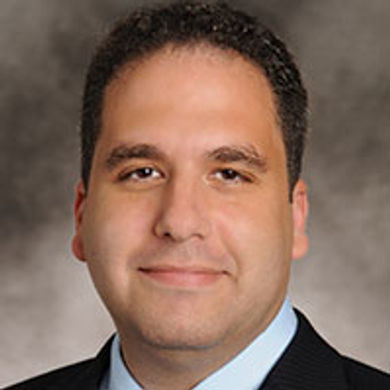 Issa Jouaneh
of American Express Meetings
& Events calls compliance
"a competitive advantage"
Issa Jouaneh
of American Express Meetings
& Events calls compliance
"a competitive advantage" To manage the kind of tracking that pharmaceutical companies are required to do, a robust technology solution is vital. Even taking into account Houston and Kim's warning not to get so caught up in the details that you can't see the forest for the trees, an integrated tool that manages everything and can report on anything is no longer a luxury; it's a necessity. That is one of the key lessons that can be learned from pharmaceutical companies' experience, says Issa Jouaneh.
Technology makes it possible to collect information in a clear and disciplined manner on questions such as on what a company is spending its meetings budget, which hotels and hotel companies it is using, how much it is spending with each one, whether preferred supplier agreements that offer better prices at specific hotel chains' properties are in place, and whether they are actually being used by the company's planners, he says. That, in turn, makes it both possible and easy to analyze the data and to determine if the company's meetings-approval process is actually being followed.
"Technology provides access and consistency in terms of the reporting of information and the ability to aggregate that information for analysis or for compliance purposes," Jouaneh says. "It really facilitates that process."
That said, not everyone feels the pharmaceutical industry is as far along on the technology front as it should be.
 Pat Schaumann, MPI's director
of healthcare meetings compliance,
says one lesson of pharma meetings
is that meetings that can't
be tracked can't be defended
Pat Schaumann, MPI's director
of healthcare meetings compliance,
says one lesson of pharma meetings
is that meetings that can't
be tracked can't be defended
"A lot of money and effort has been put into building the tools to be able to monitor reports, but nobody studied the industry itself," says Pat Schaumann, director of health-care meeting compliance for Meeting Professionals International (MPI). "They were good at what they did, [but] I think it was reactive to Open Payments, and there wasn't enough due diligence on sitting down and understanding the meaning of industry terms like category of spend, transfer of value."
Nor is Schaumann sanguine that pharma firms' technology is flexible enough to deal with the many countries that have or are creating some kind of compliance reporting requirement. This is not a minor point, she adds, as roughly one-third of the nearly 200 countries are doing this, and each one will have different rules, regulations, and reporting requirements. Which means pharmaceutical companies have to be able to pull out information about every foreign doctor who attends a meeting or conference and make a separate compliance report about each.
Beyond this, different countries' regulations can have an impact on the details of the meeting. For example, if a half-dozen attendees at a meeting of 200 medical professionals come from countries that ban them from accepting any meals, the planners must ensure they don't eat any food provided for other attendees. That could mean barring them from meals (and the attendant network and information-sharing opportunities), charging them for meals, or even reconsidering whether to have a speaker during meals.
On the other hand, Jouaneh says that "global oversight and in-country capabilities to execute the end-to-end process from sourcing to payments" is a key area in which planners in other industries can learn from the pharmaceutical industry and meeting planning companies that understand it.
He adds, "That governance structure needs to exists globally, but it's fundamental to have the in-country capabilities to be able to deliver on that end-to-end process, [while] understanding local culture and local business practices."
One area where pharmaceutical firms do excel in using technology effectively is the standard online request for proposal (RFP). While this tool has the ability to simplify and expedite the RFP process, many hotel suppliers have been frustrated when corporate planners send out so many they are practically spamming, and by the generic nature of many of the RFPs they receive.
"Pharmaceutical companies have done a very good job making very specific, customized questions for the venues to see if it can accommodate the requirements of that meeting," Wynne says. "I think other industries would do a much better job in providing more detailed information, and providing some historical reference to what their expectations are. A venue will ask, 'Where have you historically held this meeting?' They're asking that for a few reasons, not just for pricing. They truly want to put their best foot forward, and make sure that their property is a good match. If you previously held your meeting at, say, a DoubleTree [by Hilton] type of product and now you're looking to go to The Ritz-Carlton, that indicates, maybe that property is not the best fit, unless your budget has dramatically increased."
By sending out eRFPs that offer specific details about the event in question, who the attendees will be, and what special requirements there are for tracking attendees and monitoring spending -- for example, that no attendee can be offered room upgrades -- the pharmaceutical firms make it easier for hotels to determine if they are a good fit for the event, and let them more effectively shape their proposals to the clients' need.
5. Compliance, Ethical Conduct, and Perception
For pharmaceutical firms, compliance is a far more important issue than it is for most companies. After all, they are dealing not with internal procurement departments, but federal (and sometimes state) laws, as well as consequences that can range from bad publicity to stiff fines to corporate integrity agreements that can place even stricter and more costly reporting requirements upon them.
At the same time, it's worth noting that the pharmaceutical business is hardly the only industry under scrutiny. Most notable are the financial and insurance industries. While both are government regulated, neither has to deal with a formal structure like the Sunshine Act impacting its meetings and events specifically. But planners only have to think back to the fallout after insurance giant AIG was found to be hosting a five-star incentive trip days after receiving an $85 billion government bailout, or when the Department of Justice was accused of buying $16 muffins for meeting attendees on the taxpayers' dime.
"There are other industries that may not really fall within the realm of regulated industries, but that have been under a lot of scrutiny and focus in the past 10 or so years," Kim says. "That includes oil and gas, natural resources, mining, and extractive industries, which are becoming more and more regulated."
One result is that industry guidelines like the PhRMA Code -- which members of the Pharmaceutical Research and Manufacturers of America (PhRMA) trade group can be certified as adhering to -- are becoming more common, says Rabideau. At the same time, she adds, "my financial institution clients also have more informal meetings guidelines in place, because of the perception around some of the venue locations or gifts," as well as the cost of some meetings and events.
In some ways, Kim says, she thinks some regulations are a good thing if they "cause people to think twice before they act, in terms of propriety, the appearance of impropriety, compliance, and ethical conduct."
Of course, regulations like the Sunshine Act could strike a better balance between gathering information, and making sure it is meaningful. "Just because you have the high numbers attached to your name [in the Open Payments registry] doesn't mean that you're accepting bribes," she says. "It may mean that you're very active in research and development."
One key lesson to take away from pharmaceutical companies' experience with the Sunshine Act is to understand that the foundation of this type of compliance is "prevent, detect, respond," Kim says. "I get asked, how can a board member, a senior executive, really know what's going on," she adds. "They ask, 'How can I prevent that one guy from going rogue and doing something that he shouldn't be doing? That is not going to get solved by having this type of disclosure, how am I supposed to oversee that?'"
The answer, she says, is understanding that what "regulatory agencies are really looking for, at the end of the day, is a very robust program that shows the elements of prevent, detect, and respond."
She explains, "You try to prevent by having policies, procedures, communication, and training. You try to detect bad acts through risk assessments, monitoring, and testing, but also whistle blower activities. You need to make sure you have an open, transparent, and robust reporting line. You respond to the gaps and the issues that may be identified, you investigate any reports that come in through the whistleblower activity and you close out the issue -- you discipline people as necessary, and then all of this builds into your next year's policies, training, and program. What the regulators are saying is that at the end of the day, if you have a program like this, then whenever you have a bad act, it surfaces quickly. It doesn't sit around and fester. When bad acts fester, regulators like to use the phrase, 'a criminal corporate culture.'" This is why internal compliance with procurement policies is so important.
"I talk with my customers about compliance with a strategic meeting management program," Rabideau says. "If you put a meeting policy in place and you want meetings to be registered and sourced centrally, whether they are of 20 people or 20,000, do you have 50-percent or 80-percent compliance?
The first step in gaining that compliance, Kim says, "is getting support from senior leaders who really understand and recognize the importance of compliance. That tone at the top carries through in terms of resources and investment and people really following and understanding the message."
Who's Listening?
Whether the lessons of the pharmaceutical industry's meeting woes are being learned is more difficult to assess.
"I think that the evolving compliance and transparency and anti-corruption laws, guidelines, and codes are being paid more attention than they have in the past," says Schaumann. "I'm not sure whether it's Open Payments that brought that awareness or a combination of that and some other governmental changes on meetings, especially in the insurance side… [but] I hope that people are paying more attention in the meetings industry to transparency and compliance in all industries."
 A big benefit of collecting a lot of
meeting data is learning what you
are really spending, says Judy Johnson
of Rx Worldwide Meetings
A big benefit of collecting a lot of
meeting data is learning what you
are really spending, says Judy Johnson
of Rx Worldwide Meetings
Rx Worldwide Meetings' Johnson is not so sure. "Normally, pharma seems to start things and then other [regulated] industries, like banking and insurance, follow suit," she says. "Then, things ease up in other industries and they go back to the way it was."
That's not wise, Schaumann says. "Being able to defend however you track your meetings is becoming more important because it can be audited," she notes. "If there is any legal action or any other action they're going to want you to be able to easily access that meeting report. Something that I've learnt from Open Payments is that government entities can walk into a company at any time and say, 'I want to see your reports from June 2013,' and you have to pull it. We know, as planners, sometimes that information is not archived for five or seven years, and you can't put your hands on it, which would mean you're not able to defend it."
Questions or comments? Email [email protected]
This article appears in the February 2015 issue of Successful Meetings.