Studies show the more diverse a workplace is, the better it is for the company's bottom line. A Harvard Business School survey of 250 firms found that those with greater diversity among their employees made between 18 and 69 percent more in net income than those with a more homogenous team. Companies with the greatest ethnic, gender, sexual orientation, and racial diversity are 35 percent more likely to see financial returns above their respective national industry medians, according to research conducted by consultancy McKinsey & Company. What many of us have felt and known intuitively is becoming harder to ignore: diversity matters in business and that includes meetings and conferences.
"Diversity is the new normal," says David Jefferys, president and CEO of the Altus Agency and founder and executive director of the LGBT Meeting Professionals Association (LGBT MPA). The association has grown to 500 members and is having its first annual workshop and networking event this November. A strategic goal of LGBT MPA is to partner with organizations like the National Coalition of Black Meeting Planners and support their model of diversity and inclusion.
Although optimism is strong, there still are challenges to overcome. Some industry experts feel that given the current political climate, diversity may actually start to wane. The recent clash between white supremacists and counterprotesters in Charlottesville, VA, demonstrated that anti-diversity sentiments are hardly a thing of the past.
Here is a look at the state of diversity in the meetings and events industry.
Progress in Jeopardy?
"I fear that diversity might slip down the agenda. There is the risk of the rise of nationalism and anti-diversity organizations, as evidenced by the events in Charlottesville and the White House response," says Rohit Talwar, an internationally renowned futurist and CEO of U.K.--based Fast Future Research. "This may have a bearing on business diversity and hence meetings."
Martin Sirk, chief executive officer of the International Congress and Convention Association (ICCA), is more optimistic. "It would take far more than White House rhetoric to reverse course, especially when we see so many U.S. business and association leaders standing up publicly for diversity and inclusion," he says.
International associations strive to maintain diversity at their events, says Sirk, using a recent ICCA meeting as an example. The meeting of 150 delegates held in Fukuoka, Japan, attracted attendees from 35 countries, with less than 50 percent of those delegates based in Asia-Pacific. "Our Congress attracts delegates from between 65 and 75 countries, with no reduction in diversity expected," he adds.
Although many think of diversity as being driven by demographics encompassing, race, gender, sexuality, and age, to some it also encompasses informational differences.
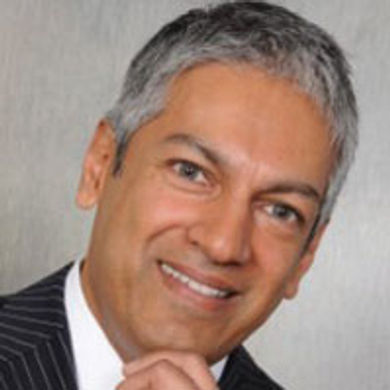 Sherrif Karamat of PCMA
"We have this notion that including people of different color or sexual orientation means there is diversity. To me, this is not enough," says Sherrif Karamat, CAE, chief operating officer of the Professional Convention Management Association (PCMA). "We can all look different but still be homogenous. There must be a diversity of ideas."
This year's Convening Leaders, PCMA's annual meeting, attracted delegates from more than 40 countries and featured a broad range of speakers. One that was especially powerful was Vusi Thembekwayo, a South African venture capitalist who has a mentorship program that seeks out and nurtures black entrepreneurs, particularly women.
"It's truly not a North American event anymore," explains Karamat. "It's a global event with a diverse integration of ideas." In 2018, PCMA will be introducing Zoom, a multi-channel approach to helping people of all backgrounds launch their careers.
"We don't just talk the talk at PCMA. We walk the talk," says Karamat. The association is headed by Deborah Sexton, a woman, and there are several other women and African Americans in leadership roles, he adds.
In response to the theory that diversity may start to wane as a result of the current political climate, Karamat says there will always be obstacles to overcome. "There will always be hiccups and irritants along the way. When building something, there is never a straight line," he says. "Having public discourse when things get unsettling is how we get our arms around it, leading to a just society."
Destinations Emphasize Inclusion
Jim McMichael, specialty markets manager for the Las Vegas Convention & Visitors Authority (LVCVA) for the past five years and a member of the LGBT MPA advisory board, can offer valuable advice. "We deal with all types of diverse groups because of the volume of business we do," he says.
It's not just Las Vegas that is reaching out to attract multicultural meetings. Richard Gray, managing director of the Greater Fort Lauderdale Convention and Visitors Bureau, is also on the advisory board of the LGBT MPA. "Greater Fort Lauderdale is a diverse oasis with arms wide open, offering an authentic welcome to visitors from all walks of life," says Gray. "For us as a destination, we don't care who you love, what your religious beliefs are, the color of your skin, or how you identify."
Philadelphia is another city with an emphasis on diversity. When Julie Coker Graham became president and CEO of the Philadelphia Convention & Visitors Bureau (PHLCVB) in 2015, she became the only African-American woman to lead a major convention and visitors bureau in the top 50 U.S. markets.
The PHLCVB has a business development division, PHL Diversity, led by Greg DeShields. While PHL Diversity began with a focus on only the African-American market, it soon expanded to include the Hispanic and Latino community, Native Americans, Asian Americans, and more recently, LGBT and women affinity groups. In fact, Philadelphia's pro-diversity efforts are among the factors that won it the 2018 NGLCC Conference.
NYC & Company, the official destination marketing organization for New York City, has a campaign in place called "New York City -- Welcoming the World" that spotlights the city's welcoming spirit.
Washington, D.C., recently became home to In3, an affordable co-working incubator focused on supporting entrepreneurs and businesses from underrepresented communities.
"We are thrilled to witness In3 come to life," said Mayor Muriel Bowser at In3's grand opening. "This initiative supports my administration's vision to make D.C. a more diverse and inclusive city as we expand our tech economy in ways that benefit every D.C. resident."
Representatives from these destinations agree that racial, gender, sexual, and cultural respect is imperative in order to have an effective meeting or conference. Successful meeting professionals know their attendees. If someone attending your meeting or conference is Muslim, do you have the right space set aside for prayer and can you direct them to the nearest mosque? Be sure to have prayer rugs and signage pointing to the east, the direction of Mecca, says Cynthia Lett,CPP, CTP, director and CEO of The Lett Group, a business etiquette and international training company. Are there halal food choices available? Understand that alcoholic beverages are forbidden by Islamic law, she says.
For your Jewish attendees, will there be kosher choices? Have you confirmed that there are not any national or religious holidays during the time of your meeting or conference? asks Lett. Eid Al-Fitr, celebrated at the end of Ramadan, Christmas, Yom Kippur, and Rosh Hashanah are holidays to keep in mind. "You don't want your attendees to have to choose between attending a meeting or conference or celebrating a religious holiday."
Questions or comments? Email [email protected]
This article appears in the September 2017 issue of Successful Meetings.
The Unbreakable Glass Ceiling
The meetings and hospitality industry is dominated by women, but peek into any corporate suite, and odds are you'll find a man. Why is it that many women who have aimed for the upper echelons of management have encountered roadblocks? In most cases, the glass ceiling -- the invisible barrier that blocks women from the top jobs -- is still in place. But according to industry insiders, things are slowly improving.
"It's true that meetings are a microcosm of business, but women make up nearly half of the U.S. workforce and about 40 percent of management. Therefore, it would stand to reason that you should have roughly the same percentage of women attending, regardless of who's in the White House. For meetings about meetings, like our World Education Congress, the female to male ratio is closer to 70--80 percent female and 20--30 percent male, which is a reflection of the composition of our industry," says Kristi Casey Sanders, CMP, CMM, DES, HMCC, director of the MPI Academy. "The topic is very much on our minds, and I think it will be something that continues to be a societal, and thus a meeting professionals', concern for many years to come. If anything, I think meeting professionals are focused on being more inclusive, more welcoming, and more accommodating of diverse voices, faces, and talents in their programming and meeting design."
MPI recently launched the Women in Leadership program, focusing on executive leadership skills. The four-hour course aims to examine why women are less likely to ascend to leadership positions than their male peers, what they can do about it, and to help them create individual action plans to overcome some of the common career obstacles.
Another resource that has been created to help women rise to the top is the Association for Women in Events (AWE), founded in 2015 by five professional women in the events sector, to create an inclusive place to find resources, mentorship, and career guidance and enhancement.
"This organization fills a need," says Carrie Abernathy, CMP, CEM, CSEP, cofounder of AWE. "There are a lot of resources out there, but it's difficult to find anything specifically geared towards women. AWE empowers a thirsty community; a community that should feel like home."
The New Voices
Not only is gender and racial diversity a focus of the meetings industry, but sexual orientation is as well. "We make sure all segments feel comfortable during our conference," says Rick Fowler, vice president of events and experience for the National Gay & Lesbian Chamber of Commerce (NGLCC), based in Washington, D.C. Its International Business & Leadership Conference attracted approximately 1,200 entrepreneurs, corporate decision makers, affiliate chamber leaders, and government officials from across the country and around the world to Caesars Palace in Las Vegas this August, a natural fit as Caesars Entertainment is an NGLCC corporate partner and has been for seven years.
"The location of our conference is very important, as we take a serious look at whether the destination we are considering has, or may have, either proposed anti-LGBT legislation or current anti-LGBT legislation," says Fowler. The conference will return to Las Vegas in 2020.
Inclusion and diversity training is imperative in the world of hospitality -- and for the NGLCC conference, it is a requirement. "We make certain all department heads are committed to full inclusion and that it trickles down to all," says Fowler. Front-desk personnel are a particular focus. "I want to ensure the first interaction of each attendee is seamless and there will not be any negative reaction to any type of diverse situation," he adds. "There simply cannot be any hesitation or awkwardness from the front-desk person toward any of our constituents."
There are specific issues meeting planners should keep in mind when dealing with transgender attendees. Given the recent spate of bathroom laws limiting users to their birth gender, this can be tricky. This is a personal concern for Alexis Dinyovszky, president of the board of directors for the Southern Comfort (SoCo) Conference Organization and member of the advisory committee of the LGBT MPA, who is a transgender woman.
"I live in North Carolina and have tried for a couple of years to get my name legally changed to no avail. I transitioned ten years ago but still travel on my male documents," notes Dinyovszky.
For transgender people, those who don't identify with the sex to which they are born, anytime they have to show ID can be nerve-wracking, including dealing with the TSA and checking into a hotel. Not only should hotel staff be prepared to deal with such situations professionally, they should also be well versed on the proper pronouns to use. "If there is a question, ask what pronoun the attendee would prefer," says Dinyovszky.
She adds that the onus is on the meeting planner to ensure the safety of the attendees. "I want to know that I can go to and fro without being put in unfriendly situations. Places like Fort Lauderdale, San Francisco, Seattle, and New York are extremely friendly. There are spots in my home state that I wouldn't go."
There is a great deal of ignorance about the transgender community, adds Dinyovszky. Rhetoric coming out of the White House doesn't help, she says. "The transgender community doesn't want any special consideration. They really want to just be treated like everyone else," she says.
Inclusion Trumps Diversity
"Diversity started as a buzzword. A meeting would include one black person, one Hispanic, and one LGBT attendee, and would be called diverse," says Mazda T. Miles, CMM, chief event strategist of Perfection Events, an event management and production firm based in Philadelphia. "It is more involved than that. They must actually be given a voice."
Miles is also the current board president of the National Association of Women Business Owners--Greater Philadelphia Chapter, one of the largest chapters of the association, and the first woman of color to lead the organization in 20 years.
"There is a lot more awareness, acceptance, and embracing of everyone's differences. But diversity without inclusion is hollow," she says. "Planners need to go outside of what is comfortable when planning their conferences. People do business with people they know, but this must stop. Break that mold and open your eyes to the wonderful things you will encounter that you wouldn't if you didn't expand your horizons."
Inclusion and diversity must be part of every aspect of the meeting, from inception to execution, Miles adds. "Not only does this include attendees but topics, speakers, food and beverage, and branding."
Jefferys agrees. "All people, no matter race, ethnicity, sexual orientation, sexual identity, and religion should have their opinions included," he says.
Antwone Stigall, CMP, DES, chief events officer of event production firm Antwone Stigall & Company, is also international chair of the Diversity & Inclusion Task Force for Meeting Professionals International (MPI). He points out that diversity is the "who" and the "what," while inclusion is the "how." "Diversity is being invited to the dance while inclusion is being asked to actually dance," he says.
Members of minority groups want to experience the same sense of belonging as anyone else. "I attend all the industry conferences and events and I still don't see myself. When people see others just like them, they feel accepted. We still have a long way to go," says Miles.
According to the McKinsey & Company report, women of color face the greatest barriers and experience the steepest drop-offs in seniority, despite having higher aspirations for serving in top leadership positions. The report also states that women of color get less access to opportunities and see their workplace as less fair and inclusive.
"I have my Certificate in Meeting Management and there wasn't any discussion about diversity. A mistake," says Miles. "There should be metrics around diversity to make it real. It is a thread that should be woven through the entire event."
That only makes sense, as the Pew Research Center predicts that by 2055 the United States will not have a single racial or ethnic majority. Much of this change has been driven by immigration. Nearly 59 million immigrants have arrived in the United States in the past 50 years, mostly from Latin America and Asia.
Similarly, the world's religious makeup will look a lot different by 2050. Over the next four decades, Christians will remain the largest religious group, but Islam will grow faster than any other major religion, Pew predicts. Plus, the world is aging. Population growth from 2010 to 2050 is projected to slow down and tilt to the oldest age groups, both globally and in the U.S. All of these factors must be kept in mind when planning effective meetings.
In order to increase diversity at meetings and conferences, practical, actionable, and achievable objectives must be set. "Be courageous and collect data about who is attending your meeting," says Stigall. "If out of 4,500, only 75 are black meeting professionals, there is an issue."
In addition to creating objectives, strategic conversations must take place, Stigall adds. "We are strategic when it comes to planning our events and must use these same strategies when it comes to overcoming the lack of diversity in our industry," he says. "African-Americans, Indian-Americans, Asian-Americans, and Latin-Americans are lacking at the meetings we plan and in leadership positions. Professionals of color are coordinators and assistants, not vice presidents or directors."
Inclusion Trumps Diversity
"Diversity started as a buzzword. A meeting would include one black person, one Hispanic, and one LGBT attendee, and would be called diverse," says Mazda T. Miles, CMM, chief event strategist of Perfection Events, an event management and production firm based in Philadelphia. "It is more involved than that. They must actually be given a voice."
.jpg?tr=w-390%2Cfo-auto "Mazda T. Miles,
Perfection Events") Mazda T. Miles,
Perfection Events
Mazda T. Miles,
Perfection EventsMiles is also the current board president of the National Association of Women Business Owners--Greater Philadelphia Chapter, one of the largest chapters of the association, and the first woman of color to lead the organization in 20 years.
"There is a lot more awareness, acceptance, and embracing of everyone's differences. But diversity without inclusion is hollow," she says. "Planners need to go outside of what is comfortable when planning their conferences. People do business with people they know, but this must stop. Break that mold and open your eyes to the wonderful things you will encounter that you wouldn't if you didn't expand your horizons."
Inclusion and diversity must be part of every aspect of the meeting, from inception to execution, Miles adds. "Not only does this include attendees but topics, speakers, food and beverage, and branding."
Jefferys agrees. "All people, no matter race, ethnicity, sexual orientation, sexual identity, and religion should have their opinions included," he says.
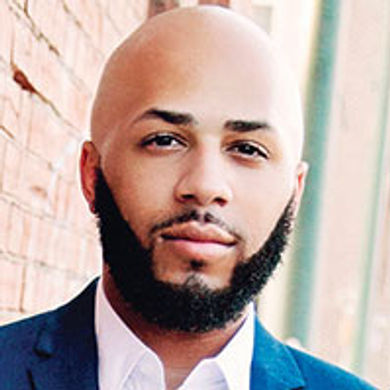 Antwone Stigall
of Antwone Stigall & Company
Antwone Stigall
of Antwone Stigall & CompanyAntwone Stigall, CMP, DES, chief events officer of event production firm Antwone Stigall & Company, is also international chair of the Diversity & Inclusion Task Force for Meeting Professionals International (MPI). He points out that diversity is the "who" and the "what," while inclusion is the "how." "Diversity is being invited to the dance while inclusion is being asked to actually dance," he says.
Members of minority groups want to experience the same sense of belonging as anyone else. "I attend all the industry conferences and events and I still don't see myself. When people see others just like them, they feel accepted. We still have a long way to go," says Miles.
According to the McKinsey & Company report, women of color face the greatest barriers and experience the steepest drop-offs in seniority, despite having higher aspirations for serving in top leadership positions. The report also states that women of color get less access to opportunities and see their workplace as less fair and inclusive.
"I have my Certificate in Meeting Management and there wasn't any discussion about diversity. A mistake," says Miles. "There should be metrics around diversity to make it real. It is a thread that should be woven through the entire event."
That only makes sense, as the Pew Research Center predicts that by 2055 the United States will not have a single racial or ethnic majority. Much of this change has been driven by immigration. Nearly 59 million immigrants have arrived in the United States in the past 50 years, mostly from Latin America and Asia.
Similarly, the world's religious makeup will look a lot different by 2050. Over the next four decades, Christians will remain the largest religious group, but Islam will grow faster than any other major religion, Pew predicts. Plus, the world is aging. Population growth from 2010 to 2050 is projected to slow down and tilt to the oldest age groups, both globally and in the U.S. All of these factors must be kept in mind when planning effective meetings.
In order to increase diversity at meetings and conferences, practical, actionable, and achievable objectives must be set. "Be courageous and collect data about who is attending your meeting," says Stigall. "If out of 4,500, only 75 are black meeting professionals, there is an issue."
In addition to creating objectives, strategic conversations must take place, Stigall adds. "We are strategic when it comes to planning our events and must use these same strategies when it comes to overcoming the lack of diversity in our industry," he says. "African-Americans, Indian-Americans, Asian-Americans, and Latin-Americans are lacking at the meetings we plan and in leadership positions. Professionals of color are coordinators and assistants, not vice presidents or directors."
The Unbreakable Glass Ceiling
The meetings and hospitality industry is dominated by women, but peek into any corporate suite, and odds are you'll find a man. Why is it that many women who have aimed for the upper echelons of management have encountered roadblocks? In most cases, the glass ceiling -- the invisible barrier that blocks women from the top jobs -- is still in place. But according to industry insiders, things are slowly improving.
"It's true that meetings are a microcosm of business, but women make up nearly half of the U.S. workforce and about 40 percent of management. Therefore, it would stand to reason that you should have roughly the same percentage of women attending, regardless of who's in the White House. For meetings about meetings, like our World Education Congress, the female to male ratio is closer to 70--80 percent female and 20--30 percent male, which is a reflection of the composition of our industry," says Kristi Casey Sanders, CMP, CMM, DES, HMCC, director of the MPI Academy. "The topic is very much on our minds, and I think it will be something that continues to be a societal, and thus a meeting professionals', concern for many years to come. If anything, I think meeting professionals are focused on being more inclusive, more welcoming, and more accommodating of diverse voices, faces, and talents in their programming and meeting design."
MPI recently launched the Women in Leadership program, focusing on executive leadership skills. The four-hour course aims to examine why women are less likely to ascend to leadership positions than their male peers, what they can do about it, and to help them create individual action plans to overcome some of the common career obstacles.
Another resource that has been created to help women rise to the top is the Association for Women in Events (AWE), founded in 2015 by five professional women in the events sector, to create an inclusive place to find resources, mentorship, and career guidance and enhancement.
"This organization fills a need," says Carrie Abernathy, CMP, CEM, CSEP, cofounder of AWE. "There are a lot of resources out there, but it's difficult to find anything specifically geared towards women. AWE empowers a thirsty community; a community that should feel like home."
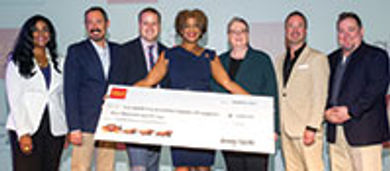 The National Gay & Lesbian
Chamber of Commerce, along
with Wells Fargo, awards
Chamber Development Grants to
deserving LGBT Chambers during
its International Business
& Leadership Conference
The National Gay & Lesbian
Chamber of Commerce, along
with Wells Fargo, awards
Chamber Development Grants to
deserving LGBT Chambers during
its International Business
& Leadership ConferenceThe New Voices
Not only is gender and racial diversity a focus of the meetings industry, but sexual orientation is as well. "We make sure all segments feel comfortable during our conference," says Rick Fowler, vice president of events and experience for the National Gay & Lesbian Chamber of Commerce (NGLCC), based in Washington, D.C. Its International Business & Leadership Conference attracted approximately 1,200 entrepreneurs, corporate decision makers, affiliate chamber leaders, and government officials from across the country and around the world to Caesars Palace in Las Vegas this August, a natural fit as Caesars Entertainment is an NGLCC corporate partner and has been for seven years.
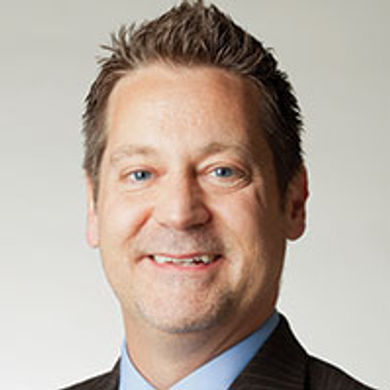 Rick Fowler of the National
Gay & Lesbian Chamber
of Commerce
Rick Fowler of the National
Gay & Lesbian Chamber
of Commerce"The location of our conference is very important, as we take a serious look at whether the destination we are considering has, or may have, either proposed anti-LGBT legislation or current anti-LGBT legislation," says Fowler. The conference will return to Las Vegas in 2020.
Inclusion and diversity training is imperative in the world of hospitality -- and for the NGLCC conference, it is a requirement. "We make certain all department heads are committed to full inclusion and that it trickles down to all," says Fowler. Front-desk personnel are a particular focus. "I want to ensure the first interaction of each attendee is seamless and there will not be any negative reaction to any type of diverse situation," he adds. "There simply cannot be any hesitation or awkwardness from the front-desk person toward any of our constituents."
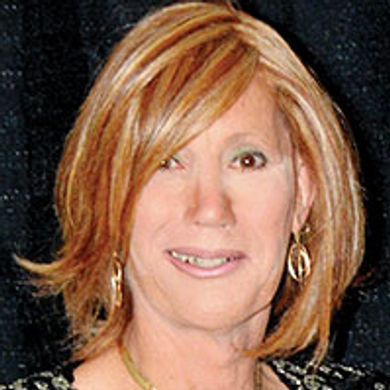 Alexis Dinyovszky,
advisory committee member,
LGBT MPA
Alexis Dinyovszky,
advisory committee member,
LGBT MPAThere are specific issues meeting planners should keep in mind when dealing with transgender attendees. Given the recent spate of bathroom laws limiting users to their birth gender, this can be tricky. This is a personal concern for Alexis Dinyovszky, president of the board of directors for the Southern Comfort (SoCo) Conference Organization and member of the advisory committee of the LGBT MPA, who is a transgender woman.
"I live in North Carolina and have tried for a couple of years to get my name legally changed to no avail. I transitioned ten years ago but still travel on my male documents," notes Dinyovszky.
For transgender people, those who don't identify with the sex to which they are born, anytime they have to show ID can be nerve-wracking, including dealing with the TSA and checking into a hotel. Not only should hotel staff be prepared to deal with such situations professionally, they should also be well versed on the proper pronouns to use. "If there is a question, ask what pronoun the attendee would prefer," says Dinyovszky.
She adds that the onus is on the meeting planner to ensure the safety of the attendees. "I want to know that I can go to and fro without being put in unfriendly situations. Places like Fort Lauderdale, San Francisco, Seattle, and New York are extremely friendly. There are spots in my home state that I wouldn't go."
There is a great deal of ignorance about the transgender community, adds Dinyovszky. Rhetoric coming out of the White House doesn't help, she says. "The transgender community doesn't want any special consideration. They really want to just be treated like everyone else," she says.
Destinations Emphasize Inclusion
Jim McMichael, specialty markets manager for the Las Vegas Convention & Visitors Authority (LVCVA) for the past five years and a member of the LGBT MPA advisory board, can offer valuable advice. "We deal with all types of diverse groups because of the volume of business we do," he says.
It's not just Las Vegas that is reaching out to attract multicultural meetings. Richard Gray, managing director of the Greater Fort Lauderdale Convention and Visitors Bureau, is also on the advisory board of the LGBT MPA. "Greater Fort Lauderdale is a diverse oasis with arms wide open, offering an authentic welcome to visitors from all walks of life," says Gray. "For us as a destination, we don't care who you love, what your religious beliefs are, the color of your skin, or how you identify."
Philadelphia is another city with an emphasis on diversity. When Julie Coker Graham became president and CEO of the Philadelphia Convention & Visitors Bureau (PHLCVB) in 2015, she became the only African-American woman to lead a major convention and visitors bureau in the top 50 U.S. markets.
The PHLCVB has a business development division, PHL Diversity, led by Greg DeShields. While PHL Diversity began with a focus on only the African-American market, it soon expanded to include the Hispanic and Latino community, Native Americans, Asian Americans, and more recently, LGBT and women affinity groups. In fact, Philadelphia's pro-diversity efforts are among the factors that won it the 2018 NGLCC Conference.
NYC & Company, the official destination marketing organization for New York City, has a campaign in place called "New York City -- Welcoming the World" that spotlights the city's welcoming spirit.
Washington, D.C., recently became home to In3, an affordable co-working incubator focused on supporting entrepreneurs and businesses from underrepresented communities.
"We are thrilled to witness In3 come to life," said Mayor Muriel Bowser at In3's grand opening. "This initiative supports my administration's vision to make D.C. a more diverse and inclusive city as we expand our tech economy in ways that benefit every D.C. resident."
Representatives from these destinations agree that racial, gender, sexual, and cultural respect is imperative in order to have an effective meeting or conference. Successful meeting professionals know their attendees. If someone attending your meeting or conference is Muslim, do you have the right space set aside for prayer and can you direct them to the nearest mosque? Be sure to have prayer rugs and signage pointing to the east, the direction of Mecca, says Cynthia Lett,CPP, CTP, director and CEO of The Lett Group, a business etiquette and international training company. Are there halal food choices available? Understand that alcoholic beverages are forbidden by Islamic law, she says.
For your Jewish attendees, will there be kosher choices? Have you confirmed that there are not any national or religious holidays during the time of your meeting or conference? asks Lett. Eid Al-Fitr, celebrated at the end of Ramadan, Christmas, Yom Kippur, and Rosh Hashanah are holidays to keep in mind. "You don't want your attendees to have to choose between attending a meeting or conference or celebrating a religious holiday."
Questions or comments? Email [email protected]
This article appears in the September 2017 issue of Successful Meetings.