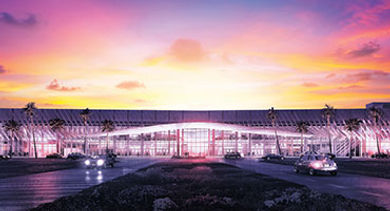
No convention center should be an island. More and more, new exhibition and conference space is being unveiled with walking-distance accessibility to hotels, restaurants, and other attractions. Whether you call it density or call it smart growth, it's being well-received and planners are happy to take advantage of the new offerings. There are tight convention packages all over the country. Some are long established, others are relatively new, and some are construction projects that are on the drawing board or currently under way.
Look no further than Miami Beach. City planners and convention authorities are aiming to both upgrade the Miami Beach Convention Center and make the surrounding area more appealing to locals. It makes sense. Slated to be completed in 2018, the $515 million renovation in Miami Beach will create a 1.4 million-square-foot, LEED-certified facility with 150,000 square feet of new space. Upon completion, the area just outside the center will complement the convention experience, with plans for a food pavilion, a public park with flexible-use lawn area, and a veteran's memorial, among other amenities aimed at mixed use by both locals and visitors.
What are some general benefits of a pedestrian-friendly convention district? Mark McMinn, vice president of sales for the Monterey County Convention & Visitors Bureau, in California, offers this list:
} Keep the networking going. Having attendees close to the meeting site fosters interaction.
} If more options for sanctioned networking are closer to the meeting site, that saves on transportation.
} In any setting, there is safety in numbers.
} It offers more and unusual ways to "brand" the district specifically for the meeting.
} Shopper and restaurant discounts are usually available for attendees -- just flash your badge.
} Proximity to a convention center allows you to create merchant awareness with signage that makes attendees feel welcome.
} Being "green" means there's little or no need for cars and buses, since there's plenty to do around the facility.
McMinn's list hits the nail on the head. Meeting planners and destination representatives around the country agree. But there are certain steps planners should take to get the full benefits of these burgeoning convention-center districts. Here we offer some best practices that wise planners will want to follow.
Let's Do Lunch
"We definitely seek out pedestrian-friendly venues," says Lori Smith, director of conventions and meetings for the Sacramento-based California Association of School Business Officials. "Most of our folks fly or drive to our meetings and just want to check into the hotel and not get back into a car or bus."
She points to several benefits of settings such as Long Beach, CA, where her group recently held its "Heart of School Business" meeting. They include discounts on restaurants, dine-around opportunities, and savings on transportation costs. But Smith zeroes in on the networking and interaction that Long Beach facilitates.
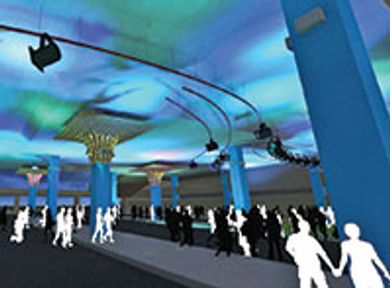 The Long Beach Convention
& Entertainment Center is
expanding its turnkey spaces
with The Cove
The Long Beach Convention
& Entertainment Center is
expanding its turnkey spaces
with The CoveHer 3,000 attendees come from all over the state and don't necessarily know one another. Many share like jobs in the business end of running schools: directors of transportation, payroll supervisors, child nutrition experts, and other specialties.
"They meet in the workshops and sometimes they continue conversations out in the halls," Smith says. "They're talking and comparing notes, and maybe they say, 'Hey, let's grab a bite to eat.' And they can walk right across the street from the convention center and do that."
She noticed people walking out of the Long Beach Convention & Entertainment Center and heading over to nearby restaurants such as Islands, P.F. Chang's, and Yardhouse. "When the restaurants are convenient and close by, it makes it so much easier to keep the interactions going," Smith says.
The Long Beach convention center is centrally located in the middle of the city's downtown waterfront entertainment district. There are more than 125 restaurants located within an eight-block area around the center. The proximity of the convention center to the city's downtown area, as well as palm-lined pedestrian promenades and pathways that are also bike-friendly, helped get the area onto the list of the "Most Walkable Neighborhoods in America," by WalkScore.com.
Being Green Saves Money
Paula Currie plans biannual meetings for the Association of California Water Agencies (ACWA). The organization is a statewide coalition of 430 public water agencies, whose members are responsible for 90 percent of water delivered to cities, farms, and businesses in the Golden State. Because of the nature of the organization, it's important for employees to lean toward being green when they participate in activities.
"We're all with public water agencies, so we're always concentrating on how we contribute to the environment at meetings," Currie says.
ACWA holds one meeting a year each in Northern and Southern California, and the NorCal conference is usually held in Monterey. You couldn't hold that giant ADA meeting here, but Monterey is the perfect size for the 2,700 room nights required for a four-day ACWA meeting. There's 70,000 square feet of flexible meeting space and about 20,000 square feet of exhibition space between the Monterey Conference Center, the Marriott Monterey, and the Portola Hotel & Spa.
"Monterey is beautiful, and it's a highly attended conference site, but one reason we keep going back is the convenience of being able to walk from hotels to meeting," Currie says.
It's also a destination that's demonstrating how a conference or convention center district can lead to enhancements beyond the event space itself. As the conference center completes a $60 million renovation, the Portola completed its own expansive renovation of its 379 guest rooms, atrium lobby, and more.
"Cabs cost money," Currie points out. "We can't meet in a city like San Francisco, for example, because of the costs of a lot of things, including transportation and parking. In Monterey, we sometimes have people at overflow properties, and we'll provide a shuttle. But that's nothing compared to some of the larger cities that aren't as pedestrian-friendly."
Small-town charm mixes with big-time celebrity in Monterey, which was the setting and the site of filming for the recent HBO series
Big Little Lies. You could walk from the Monterey Conference Center to Fisherman's Wharf and sit at the harbor-side café where characters played by Nicole Kidman and Reese Witherspoon were filmed gossiping about local goings-on in the whodunit series.
Questions or comments? Email [email protected]
This article appears in the June 2017 issue of Successful Meetings.That Welcome Feeling
With a nod to Cheers' slogan, "where everybody knows your name," planners utilizing the tight package that is the downtown St. Louis convention center district can take advantage of city signage that lets businesses and merchants know the name of visiting convention groups. It's a free service for groups that use at least 1,000 hotel rooms, or three to four hotels, says John Bettag, vice president of sales for Explore St. Louis.
"We'll put banners up on the streetlight poles," Bettag says. "We change the banners about 30 to 40 times a year. The top half has a regional logo. The other half is a welcome sign to the group that is in town."
In addition to the banners, a group also can get its name on signage and counter cards in restaurants and shops. A service like this is doable because the convention corridor is so dense -- with the convention center being so close (within six to eight blocks) of so many hotels, restaurants, and nightlife spots.
The America's Center Convention Complex in St. Louis -- which includes the Cervantes Convention Center, The Dome at America's Center, the St. Louis Executive Conference Center, and the Ferrara Theatre -- is walkable to and from the St. Louis Cardinals' Ballpark Village, the National Blues Museum, and the CityArchRiver project, home to the famed Gateway Arch and part of a recent $380 million "reimagination" of the park that runs alongside the Mississippi River.
The Subway Way
You'll take Manhattan? Go right ahead. New York City's Jacob K. Javits Center is in the midst of a $1.5 billion renovation that will add 1.2 million square feet of exhibit and meeting space. At the same time, the center is also becoming more accessible to the rest of the Big Apple.
The Javits Center has always been sort of off on its own on the West Side. But the center is more connected than ever now that the new No. 7 subway line extension has opened, along with the 34th Street--Hudson Yards Station. It's the first addition to the subway system in more than a quarter of a century.
The 1.5-mile extension of the No. 7 line connects the Javits Center to all parts of the city -- and means a trip from Times Square to the Javits Center takes just minutes.
"If you're staying in one of the Big Four hotels in midtown, just hop on the 7 line and you're at the Javits in five minutes," says Sean Altberger, assistant manager of communications for NYC & Company.
The area is also seeing the opening of new properties to meet the growing demand of the huge residential and entertainment project, Hudson Yards. The recently opened Four Points Manhattan Midtown West provides 148 rooms, comfy signature beds, as well as American cuisine and local beer on tap at its Hudson Bar Room.
Discounts Count
If convention attendees are out on their own in downtown Indianapolis, they can take advantage of local discounts with the "Show Us Your Badge" program. Visit Indy partnered on this with dozens of the 250 local restaurants and attractions that are walking distance from the Indiana Convention Center and Lucas Oil Stadium. Yes, a convention badge works to get the discounts at most participating locations, but there's also a printed and an electronic version of the list of discounts that can be presented for cash-off deals.
A recent example of a list of nearby partners on Visit Indy's Show Us Your Badge program included 57 places -- not just restaurants and attractions, but also performing arts centers, recreation outlets, shopping centers, and tours -- where groups get discounts.
"These are especially popular with attendees who come with families," says Lisa Wallace, Visit Indy's senior communications manager of conventions and meetings.
In particular, the Eiteljorg Museum, which is a downtown showcase for American Indian and Western Art, reports high participation in the $2-off coupons that are included in the Show Us Your Badge program, according to Wallace.
"Planners say this is very important and valuable," she says. "Not only does it save attendees money, it saves planners time because they don't have to research what's nearby and seek out discounts themselves."
The 250 restaurants that are within the city's convention center district are also easily walkable from a dozen hotels (and 4,700 rooms) that are connected to the convention center by enclosed skywalks. That means rain or shine, attendees can safely walk to meetings or after-hours networking or entertainment options.
Hotel Block
The American Dental Association's (ADA) annual meetings are gargantuan, ranging anywhere in size from 20,000 to 35,000 attendees. One of the biggest challenges in the planning of that event is wrangling the hotel blocks, says Catherine H. Mills, annual meeting director for the Chicago-based ADA. Depending on the city in which it is meeting, the ADA requires anywhere from 30 to 60 hotels to place all its people -- and the fewer hotels that need to be included the better. "Having the majority of hotel rooms as close as possible to the convention center is huge," Mills says. "It makes everything work better."
The ADA's 2016 fall annual meeting was in Denver. Mills was able to keep the number of hotels used down to 41 (for 21,600 attendees), and the majority of properties (including 10,000 rooms) are within walking distance of the Colorado Convention Center. Denver's downtown has all the big-brand properties -- Starwood, Hyatt, Marriott, Hilton, and a wide array of boutique options, such as The Crawford Hotel, the dual-branded AC Hotels by Marriott and Le Méridien, as well as the Kimpton Hotel Born, and Hotel Monaco.
When you've got 20,000-plus people at an event, you don't do whole-group dinners. But the ADA's welcome reception was at the convention center, which Mills planned for right after the conclusion of the last breakout sessions on the first day.
"We've got lots of auxiliary groups that hold their own dinners, so people have that to keep in mind," Mills says. "So, our party was from 4:30 p.m. to 6 p.m. -- after the sessions ended at 4:30. I know that a lot of people came to the opening party and stayed because they knew they didn't have to spend time getting in a bus, getting back to their rooms, and getting changed or ready to go out to other events."
Mills gives kudos to Visit Denver for helping her get bigger percentages than usual of room blocks in the downtown hotels. Otherwise, she says, the group might have easily had to spread out to 60 hotels and the convention could have been more challenging to manage.
San Juan Excitement
In between education sessions at a large-scale convention, grabbing a coffee or catching up on emails might be a typical way to pass the time. But in 2019, event attendees at the Puerto Rico Convention Center (PRCC), in San Juan, can check out a concert, pop in to a "day disco," or take a ride on a zip-line course. These are all part of the offerings being planned as part of the new District Live! entertainment complex under way.
The five-acre entertainment district, expected to open in early 2019, will feature a 170-room luxury hotel (with 6,000 square feet of meeting space), a 44,000-square-foot Plaza (offering the Caribbean's largest LED screen and outdoor presentation stages), an 18,000-square-foot "day and night disco," a 500-seat performance space, television and radio broadcast studios, and an eight-screen premium movie theater. All of it will be anchored by the 600,000-square-foot PRCC, providing visitors with an impressive array of attractions to complement the property's current event offerings (including a 39,500-square-foot ballroom, top-notch A/V, and original art displays). The convention center is also updating its public areas to include a bar-lounge area and branded-coffee cafe.
It is being developed under a partnership between Island Hospitality Partners and the Puerto Rico Convention Center District Authority. AEG Facilities, which took over the operations of the PRCC last year, will also be overseeing the management of District Live! If the all-encompassing attractions of the San Juan center sound similar to the hugely successful L.A. Live complex, that is likely because AEG is also the organization behind that entertainment district.
--Alex Palmer
Discounts Count
If convention attendees are out on their own in downtown Indianapolis, they can take advantage of local discounts with the "Show Us Your Badge" program. Visit Indy partnered on this with dozens of the 250 local restaurants and attractions that are walking distance from the Indiana Convention Center and Lucas Oil Stadium. Yes, a convention badge works to get the discounts at most participating locations, but there's also a printed and an electronic version of the list of discounts that can be presented for cash-off deals.
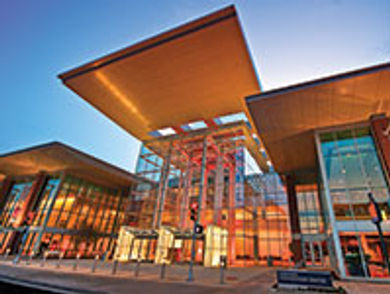 Visitors to the Indiana Convention
Center can take advantage of Visit
Indy's Show Us Your Badge program
offering discounts to local venues
Visitors to the Indiana Convention
Center can take advantage of Visit
Indy's Show Us Your Badge program
offering discounts to local venuesA recent example of a list of nearby partners on Visit Indy's Show Us Your Badge program included 57 places -- not just restaurants and attractions, but also performing arts centers, recreation outlets, shopping centers, and tours -- where groups get discounts.
"These are especially popular with attendees who come with families," says Lisa Wallace, Visit Indy's senior communications manager of conventions and meetings.
In particular, the Eiteljorg Museum, which is a downtown showcase for American Indian and Western Art, reports high participation in the $2-off coupons that are included in the Show Us Your Badge program, according to Wallace.
"Planners say this is very important and valuable," she says. "Not only does it save attendees money, it saves planners time because they don't have to research what's nearby and seek out discounts themselves."
The 250 restaurants that are within the city's convention center district are also easily walkable from a dozen hotels (and 4,700 rooms) that are connected to the convention center by enclosed skywalks. That means rain or shine, attendees can safely walk to meetings or after-hours networking or entertainment options.
Hotel Block
The American Dental Association's (ADA) annual meetings are gargantuan, ranging anywhere in size from 20,000 to 35,000 attendees. One of the biggest challenges in the planning of that event is wrangling the hotel blocks, says Catherine H. Mills, annual meeting director for the Chicago-based ADA. Depending on the city in which it is meeting, the ADA requires anywhere from 30 to 60 hotels to place all its people -- and the fewer hotels that need to be included the better. "Having the majority of hotel rooms as close as possible to the convention center is huge," Mills says. "It makes everything work better."
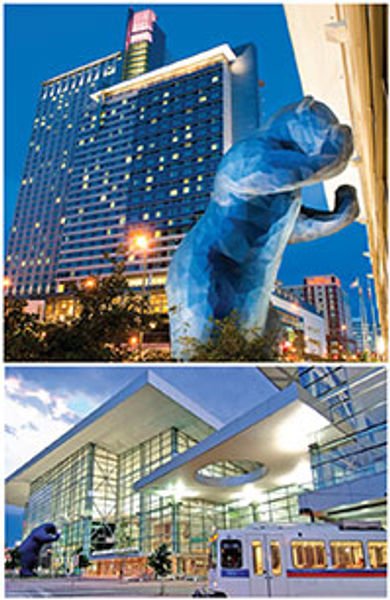 Within walking distance of the
Colorado Convention Center, Denver's
downtown district has big-brand
properties as well as a wide array
of boutique options, such as The
Crawford Hotel, the dual-branded
AC Hotels by Marriott
and Le Méridien, among others
Within walking distance of the
Colorado Convention Center, Denver's
downtown district has big-brand
properties as well as a wide array
of boutique options, such as The
Crawford Hotel, the dual-branded
AC Hotels by Marriott
and Le Méridien, among othersThe ADA's 2016 fall annual meeting was in Denver. Mills was able to keep the number of hotels used down to 41 (for 21,600 attendees), and the majority of properties (including 10,000 rooms) are within walking distance of the Colorado Convention Center. Denver's downtown has all the big-brand properties -- Starwood, Hyatt, Marriott, Hilton, and a wide array of boutique options, such as The Crawford Hotel, the dual-branded AC Hotels by Marriott and Le Méridien, as well as the Kimpton Hotel Born, and Hotel Monaco.
When you've got 20,000-plus people at an event, you don't do whole-group dinners. But the ADA's welcome reception was at the convention center, which Mills planned for right after the conclusion of the last breakout sessions on the first day.
"We've got lots of auxiliary groups that hold their own dinners, so people have that to keep in mind," Mills says. "So, our party was from 4:30 p.m. to 6 p.m. -- after the sessions ended at 4:30. I know that a lot of people came to the opening party and stayed because they knew they didn't have to spend time getting in a bus, getting back to their rooms, and getting changed or ready to go out to other events."
Mills gives kudos to Visit Denver for helping her get bigger percentages than usual of room blocks in the downtown hotels. Otherwise, she says, the group might have easily had to spread out to 60 hotels and the convention could have been more challenging to manage.
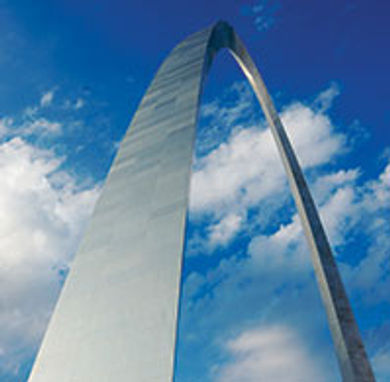 St. Louis' Cervantes Convention
Center is walking distance from
city icons like the Gateway Arch
St. Louis' Cervantes Convention
Center is walking distance from
city icons like the Gateway ArchThat Welcome Feeling
With a nod to Cheers' slogan, "where everybody knows your name," planners utilizing the tight package that is the downtown St. Louis convention center district can take advantage of city signage that lets businesses and merchants know the name of visiting convention groups. It's a free service for groups that use at least 1,000 hotel rooms, or three to four hotels, says John Bettag, vice president of sales for Explore St. Louis.
"We'll put banners up on the streetlight poles," Bettag says. "We change the banners about 30 to 40 times a year. The top half has a regional logo. The other half is a welcome sign to the group that is in town."
In addition to the banners, a group also can get its name on signage and counter cards in restaurants and shops. A service like this is doable because the convention corridor is so dense -- with the convention center being so close (within six to eight blocks) of so many hotels, restaurants, and nightlife spots.
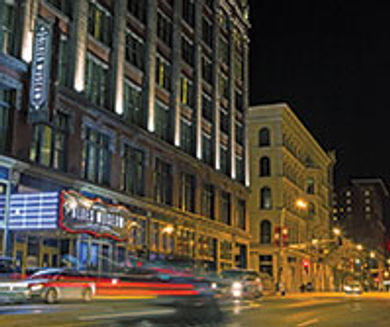 The National Blues Museum is the
latest St. Louis gem close to the
convention center
The National Blues Museum is the
latest St. Louis gem close to the
convention centerThe America's Center Convention Complex in St. Louis -- which includes the Cervantes Convention Center, The Dome at America's Center, the St. Louis Executive Conference Center, and the Ferrara Theatre -- is walkable to and from the St. Louis Cardinals' Ballpark Village, the National Blues Museum, and the CityArchRiver project, home to the famed Gateway Arch and part of a recent $380 million "reimagination" of the park that runs alongside the Mississippi River.
The Subway Way
You'll take Manhattan? Go right ahead. New York City's Jacob K. Javits Center is in the midst of a $1.5 billion renovation that will add 1.2 million square feet of exhibit and meeting space. At the same time, the center is also becoming more accessible to the rest of the Big Apple.
The Javits Center has always been sort of off on its own on the West Side. But the center is more connected than ever now that the new No. 7 subway line extension has opened, along with the 34th Street--Hudson Yards Station. It's the first addition to the subway system in more than a quarter of a century.
The 1.5-mile extension of the No. 7 line connects the Javits Center to all parts of the city -- and means a trip from Times Square to the Javits Center takes just minutes.
"If you're staying in one of the Big Four hotels in midtown, just hop on the 7 line and you're at the Javits in five minutes," says Sean Altberger, assistant manager of communications for NYC & Company.
The area is also seeing the opening of new properties to meet the growing demand of the huge residential and entertainment project, Hudson Yards. The recently opened Four Points Manhattan Midtown West provides 148 rooms, comfy signature beds, as well as American cuisine and local beer on tap at its Hudson Bar Room.
Theme Park Included
What if the convention center you choose for your next meeting has proximity to hotels and restaurants, is in an easily walkable package, and also happens to be connected to a pair of theme parks? No, not Disney, and not anywhere in the United States. Welcome to PortAventura.
Located just outside Barcelona, Spain, the PortAventura Convention Centre (which can accommodate groups of up to 3,000 attendees) shares grounds with a full-fledged theme park as well as the just-opened Ferrari Land.
Being able to walk from 2,000 rooms in five high-end hotels to the convention center as well as the theme parks is "fantastic," raves Sharon Hervey, event planner for the TUI Group in the United Kingdom and Ireland. The TUI Group held its "Shine On" event for senior management at PortAventura in October 2016.
All hotel guests get free admission to the theme park -- complete with roller coasters and water rides. TUI Group chose to hold a gala reception inside a private area inside the park. And groups can also take advantage of teambuilding exercises that send groups looking for clues all over the park.
Being Green Saves Money
Paula Currie plans biannual meetings for the Association of California Water Agencies (ACWA). The organization is a statewide coalition of 430 public water agencies, whose members are responsible for 90 percent of water delivered to cities, farms, and businesses in the Golden State. Because of the nature of the organization, it's important for employees to lean toward being green when they participate in activities.
"We're all with public water agencies, so we're always concentrating on how we contribute to the environment at meetings," Currie says.
ACWA holds one meeting a year each in Northern and Southern California, and the NorCal conference is usually held in Monterey. You couldn't hold that giant ADA meeting here, but Monterey is the perfect size for the 2,700 room nights required for a four-day ACWA meeting. There's 70,000 square feet of flexible meeting space and about 20,000 square feet of exhibition space between the Monterey Conference Center, the Marriott Monterey, and the Portola Hotel & Spa.
"Monterey is beautiful, and it's a highly attended conference site, but one reason we keep going back is the convenience of being able to walk from hotels to meeting," Currie says.
It's also a destination that's demonstrating how a conference or convention center district can lead to enhancements beyond the event space itself. As the conference center completes a $60 million renovation, the Portola completed its own expansive renovation of its 379 guest rooms, atrium lobby, and more.
"Cabs cost money," Currie points out. "We can't meet in a city like San Francisco, for example, because of the costs of a lot of things, including transportation and parking. In Monterey, we sometimes have people at overflow properties, and we'll provide a shuttle. But that's nothing compared to some of the larger cities that aren't as pedestrian-friendly."
Small-town charm mixes with big-time celebrity in Monterey, which was the setting and the site of filming for the recent HBO series Big Little Lies. You could walk from the Monterey Conference Center to Fisherman's Wharf and sit at the harbor-side café where characters played by Nicole Kidman and Reese Witherspoon were filmed gossiping about local goings-on in the whodunit series.
Questions or comments? Email [email protected]
This article appears in the June 2017 issue of Successful Meetings.