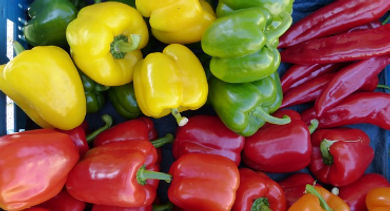
Fresh. Responsibly sourced. Local. Organic. Farm-to-table. These are nearly ubiquitous terms when it comes to describing many of today's leading restaurants and F&B programs, but what exactly defines farm-to-table cuisine today? And how can you use farm-to-table F&B programs to create a meeting experience your attendees won't soon forget?
"Farm-to-table is really, more broadly speaking, about local food," says Kevin S. Murphy, Ph.D, certified executive chef, and chair of the hospitality services department of the Rosen College of Hospitality Management at the University of Central Florida. "It depends on where you are -- for example, it's much easier to do farm-to-table in California than it might be in a place like Arkansas -- and the definitions of 'local' can vary greatly."
Some of the best farm-to-table experiences, Murphy notes, are those that happen right on the farm, but they can also take place at local farmers' markets and wineries. "Being right there, where the food is being produced or the wine grapes are being grown, or where the cheese is being made -- those actual visits, far and away, really bring home the meaning of the event that you're trying to do. But I know that's not always possible with budget constraints."
Farm-to-table cuisine is a movement that will only continue to grow, says Tracy Stuckrath, president and chief connecting officer of Thrive! Meetings & Events. Stuckrath, a meeting planner herself, specializes in consulting on F&B programs for events.
"People want to learn how to make their food, and the role that food plays will be a lot more important in the coming years," she says.
Redefining Farm-to-Table
"In the last five years, farm-to-table has been something that the general public has talked about a lot more, especially with the 'foodie' movement we have today," says Danielle Harrity, director of events at Blue Hill at Stone Barns. "But that phrase doesn't have a good, solid definition anymore, and many people are just using it to use it," she explains. "There are many restaurants and food providers that occasionally buy from a local farmer, but is that really farm-to-table? It means different things to different people these days."
Located in upstate New York in Pocantico Hills, Blue Hill at Stone Barns opened in 2004 as a working farm, educational center, and world-class restaurant headed by Co-Owner and Executive Chef Dan Barber, who is often credited as a leading figure in the farm-to-table movement. At the restaurant, Harrity and her events team work closely with clients to create custom meetings that take advantage of the venue's rustic setting and its locally sourced cuisine.
"Attendees will participate in real things taking place on the farm," Harrity explains. "We don't make up activities; they don't know in advance what they'll be doing because the activities are based on what's happening on the farm at the time. It might be gathering produce from the greenhouse, paying a visit to the dairy farm, or helping the chefs in the kitchen."
Natalie McDonald, president and founding creator of Create NYC, a New York-based pharmaceutical advertising agency, recently brought a group of 20 to Blue Hill at Stone Barns in July for an off-site strategy-planning meeting that also included visits to a chicken coop to collect fresh eggs, a potato garden to pick potatoes and talk to the farmers, and the on-site kitchen to work on creating dishes with the chefs.
"Those activities really balanced out our day, and drove home the idea of learning how to balance our professional life beyond the typical work/life goals that we have," says McDonald. "Our purpose for the day melded nicely with the venue and their philosophy. Our day was focused on thriving and work/life balance and that kind of environment is conducive to it."
The concept of farm-to-table, McDonald adds, also helped convey these themes. "So many times in life you don't know where your food comes from and you're in such a hurry, you don't know the work that goes into it. But being able to see all of that in action was a great complement to what we were trying to achieve in our strategy and goal planning."
Not only that, but getting to see and participate in activities on the farm kept attendees engaged. "Our guests were extremely engaged throughout the meeting," she says. "Nothing was too deep, but it was really fun and engaging. The potato picking was optional, for example, but most of our guests got down into the dirt and started picking them."
Emphasizing Sustainability
Another aspect of a true farm-to-table experience has a lot to do with sustainability and supporting the local community. At Fair Oaks Farms in Fair Oaks, IN, the entire operation is dedicated to sustainable farming and the education of visitors and groups.
"This farm is all about education and transparency of large-scale food production," explains Brent Brashier, Farmhouse Restaurant general manager at Fair Oaks Farms. "In the year 2050, there will be 10 billion people on Earth; right now, we've only got about 1 percent of the population producing food for the rest of the 99 percent. We have to look at how we're producing food to feed that many people, and to find a way to do that sustainably."At Fair Oaks, sustainability is a major focus. "We want to show people that you can do large-scale food production and do it sustainably," says Brashier.
In July, Fair Oaks also opened a brand-new Farmhouse Restaurant and Conference Center with a banquet facility that can accommodate up to 280, and a restaurant that can hold up to 300. One of the first groups to meet in the new facility was, fittingly, the 85-person board of directors of U.S. Dairy.
The pre-board outing for 85 dairy farmers from across the country was a huge hit with attendees, says Barbara O'Brien, president of the innovation center for U.S. Dairy. "It was a beautiful fit for our group," she says.
O'Brien's group began their day with a meeting in the new conference center, speaking to Mike and Sue McCloskey, the owners of Fair Oaks Farms. "They introduced themselves to us and talked about the whole business, and their philosophies about animal care and sustainability, and because the audience was dairy farmers, there was a huge connection there," she says. Afterward, the group was split into two, each group visiting both the dairy and pig farms on site and eventually making their ways back to the conference center for a lunch spread of fresh vegetables and greens, a carving station, and desserts that included ice cream (made fresh from the farm's own milk).
Having that entire farm-to-table experience, she adds, made a big impact on her attendees. "My observations, over the years, are that F&B can make or break a meeting -- particularly with a board. It makes a lasting impression," says O'Brien. "Farm-to-table is still an emerging trend that different restaurants, hotels, and conference centers are able to accommodate at varying levels; not everyone can deliver on that kind of experience. But it's important to see how it's executed, and this experience really delivered on it."
Meet the Farmer
Having the opportunity to meet the farmer behind your meal's components is another way to develop a farm-to-table group experience. At the Four Seasons Westlake Village in Westlake Village, CA, a brand-new Heirloom Farming Extraordinary Experience Package is giving groups an opportunity to be a part of the entire farm-to-table process. It includes a visit to Philen Pharms, one of the few organic heirloom farms in the country, where they meet with farmer and proprietor Tim Philen, who is more than eager to share his passion for organic farming with visitors.
"The folks from the Four Seasons stopped by and asked me to do something beyond the amenity baskets that we do for them," Philen explains. "We needed to do something where groups can come and really understand how important it is to know where your food is coming from and how it's harvested. When you bite into one of our fruits and you taste the incredible flavor that it has, it's a wonderful thing."
The hotel is also home to the California Health and Longevity Institute (CHLI), which promotes well-being for guests and locals alike. The institute runs its own Wellness Kitchen on the property where groups of up to 18 may participate in a hands-on cooking class with fresh, local ingredients as part of the Heirloom Farming Extraordinary Experience package.
CHLI's director of nutrition, Paulette Lambert, says that wellness is just as important an aspect of farm-to-table cuisine as is flavor, sustainability, and regional culture. "Meeting organizations are sometimes a little afraid to go the wellness route," she says. "But wellness and indulgence can come in the same sentence. You can have phenomenal food and not realize that it's wellness oriented."
Local Motion
Farm-to-table F&B is also about engaging the local community and infusing the local culture, something that Wild Dunes Resort in Isle of Palms, SC, demonstrates with one of its newest culinary group experiences. In June, the 1,600-acre oceanfront resort formed a partnership with the Lee Brothers, two James Beard Award-winning cookbook authors and regional Lowcountry cooking experts based in Charleston, SC. Their cookbooks and their article contributions to Bon Appetit and Travel + Leisure focus on using local Charleston ingredients to create authentic, hyper-local meals that feature favorites such as artichoke relish, shrimp and grits, oyster pie, chicken purloo, and Huguenot torte.
Together, Matt and Ted Lee are offering special group F&B programs at Wild Dunes that bring that unique local Lowcountry cuisine to life. Programs include demonstration cooking classes, an oyster roast experience hosted by the two brothers, or a special custom dinner.
In June, Brian Ruder, president of New York-based Skylight Counselors, organized an annual retreat for 11 fellow members of the World Presidents Organization at Wild Dunes where they enjoyed a custom dinner hosted and prepared by the Lee Brothers.
"Wherever we go, we try to have something that particularly reflects the place we're going to," says Ruder. "We always want some local feel to what we see, do, or eat."
The dinner with the Lee Brothers, says Ruder, was no exception. "It was a hit. Having them explain what their business is all about, and what the food is all about, and how they've sort of reinvented Southern Lowcountry cooking with their own spin was wonderful," he says. "We had a great conversation with them and it really enhanced the meal to know what they were serving us, and how the evolved and morphed it. Each course had is own special story."
Although Ruder's group didn't participate in the preparation of the meal or in the gathering of ingredients needed for the dinner, Jeffery Payne, director of event management for Wild Dunes, says that all Lee Brothers' experiences can be tailored for each group. "We're willing to completely customize this entire experience -- it's all about having an authentic experience."
Payne says that while there are still many people who are interested in where their food is coming from, he sees the bigger trend in farm-to-table being about the story behind the food. "The story behind particular parts of what you're eating is what matters. People want to know that it's not only local but also know where it's from, and they want to know it's real, and not just a trick of menu writing." Questions or comments? Email [email protected]
This article appears in the September 2014 issue of Successful Meetings.
Finding the Source
Having a hands-on culinary experience takes on a whole new meaning at 77-suite Nita Lake Lodge in Whistler, British Columbia. There, during the spring and fall, Aura Restaurant Chef Paul Moran, a fourth-generation forager, takes small groups of up to 25 for a morning excursion in the surrounding Whistler Valley, where he teaches them how to search safely for edible plants, shoots, lichens, and mushrooms. Later that day, the groups join the chef for a five-course meal at Aura that is prepared using those same ingredients.
"Foraging is a really healthy activity," says Moran. "When we do the foraging classes, you're going out into the wild, and picking the food you're going to be eating for dinner. It gets people thinking, and takes them back to the times when people used to forage. Over the course of that three-hour walk, you learn a lot, and when you have your meal, you're able to see that progression of how those ingredients get used, what their benefits are, and enjoy the evening."
Michele Davidson, who owns Modern Celebrant, a B.C.-based ceremony specialty company, joined in one of these foraging experiences. She says that even though she considers herself an "avid forest walker and hiker" it led her to see her surroundings differently. "It was so fun and practical to return home with samples of nature's vast abundance for my friends and family; I'm hooked."
Nita Lake Lodge's surrounding valley is home to a bounty of wild ingredients, from the sorrel used for a signature spring sorbet to porcini mushrooms that Moran roasts and combines with local cheese and breadcrumbs for a signature fall entrée.
"Farm-to-table is a great concept, but perhaps, today, it's being taken advantage of by some restaurants," says Moran. "Some of the ingredients they might get from local farms only makes up 10 percent of what's being served on the menu. That's not the case at our restaurant, and especially not when we incorporate these foraging classes." He believes that the entire process is an especially important -- and healthy -- one for groups. "This isn't just an activity; it's also a meal. It opens your mind up to a different world and it's really stimulating."
Meet the Farmer
Having the opportunity to meet the farmer behind your meal's components is another way to develop a farm-to-table group experience. At the Four Seasons Westlake Village in Westlake Village, CA, a brand-new Heirloom Farming Extraordinary Experience Package is giving groups an opportunity to be a part of the entire farm-to-table process. It includes a visit to Philen Pharms, one of the few organic heirloom farms in the country, where they meet with farmer and proprietor Tim Philen, who is more than eager to share his passion for organic farming with visitors.
"The folks from the Four Seasons stopped by and asked me to do something beyond the amenity baskets that we do for them," Philen explains. "We needed to do something where groups can come and really understand how important it is to know where your food is coming from and how it's harvested. When you bite into one of our fruits and you taste the incredible flavor that it has, it's a wonderful thing."
The hotel is also home to the California Health and Longevity Institute (CHLI), which promotes well-being for guests and locals alike. The institute runs its own Wellness Kitchen on the property where groups of up to 18 may participate in a hands-on cooking class with fresh, local ingredients as part of the Heirloom Farming Extraordinary Experience package.
CHLI's director of nutrition, Paulette Lambert, says that wellness is just as important an aspect of farm-to-table cuisine as is flavor, sustainability, and regional culture. "Meeting organizations are sometimes a little afraid to go the wellness route," she says. "But wellness and indulgence can come in the same sentence. You can have phenomenal food and not realize that it's wellness oriented."
Local Motion
Farm-to-table F&B is also about engaging the local community and infusing the local culture, something that Wild Dunes Resort in Isle of Palms, SC, demonstrates with one of its newest culinary group experiences. In June, the 1,600-acre oceanfront resort formed a partnership with the Lee Brothers, two James Beard Award-winning cookbook authors and regional Lowcountry cooking experts based in Charleston, SC. Their cookbooks and their article contributions to Bon Appetit and Travel + Leisure focus on using local Charleston ingredients to create authentic, hyper-local meals that feature favorites such as artichoke relish, shrimp and grits, oyster pie, chicken purloo, and Huguenot torte.
Together, Matt and Ted Lee are offering special group F&B programs at Wild Dunes that bring that unique local Lowcountry cuisine to life. Programs include demonstration cooking classes, an oyster roast experience hosted by the two brothers, or a special custom dinner.
In June, Brian Ruder, president of New York-based Skylight Counselors, organized an annual retreat for 11 fellow members of the World Presidents Organization at Wild Dunes where they enjoyed a custom dinner hosted and prepared by the Lee Brothers.
"Wherever we go, we try to have something that particularly reflects the place we're going to," says Ruder. "We always want some local feel to what we see, do, or eat."
The dinner with the Lee Brothers, says Ruder, was no exception. "It was a hit. Having them explain what their business is all about, and what the food is all about, and how they've sort of reinvented Southern Lowcountry cooking with their own spin was wonderful," he says. "We had a great conversation with them and it really enhanced the meal to know what they were serving us, and how the evolved and morphed it. Each course had is own special story."
Although Ruder's group didn't participate in the preparation of the meal or in the gathering of ingredients needed for the dinner, Jeffery Payne, director of event management for Wild Dunes, says that all Lee Brothers' experiences can be tailored for each group. "We're willing to completely customize this entire experience -- it's all about having an authentic experience."
Payne says that while there are still many people who are interested in where their food is coming from, he sees the bigger trend in farm-to-table being about the story behind the food. "The story behind particular parts of what you're eating is what matters. People want to know that it's not only local but also know where it's from, and they want to know it's real, and not just a trick of menu writing." Questions or comments? Email [email protected]
This article appears in the September 2014 issue of Successful Meetings.