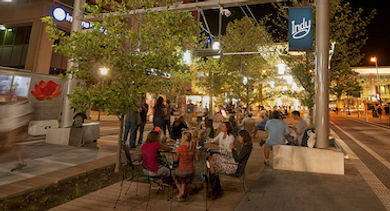
Fort Wayne, IN, has enjoyed a steady influx of visitors since the city expanded its Grand Wayne Convention Center in 2005. The extension has not only made the venue a more desirable destination for outside meeting planners looking for an affordable option that can accommodate a sizable group, but has helped stoke development in the area -- e.g., the building of new retail, restaurants, and riverfront entertainment options -- which has helped lure locals to downtown in the process.
To keep this momentum going, talk began a few years ago about expanding the convention center even further. The city reached out to Hunden Strategic Partners (HSP), a Chicago-based real estate consultancy that analyzes whether such large-scale building projects make sense, taking into account the flow of people, available services and amenities, market conditions, and competition.
But HSP came back with a surprising response: not so fast. "We told them that more space won't necessarily help them unless there is something else that moves the needle," says Rob Hunden, owner of HSP.
Instead, the consultants recommended that the city invest in a proposed arena adjacent to the convention center, which would bring more people (and especially more locals) into downtown during the weekends and evenings, when business from the center would be quieter.
"Having that arena/convention center package together starts to bring consistent, 12-months-a-year activity to downtown," says Hunden. "All these things right in the same block turn the tide for the local community to say, 'We want to live downtown, work downtown, and move our company downtown.'"
Hunden characterizes a city that creates this synergy between visiting meeting groups and locals, merchants and developers, as an engine firing on all cylinders, driving steady, accelerating long-term growth.
It's an outlook that is being adopted by cities with increasing frequency. Convention centers and the meeting groups they attract are playing a vital role in the development and, in many cases, the rebirth of downtown areas. But as the Fort Wayne example shows, they are most effective when seen as one piece of a larger puzzle. In return, meeting planners are finding great benefits in convention facilities that are integrated with the greater downtown, which allow planners and attendees to take advantage of all the city has to offer.
Piece of a Larger Puzzle
Increasingly, convention centers are being expanded, particularly in downtown areas, with the goal of making them not isolated destinations in themselves, but as one more attraction among many. Texas, for example, demonstrates how cities are creating symbiotic "convention districts."
San Antonio is in the midst of the $325-million expansion of its Henry B. Gonzalez Convention Center from 1.3 million square feet to 1.65 million square feet -- the largest capital project in the city's history -- slated for completion in 2016. But while it is adding major meeting space, the city is also ensuring that the center is adding to the surrounding downtown area, creating outdoor meeting space adjacent to the famous River Walk and developing the neighboring Hemisfair Park. The park's additions, set to debut in 2018, will place more than eight football fields' worth of green space into downtown San Antonio, inaugurating a central gathering place open to public and private events alike.
Meanwhile, Houston has developed the area surrounding its George R. Brown Convention Center into a vibrant multi-use Convention District. Last fall, it completed its Green Street park area surrounded by retail, dining, and entertainment shops that draw locals and visitors alike. A new 1,000-room Marriott Marquis is expected to join the hotel inventory in 2016.
"It's a whole campus environment where a group can put up banners and association logos," says John Solis, vice president of sales for the Greater Houston Convention & Visitors Bureau. "It's really opening things up and turning downtown into something like a resort destination."
As Austin's reputation as a top-notch meeting city has grown, so has the hotel inventory adjacent to the Austin Convention Center (ACC), located near the waterfront of Lady Bird Lake. This past February saw the opening of the JW Marriott Austin next to the convention center, adding another 1,000 guest rooms (and becoming the city's largest hotel). Three additional properties are currently under construction in the downtown area, adding more than 800 rooms in the next couple years.
"Over the last few years we've seen that the market needs more rooms," says Joe Pagone, general manager of the Hotel Van Zandt, which will open in July with 319 guest rooms and 12,000 square feet of meeting space one block from the ACC. It sits in the city's historic Rainey Street district, once one of Austin's less attractive neighborhoods. But thanks to the ingenuity of Austin natives, who converted the area's dilapidated bungalow homes into hip restaurants and shops, the area is now one of the hottest in the city. "Everyone wants to hold their event on Rainey Street now," adds Pagone.
"Everything is really walkable and safe," adds Cindy Y. Lo, president and owner of Austin-based DMC Red Velvet Events, which often partners with the convention center to provide visiting groups with "true local references for best places to eat and best venues for off-site parties." Lo says she "loves that we can easily mix water and land activities for our groups that are willing to be a bit more adventurous."
Lo gives the example of a recent event for an international group of 1,000 attendees meeting at the ACC. She helped the group arrange a wide range of activities, including a tour of Austin by kayak, a shopping excursion, and an exploration of the city's history museums.
"A downtown location makes it easier and less costly [for attendees to enjoy the city], as it can reduce the requirements for transportation that so often accompanies off-site activities," says Geoff Donaghy, president of the International Association of Convention Centres (AIPC), as well as CEO of International Convention Centre Sydney and director of convention centers for AEG Ogden.
This marks a major shift from a couple decades ago, when the belief was that convention centers could create this kind of energy and economic boost within their own walls. "The realization has been clear that convention centers are episodic -- they don't have people coming in and out all the time," says HSP's Hunden. "They are one piece of the puzzle that has to be integrated with the other pieces."
Hunden points to Indianapolis, which he worked with as the city was devising its convention package in the 1990s, helping pioneer this multi-pronged approach. Thanks to the city's success in attracting groups, it continues to make investments to ensure the area continues to "fire on all cylinders." The city spent $275 million on a vast expansion of the convention center in 2011 along with the construction of the 1,005-room JW Marriott headquarter hotel. More recently an investment of $12 million redeveloped Georgia Street, which runs alongside the center. It's now a pedestrian-friendly European-style promenade with outdoor event space, food trucks, a bike share program, and easy access to a wide range of shopping, hotel, and dining venues.
Local Color
Connecting with the surrounding city provides substantial benefits to meeting groups. By ensuring that visiting attendees interact with local businesses and attractions outside the convention center, planners not only make the event and destination more memorable, but further fuel the local economy.
"Having a good number of locals who mix in with convention goers actually helps with welcoming those out-of-towners into the city," says Eric Blanc, CMP, director of sales, marketing, and convention services at the Tampa Convention Center.
Located in downtown Tampa on the waterfront of the bay, the 600,000-square-foot center serves large-scale events, coordinating with Visit Tampa Bay, as well as the area's hoteliers. Its expansive outdoor space allows for waterfront events for up to 10,000 attendees, and is also the site of public events such as concerts and fireworks on holidays.
"It's an open event and if we have conventions in the house, the groups can attend for free," says Blanc. "A lot of what we do is geared to the locals and offered as an amenity to our customers who are staying here."
He maintains that this blend of locals and visitors helps create a more memorable event for meeting groups, and that the convention center has embraced the idea of also being an "entertainment center."
These are some of the goals for the Puerto Rico Convention Center. Though it is touted as the most technologically advanced convention center in the Caribbean, with easy access from ports and airports, the city is working to further integrate it into the surrounding city. Plans are underway to link it to Old San Juan with a boardwalk allowing pedestrians and cyclists -- both locals and visiting attendees -- to easily move between the waterfront convention district and historic area.
In addition to this multi-use waterfront development, the convention center district also just added the 126-room Hyatt House San Juan and early 2016 will see the opening of the 149-room Hyatt Place San Juan. As HSP's Hunden explains, creating this variety of "demand generators," offering attractions to a wide range of people at all times of the day or night -- beyond the convention center itself -- is what will help keep the convention district a powerful, well-oiled engine.
"There are cities large and small that are investing in their downtown core, entertainment, restaurants, hotels, and convention centers," says Hunden. "Until then, those cities trying to figure out their next move, they have to figure out what are going to be the pieces of the puzzle that they need to fill in in order to stay competitive."
Questions or comments? Email [email protected]
This article appears in the June 2015 issue of Successful Meetings.
Business Connection
Connection to downtown business can offer meeting groups value as well. This is the approach being taken by the Mayo Civic Center in Rochester, MN, which recently broke ground on its $85-million expansion, which will double the size of the current facility (home of the Mayo Clinic and Destination Medical) and offer expansive meeting space once it opens in 2017. It connects to almost 2,100 hotel rooms (including the new 270-room Hilton), the popular Peace Plaza, and a wealth of shops via climate-controlled skyways, and is directly connected to cultural centers like the Rochester Civic Theatre and Rochester Art Center. But its business connections are some of its greatest benefits.
According to Brad Jones, executive director of the Rochester Convention & Visitors Bureau, the center's connection to the Mayo Clinic means that it "is able to provide an innovative environment with ongoing development for visitors -- including resources like the Mayo Clinic Center for Innovation, Mayo Clinic Proton Beam Therapy Program, and the Mayo Clinic Multidisciplinary Simulation Center."
He adds that the Mayo Civic Center further integrates with the local economy by inviting Rochester businesses to bid on catering and services for meetings and events.
In this approach, the civic center is taking a page from the new Cleveland Convention Center, located in the middle of that city's downtown, but also adjacent to the Global Center for Health Innovation -- a four-floor exhibition on the future of healthcare and a major attraction for groups involved in that industry.
"[Convention] centers are obviously big economic generators for their respective cities, but they go well beyond that. They provide the destination with a capability to host events that bring knowledge, business activity, publicity, and even investment to a city, and when these correspond to local economic and community development priorities, they become big supporters of public policy," says AIPC's Donaghy. "This all helps to generate the kind of local appreciation and support that in turn makes the destination more attractive to organizers and delegates, so in the end everyone benefits."
Gene Sanders, senior vice president of trade shows and conferences of the trade association Society of the Plastics Industry (SPI), has found convention centers to be key facilitators in connecting with the wider business community in the area. In April, the organization held its annual trade show in Orlando, at the Orange County Convention Center, with more than 65,000 attendees. They worked to bring local organizations into the event to see what was new in the industry.
"We had a multitude of events that we hosted or got sponsors for, including a 3D-printing demonstration, an early morning event with Walmart that drew 700 people, and a Future Leaders in Plastics event," says Sanders.
They also showcased a number of innovations in recycling plastics, creating a "Zero Waste Zone," and even held a fashion show where models wore stylish outfits constructed from recycled plastics. Students from the Orlando area were invited to join and learn about these initiatives.
"The goal is to expand the experience people have from the tradeshow floor and vendor meetings," says Sanders. "From the community, we invited in all the dignitaries, mayor, senator, and other people to show what our industry means to who there are."
On a smaller scale, The Gaillard Center, a convention and performance center opening in Charleston, SC, later this year, will include a 16,000-square-foot exhibition hall, a 7,300-square-foot lawn, and an 1,800-seat performance hall that will play host to the Charleston Symphony Orchestra and the city's famed Spoleto Festival. The central location of the Gaillard is the focus of the venue's identity -- it bills itself as "the beating heart and thrumming soul" of the city, "the epicenter of inspiration, imagination, and collaboration," and "the hub for driving business."
The Gaillard will be about a five-minute walk from many of the city's hotels, including the 155-room Dewberry Hotel, which is slated to open later this year, as well as shopping areas and attractions.
"It makes for a very central location with an option for many to not depend on cars or buses," says the Gaillard's executive director, Doerte McManus. "It allows business to pitch new business and conduct existing business where Charleston is its most beautiful."
The public/private, $142-million center will be the largest construction project in the city's history and McManus expects it to generate $39 million annually. Larger conventions than were manageable in the city are now scheduled through 2018.
Keeping it Close
Close proximity -- very close -- is key for making this work. Hunden recommends to his clients that hotels be adjacent to the convention center if not actually connected. If the "demand generators" (his term for each attraction, hotel, and meeting venue) are placed just two to three blocks apart, the flow of people will slow to a trickle and the city will end up with "a bunch of dead zones."
Hunden points to cities like Chicago and Memphis as suffering from this situation. The distance between their convention centers and the wider downtown attractions forces planners to figure out how to transport attendees between the various components of an event, and that means "losing business to much easier, walkable environments that are in many cases cheaper too," according to Hunden.
He cites Nashville as a destination that has successfully brought its downtown demand generators in closer proximity. "They've moved the convention center closer to the action downtown, built the Omni headquarter hotel, and now you can fall out the convention center front door and have the arena and scores of attractions right in front of you," he says.
This has been the approach of the Long Beach Convention & Entertainment Center, located on the waterfront of Long Beach, CA, near retail and dining hot spots like Shoreline Village, and the Aquarium of the Pacific. The city has worked to integrate the center into the wider downtown, offering 400,000 square feet of meeting space, and making it easy for groups to move between the center and the many other Long Beach offerings.
"More cities are creating meeting attendee and visitor experiences around the concept of having a diverse mix of attractions within walking distance of the hotel and convention package. As this trend evolves, every city that improves its package raises the bar and average competitiveness overall," says Hunden. "Those that don't do that are losing conventions left and right if they don't have their hotel and convention center connected, or don't have enough things to do within easy walking distance."
Of course, it also means making the right investments at the right times -- knowing when greater impact can come from investing in an arena than a convention center expansion, for example. He sees Los Angeles as a model of this sort of smart downtown development. The Los Angeles Convention Center (LACC), recently acquired from the city by entertainment company AEG, which already owns the adjacent L.A. Live entertainment complex and Staples Center. The company has taken steps to improve the flow between these flagship venues, neighboring hotels, and nearby businesses.
"The convention center is really the lynchpin for meetings, trade shows, and exhibits and complements the dining, entertainment offerings of L.A. Live next door," says Darren Green, senior vice president of sales for Los Angeles Tourism & Convention Board (LATCB). "It really combines everything -- but the convention center is where everything started."
Together, this entertainment district is turning downtown Los Angeles into something unlikely in this auto-oriented city: a pedestrian-friendly area.
"We see more activity in the street as people take advantage of our 300-plus days of sun, and encourage planners to take this into account and design outdoor events," says Green. He adds that the LA Metro, with a planned extension all the way to Santa Monica by early 2016, is "bringing more people downtown."
The integration of the convention center into downtown means the influx of visitors to the LACC is contributing more directly than ever to the local economy. This year alone, the 23 citywide events held at LACC are expected to draw more than 360,000 attendees (and 235,880 room nights) to Los Angeles.
Local businesses are doing their part to attract groups to their establishments. The LATCB recently relaunched its Show Us Your Badge program, allowing attendees to receive discounts and special offers at more than 20 downtown restaurants and nightlife spots to anyone flashing their convention badge.
But the benefits go both directions. After five years of running a deficit, the LACC is reporting profits of $3.3 million for the first year since it was turned over to the AEG division. In part, this is thanks to some tough business decisions made by the center's new owners -- cutting staff from 200 to 91 workers, hiring a contractor to manage the center's 5,400 parking spaces -- but it is also due to the changing role of the venue in downtown Los Angeles, as one part of an increasingly powerful economic engine.
Nor is this just a U.S. phenomenon. Since completing the SSE Hydro arena on the grounds of the Scottish Exhibition and Conference Centre, Glasgow has seen dining and nightlife options opening within walking distance.
Business Connection
Connection to downtown business can offer meeting groups value as well. This is the approach being taken by the Mayo Civic Center in Rochester, MN, which recently broke ground on its $85-million expansion, which will double the size of the current facility (home of the Mayo Clinic and Destination Medical) and offer expansive meeting space once it opens in 2017. It connects to almost 2,100 hotel rooms (including the new 270-room Hilton), the popular Peace Plaza, and a wealth of shops via climate-controlled skyways, and is directly connected to cultural centers like the Rochester Civic Theatre and Rochester Art Center. But its business connections are some of its greatest benefits.
According to Brad Jones, executive director of the Rochester Convention & Visitors Bureau, the center's connection to the Mayo Clinic means that it "is able to provide an innovative environment with ongoing development for visitors -- including resources like the Mayo Clinic Center for Innovation, Mayo Clinic Proton Beam Therapy Program, and the Mayo Clinic Multidisciplinary Simulation Center."
He adds that the Mayo Civic Center further integrates with the local economy by inviting Rochester businesses to bid on catering and services for meetings and events.
In this approach, the civic center is taking a page from the new Cleveland Convention Center, located in the middle of that city's downtown, but also adjacent to the Global Center for Health Innovation -- a four-floor exhibition on the future of healthcare and a major attraction for groups involved in that industry.
"[Convention] centers are obviously big economic generators for their respective cities, but they go well beyond that. They provide the destination with a capability to host events that bring knowledge, business activity, publicity, and even investment to a city, and when these correspond to local economic and community development priorities, they become big supporters of public policy," says AIPC's Donaghy. "This all helps to generate the kind of local appreciation and support that in turn makes the destination more attractive to organizers and delegates, so in the end everyone benefits."
Gene Sanders, senior vice president of trade shows and conferences of the trade association Society of the Plastics Industry (SPI), has found convention centers to be key facilitators in connecting with the wider business community in the area. In April, the organization held its annual trade show in Orlando, at the Orange County Convention Center, with more than 65,000 attendees. They worked to bring local organizations into the event to see what was new in the industry.
"We had a multitude of events that we hosted or got sponsors for, including a 3D-printing demonstration, an early morning event with Walmart that drew 700 people, and a Future Leaders in Plastics event," says Sanders.
They also showcased a number of innovations in recycling plastics, creating a "Zero Waste Zone," and even held a fashion show where models wore stylish outfits constructed from recycled plastics. Students from the Orlando area were invited to join and learn about these initiatives.
"The goal is to expand the experience people have from the tradeshow floor and vendor meetings," says Sanders. "From the community, we invited in all the dignitaries, mayor, senator, and other people to show what our industry means to who there are."
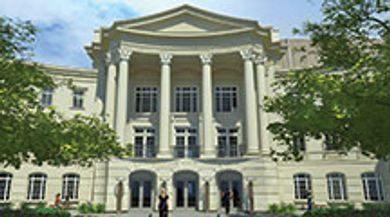 The Gaillard Center will serve as a major
meeting and cultural hub for Charleston, SC,
when it opens later this year.
On a smaller scale, The Gaillard Center, a convention and performance center opening in Charleston, SC, later this year, will include a 16,000-square-foot exhibition hall, a 7,300-square-foot lawn, and an 1,800-seat performance hall that will play host to the Charleston Symphony Orchestra and the city's famed Spoleto Festival. The central location of the Gaillard is the focus of the venue's identity -- it bills itself as "the beating heart and thrumming soul" of the city, "the epicenter of inspiration, imagination, and collaboration," and "the hub for driving business."
The Gaillard will be about a five-minute walk from many of the city's hotels, including the 155-room Dewberry Hotel, which is slated to open later this year, as well as shopping areas and attractions.
"It makes for a very central location with an option for many to not depend on cars or buses," says the Gaillard's executive director, Doerte McManus. "It allows business to pitch new business and conduct existing business where Charleston is its most beautiful."
The public/private, $142-million center will be the largest construction project in the city's history and McManus expects it to generate $39 million annually. Larger conventions than were manageable in the city are now scheduled through 2018.
Local Color
Connecting with the surrounding city provides substantial benefits to meeting groups. By ensuring that visiting attendees interact with local businesses and attractions outside the convention center, planners not only make the event and destination more memorable, but further fuel the local economy.
"Having a good number of locals who mix in with convention goers actually helps with welcoming those out-of-towners into the city," says Eric Blanc, CMP, director of sales, marketing, and convention services at the Tampa Convention Center.
Located in downtown Tampa on the waterfront of the bay, the 600,000-square-foot center serves large-scale events, coordinating with Visit Tampa Bay, as well as the area's hoteliers. Its expansive outdoor space allows for waterfront events for up to 10,000 attendees, and is also the site of public events such as concerts and fireworks on holidays.
"It's an open event and if we have conventions in the house, the groups can attend for free," says Blanc. "A lot of what we do is geared to the locals and offered as an amenity to our customers who are staying here."
He maintains that this blend of locals and visitors helps create a more memorable event for meeting groups, and that the convention center has embraced the idea of also being an "entertainment center."
These are some of the goals for the Puerto Rico Convention Center. Though it is touted as the most technologically advanced convention center in the Caribbean, with easy access from ports and airports, the city is working to further integrate it into the surrounding city. Plans are underway to link it to Old San Juan with a boardwalk allowing pedestrians and cyclists -- both locals and visiting attendees -- to easily move between the waterfront convention district and historic area.
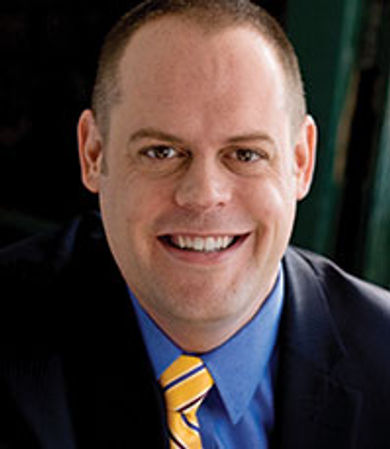 Rob Hunden says convention centers
can be key to city growth.
In addition to this multi-use waterfront development, the convention center district also just added the 126-room Hyatt House San Juan and early 2016 will see the opening of the 149-room Hyatt Place San Juan. As HSP's Hunden explains, creating this variety of "demand generators," offering attractions to a wide range of people at all times of the day or night -- beyond the convention center itself -- is what will help keep the convention district a powerful, well-oiled engine.
"There are cities large and small that are investing in their downtown core, entertainment, restaurants, hotels, and convention centers," says Hunden. "Until then, those cities trying to figure out their next move, they have to figure out what are going to be the pieces of the puzzle that they need to fill in in order to stay competitive."
Questions or comments? Email [email protected]
This article appears in the June 2015 issue of Successful Meetings.