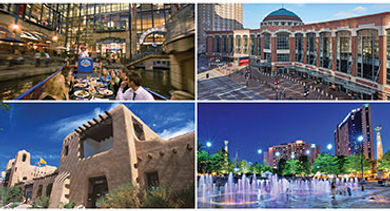
The concept of "affordability" means different things to different meeting planners. It's all relative, right? Much of what may be deemed affordable in one planner's eye is directly attributable to the specific needs of his or her conference or event attendees.
To wit: A conference that's heavy on international attendees may need to strongly consider picking a city based on its airport situation -- not just the cost of airfares but also the time and effort required to get from a destination's airport to the convention center.
Then again, airfares might not matter as much to a regional event where the bottom line is based on providing affordable room rates and food-and-beverage bargains.
Yet another group may have very specific Wi-Fi needs, or may need just the right off-site venue that can't be too expensive to rent. Or, a group may be predominantly filled with attendees looking for nightlife options, shopping excursions, golf outings, or just about any leisure activity imaginable.
It's possible to rank destinations on affordability based on collectible data. For example, Business Travel News (owned by Successful Meetings parent company Northstar Travel Group) rates cities' meal, hotel room, and car rental cost breakdowns in its 33rd annual "Corporate Travel Index." Yes, it's more expensive to eat, stay in a hotel room, and rent a car in New York City and San Francisco than it is in Bakersfield, CA, and Biloxi, MS. But that doesn't mean a more affordable city (based on any particular list) meets all the needs of a planner whose sights are set on a successful event.
According to respondents to Successful Meetings' 2017 Affordable Cities Survey, planners with event budgets ranging from less than $10,000 to more than $1 million, rated the most important factor in determining affordability to be room accommodations (83 percent), followed by meeting space (66 percent), and airfare (57 percent).
Readers who responded to the poll also rated room accommodations (36 percent) as the easiest factor to negotiate, trailed by meeting space (32 percent) and on-site food-and-beverage costs (14 percent).
And the top-three reasons cited in the poll for seeking out an affordable city were: location makes it easy for a majority of attendees to get there (76 percent); budget rules out more expensive destina-tions (56 percent); and cost saved on the meeting will be used to come in under budget (22 percent).
That's all by the numbers. Here's a look at three planners' events and the cities they chose based on the affordability factors most important to their organizations.
Airfares and Wi-Fi
Wendy Holliday, executive director of PLM World, held an annual meeting in Indianapolis last May that attracted 2,235 attendees. The highly tech-driven event included over 500 educational sessions and a trade show with 95 exhibitors.
Airlift and airfare are considerations for Holliday, because roughly 20 percent of her attendees are international visitors. If it takes an hour and a half to get from the airport to the conference site, that's an issue. Holliday also says walkability of a destination is key -- it's a plus to be able to easily get from the convention center to the hotels. Indianapolis offers that, she says.
However, disseminating tech ideas is a huge part of the conference. The group brings in its own servers because they use proprietary software that is not on the cloud. Holliday says they set up three intranets related to the show: for training rooms, for speakers, and a general one for attendees.
"Indy went smoother than other cities," Holliday says. "Wi-Fi costs can vary as much as $30,000 to $150,000 from city to city. It might be free in some instances, but that free service might not be up to what you need. I'd rather pay for good service."
She says a planner should specifically ask what "free Wi-Fi" means. Does it mean 5,000 simultaneous users? 1,000? 200? If you don't have enough bandwidth it can affect the whole show, Holliday says.
"We offer comprehensive Internet, data networking, and equipment rental services to clients and exhibitors through exclusive provider Smart City," says Debbie Hennessey, convention center director for the Indiana Convention Center and Lucas Oil Stadium. "Whether it is booth-to-booth, room-to-room, VLAN configuration, or setting up a cyber café, Smart City will provide the requested design."
Walkability, Dining Options, Off-Site Venues
Let's never forget to salute teachers. Nobody is closer to the work they do or the knowledge of school finances getting tighter and tighter every year than Robert "Bobby" Floyd, executive director of the Texas Music Educators Association, based in Austin.
The annual TMEA Clinic/Convention has been held in San Antonio every February since 1984. It lasts four days and attracts close to 30,000 people. The cost to produce this year's show was $683,000, Floyd says. They sold 1,376 exhibitor booths to 560 companies (a 10-foot-by-10-foot booth costs $600). Booth sales are a significant contributor to the overall annual budget -- and allow the TMEA to keep the preregistration cost to just $60 for members.
"Being a convention of schoolteachers, affordability is critical to us," Floyd says. "School finances are only getting smaller. More than 10,000 of our attendees are teachers, and they pay their own way."
The No. 1 priority of the TMEA convention planners is having 5,000 hotel rooms within walking distance of the convention center. San Antonio can do that.
"We're a musical education convention and that includes doing 40 concerts -- from elementary school students up to college," Floyd says. "We're doing a concert every hour and a half. We have to have a theater that's walking distance to the convention center. We can't do a city that doesn't have an active theater inventory in the area of the convention center. If we were in a position where we'd have to bus people 10-12 blocks to get to a venue, it would be a nightmare moving all those attendees from a logistical standpoint, not to mention the hit that our budget would take."
San Antonio has a state-of-the-art music venue within its convention center district. The Lila Cockrell Theatre holds 2,400 people, and recently underwent a $27 million renovation. It's in the heart of the Henry B. Gonzalez Convention Center district, right there on the San Antonio Riverwalk.
Another big factor for the TMEA: dining options. "We need everything from fast food to upscale dining; and the convention center also has affordable food on the go," Floyd says. "We have students -- so we have to consider the feeding of kids when we're doing site selection."
Both Floyd and Visit San Antonio staff spea in heartfelt terms about the partnership the TMEA has forged with the city and the service providers in San Antonio. "Our community looks at Bobby and his team as part of our family," says Visit San Antonio Vice President of Sales Steve Clanton. "Hopefully, they will be lifelong customers."
Adds Floyd: "They recognize it's great to have 30,000 people in their city each February. And they share in the reality that we are a convention of schoolteachers. The value of guaranteed repeat business and the way they protect affordability for us goes beyond a business contract."
Questions or comments? Email [email protected]
This article appears in the July 2017 issue of Successful Meetings.
Room Rates, F&B Costs, Tours
Unlike Holliday, Andrea Kinney says the majority of her clients aren't all that interested in airlift considerations or tech factors.
Kinney is a manager, global accounts, at the HelmsBriscoe office in St. Augustine, FL. She handles about 30 clients -- mostly associations, but also some corporations. Most of her groups are small to moderate, requiring from 25 to 600 rooms.
"My clients don't necessarily consider airfare first, or at least they don't discuss it with me," she says. "Why? Most likely because we're talking about associations that have members flying to meetings from all over the country. So, say the group is meeting in Atlanta, which is a very affordable city. The members from the East Coast, or within a few hundred miles of Atlanta will have lower airfares than members coming from the West Coast. And when they meet somewhere else next year, it will likely be reversed."
But, she notes, room rates and F&B cost is going to be the same fixed cost no matter what. So those are the first two things her groups look for in terms of affordability.
"Atlanta is a city I've booked recently and it's very affordable," Kinney says. "I have one client that books two meetings a year and chooses Atlanta based on room rates of about $150 per night, and negotiable F&B contracts that are very reasonable. I think people like Atlanta because it's not so cold, it's easy to get to, and there are a lot of hotel options -- from deluxe to budget."
Glancing around the country, Kinney also believes Santa Fe is in the affordability wheelhouse. "I have one group looking into that city," she says. "You can get really great rooms for less than $200 per night. Interestingly, we were looking at doing a site visit -- and we found that the airfares were pretty high. But…that didn't turn out to be a concern. It's room rates that are No. 1 when we put out an RFP. That's what drives the initial discussion."
Then it's F&B. "Some cities are very high for F&B, like New York City," she says. "You can't have a 200-person meeting in New York without a $100,000 minimum for F&B. I could take the same group to Clearwater, FL, and do pretty much the same menu for $25,000."
After room rates and F&B, what Kinney's groups look at next really differs from client to client. Some have two days of meetings and then have a free day, so cost of tours is an issue. And sometimes cities are more expensive because they've become a hot destination -- like Nashville. "Seven years ago, that city was very affordable," she says. "But I've had several clients recently look at Nashville but couldn't go because the room rates have gone up."
Incentives
Convention and visitor bureaus occasionally offer incentives to come to their city. "For example, there's Orlando -- which is itself very affordable," Kinney says. "They have tons of hotels, and they have Disney, and it's very warm in Florida. But nearby is the city of Kissimmee, which has to compete with Orlando. Kissimmee offers incentives -- they will give you dollars back. I see the same thing with incentives from Sonoma, which competes with Napa."
In booking multitudes of groups, Kinney has also found St. Louis to be very affordable. "I think that's because they are trying to drive people to the destination, and really trying to get on people's radar with affordable room rates for groups," she says.
In April, Explore St. Louis unveiled an incentive program aimed at meeting, event, and convention planners that focuses on its newly "reimagined," five-years-in-the-making Gateway Arch park. The Arch 2018 World Premiere program offers VIP experiences at the park, as well as incentives from hotels, event venues, and the America's Center Convention Complex. Perks include:
• Behind-the-scenes tours: National Park Service Rangers will take 25 VIPs on a tour of the Arch grounds and museum.
• Hotel Incentives: For each room night booked, groups will get a $1 airfare credit with the carrier of their choice; conference organizers will receive one complimentary guest room for every 30 booked; attendees get complimentary guest room Wi-Fi; hotel attrition clauses are waived, and meeting room rental is comped.
• Convention Center benefits: For each night booked, groups can get a $5 credit and comped Wi-Fi at the America's Center Convention Complex.
Room Rates, F&B Costs, Tours
Unlike Holliday, Andrea Kinney says the majority of her clients aren't all that interested in airlift considerations or tech factors.
Kinney is a manager, global accounts, at the HelmsBriscoe office in St. Augustine, FL. She handles about 30 clients -- mostly associations, but also some corporations. Most of her groups are small to moderate, requiring from 25 to 600 rooms.
"My clients don't necessarily consider airfare first, or at least they don't discuss it with me," she says. "Why? Most likely because we're talking about associations that have members flying to meetings from all over the country. So, say the group is meeting in Atlanta, which is a very affordable city. The members from the East Coast, or within a few hundred miles of Atlanta will have lower airfares than members coming from the West Coast. And when they meet somewhere else next year, it will likely be reversed."
But, she notes, room rates and F&B cost is going to be the same fixed cost no matter what. So those are the first two things her groups look for in terms of affordability.
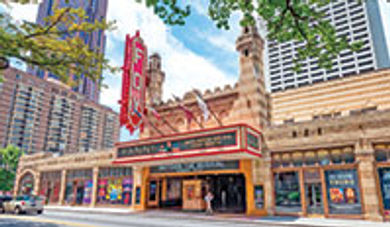 Atlanta's Fox Theater is a great
off-site venue
Atlanta's Fox Theater is a great
off-site venue"Atlanta is a city I've booked recently and it's very affordable," Kinney says. "I have one client that books two meetings a year and chooses Atlanta based on room rates of about $150 per night, and negotiable F&B contracts that are very reasonable. I think people like Atlanta because it's not so cold, it's easy to get to, and there are a lot of hotel options -- from deluxe to budget."
Glancing around the country, Kinney also believes Santa Fe is in the affordability wheelhouse. "I have one group looking into that city," she says. "You can get really great rooms for less than $200 per night. Interestingly, we were looking at doing a site visit -- and we found that the airfares were pretty high. But…that didn't turn out to be a concern. It's room rates that are No. 1 when we put out an RFP. That's what drives the initial discussion."
Then it's F&B. "Some cities are very high for F&B, like New York City," she says. "You can't have a 200-person meeting in New York without a $100,000 minimum for F&B. I could take the same group to Clearwater, FL, and do pretty much the same menu for $25,000."
After room rates and F&B, what Kinney's groups look at next really differs from client to client. Some have two days of meetings and then have a free day, so cost of tours is an issue. And sometimes cities are more expensive because they've become a hot destination -- like Nashville. "Seven years ago, that city was very affordable," she says. "But I've had several clients recently look at Nashville but couldn't go because the room rates have gone up."
Incentives
Convention and visitor bureaus occasionally offer incentives to come to their city. "For example, there's Orlando -- which is itself very affordable," Kinney says. "They have tons of hotels, and they have Disney, and it's very warm in Florida. But nearby is the city of Kissimmee, which has to compete with Orlando. Kissimmee offers incentives -- they will give you dollars back. I see the same thing with incentives from Sonoma, which competes with Napa."
In booking multitudes of groups, Kinney has also found St. Louis to be very affordable. "I think that's because they are trying to drive people to the destination, and really trying to get on people's radar with affordable room rates for groups," she says.
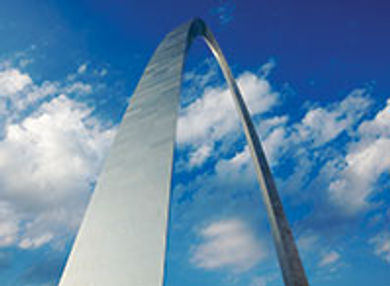 St. Louis' famed Gateway Arch is an
iconic and affordable venue
St. Louis' famed Gateway Arch is an
iconic and affordable venueIn April, Explore St. Louis unveiled an incentive program aimed at meeting, event, and convention planners that focuses on its newly "reimagined," five-years-in-the-making Gateway Arch park. The Arch 2018 World Premiere program offers VIP experiences at the park, as well as incentives from hotels, event venues, and the America's Center Convention Complex. Perks include:
• Behind-the-scenes tours: National Park Service Rangers will take 25 VIPs on a tour of the Arch grounds and museum.
• Hotel Incentives: For each room night booked, groups will get a $1 airfare credit with the carrier of their choice; conference organizers will receive one complimentary guest room for every 30 booked; attendees get complimentary guest room Wi-Fi; hotel attrition clauses are waived, and meeting room rental is comped.
• Convention Center benefits: For each night booked, groups can get a $5 credit and comped Wi-Fi at the America's Center Convention Complex.
Top 10 Affordable Cities
According to a Successful Meetings survey:
1. Orlando
2. Las Vegas
3. Chicago
4. Dallas
5. St. Louis
6. Denver
7. San Antonio
8. Miami
9. Atlanta
10. Indianapolis
Walkability, Dining Options, Off-Site Venues
Let's never forget to salute teachers. Nobody is closer to the work they do or the knowledge of school finances getting tighter and tighter every year than Robert "Bobby" Floyd, executive director of the Texas Music Educators Association, based in Austin.
The annual TMEA Clinic/Convention has been held in San Antonio every February since 1984. It lasts four days and attracts close to 30,000 people. The cost to produce this year's show was $683,000, Floyd says. They sold 1,376 exhibitor booths to 560 companies (a 10-foot-by-10-foot booth costs $600). Booth sales are a significant contributor to the overall annual budget -- and allow the TMEA to keep the preregistration cost to just $60 for members.
"Being a convention of schoolteachers, affordability is critical to us," Floyd says. "School finances are only getting smaller. More than 10,000 of our attendees are teachers, and they pay their own way."
The No. 1 priority of the TMEA convention planners is having 5,000 hotel rooms within walking distance of the convention center. San Antonio can do that.
"We're a musical education convention and that includes doing 40 concerts -- from elementary school students up to college," Floyd says. "We're doing a concert every hour and a half. We have to have a theater that's walking distance to the convention center. We can't do a city that doesn't have an active theater inventory in the area of the convention center. If we were in a position where we'd have to bus people 10-12 blocks to get to a venue, it would be a nightmare moving all those attendees from a logistical standpoint, not to mention the hit that our budget would take."
San Antonio has a state-of-the-art music venue within its convention center district. The Lila Cockrell Theatre holds 2,400 people, and recently underwent a $27 million renovation. It's in the heart of the Henry B. Gonzalez Convention Center district, right there on the San Antonio Riverwalk.
Another big factor for the TMEA: dining options. "We need everything from fast food to upscale dining; and the convention center also has affordable food on the go," Floyd says. "We have students -- so we have to consider the feeding of kids when we're doing site selection."
Both Floyd and Visit San Antonio staff spea in heartfelt terms about the partnership the TMEA has forged with the city and the service providers in San Antonio. "Our community looks at Bobby and his team as part of our family," says Visit San Antonio Vice President of Sales Steve Clanton. "Hopefully, they will be lifelong customers."
Adds Floyd: "They recognize it's great to have 30,000 people in their city each February. And they share in the reality that we are a convention of schoolteachers. The value of guaranteed repeat business and the way they protect affordability for us goes beyond a business contract."
Questions or comments? Email [email protected]
This article appears in the July 2017 issue of Successful Meetings.