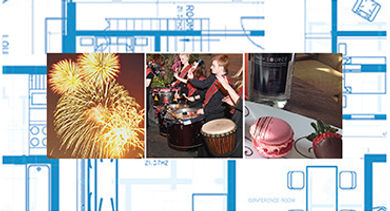
Meeting Design -- the decision-making process in which a planner shapes the content and form of a meeting to reach particular business goals -- is playing an increasingly important role in how planners approach events, and their selection of venues and destinations.
The concept of "Meeting Design" is not completely fixed, and different planners may have their own definitions for its exact meaning, but generally, the concept consists of evaluating every aspect of a gathering through how well it speaks to overall business objectives. It's taking the extra steps in executing an event to think through "why are we doing this?" and "why are we doing it this way?" Rather than just planning an event that keeps the stakeholders happy, the event is designed to reach higher, more long-term objectives, perhaps requiring the planner to press the meeting owner for more specifics on what they hope to get from an event.
"We've always been good on looks in this industry, with a strong aesthetic sense in terms of design," says John Nawn, president of The Perfect Meeting, Inc. "What we haven't done is focused on promoting how a meeting is supposed to work, and what are the elements that create the most value."
He points to a quote by Steve Jobs: "Design is not just what it looks like and feels like. Design is how it works."
A helpful breakdown of the process comes from a report Nawn authored for Meeting Professionals International (MPI), titled "Meeting Design: The What, Why, and How." It outlines six steps in effective meeting design -- the first two cover "what" and "why" and then the next four delve deeper into the "how:"
1. Identify stakeholder needs, determining what each interest group -- participants, exhibitors, sponsors, and so on -- expects and wants to get out of the event.
2. Define the event's goals, translating stakeholder needs into specific meeting objectives.
3. Select a phase: before, during, or after the event itself.
4. Select a classification: programmatic (location, time), conceptual (layout, format), human (speakers, facilitators), artistic (color, décor), or technical (A/V, furnishing).
5. Select an element, focusing on one aspect of the classification.
6. Develop design interventions, making decisions to create a particular meeting experience.
For this report, the organization interviewed some 230 people around the world, including planners and suppliers as well as education and design professionals. It found that a lack of widely accepted definitions and methodologies has impeded a more broad adoption of Meeting Design. Tightening budgets have made it more important than ever for planners to use meeting design when making decisions, determining whether their selection of venue and layout will reap the most long-term rewards for the organization. But there is more work to be done.
For planners, this means reframing their questions. When selecting a destination, it should not just be about finding a city or country with a wealth of tourist hotspots. Instead, it should be selected based on the goals of that event and the organization more broadly. Nawn says he has seen some progress since he wrote the report in 2013.
"I've been seeing plenty of examples of this: if you are holding a medical meeting, you would want to go to a destination where there is a lot of medical infrastructure they can leverage, for field trips or speaker bases," says Nawn. "Leverage more from the destination rather than just scratching the surface."
Over the past year and a half, this is just the shift that Tourisme Montréal, the Canadian city's CVB, has made in its approach to speaking with meeting planners.
"It's surprising for some meeting planners, but we're not talking about guest rooms and convention space anymore," says Michel Bourdon, vice president of sales and convention services at Tourisme Montréal. "Instead, we ask 'what is your objective and how can we as a CVB help you achieve your goals?'"
He gives the example of a chemical company that was considering Montreal for a large-scale event at which they wanted attendees to expand their knowledge of the industry and approach to innovation more broadly. The CVB worked with a local developer of web apps for the meeting to help get a full sense of the sort of speakers, businesses, and local resources that could enhance the event for the company -- with square footage and room inventory an afterthought.
During the next month or so, the app developer helped find companies that were able to provide what this client was looking for and connected with them before the meeting, so by the time the chemical company's attendees arrived, they were already tapped into Montreal's rich business offerings.
"Instead of sitting in general meetings, everybody was going to different companies to meet with the people they had been in touch with already and really wanted to speak with," says Bourdon. "They really achieved their objectives, and decided to come back in two years."
A similar effort is being made by Glasgow, Scotland's CVB, which boasts a number of specialized areas of key strategic focus. These include life sciences, low-carbon industries, engineering, and manufacturing. For example, the Congress of the Societe Internationale D'urologie (SIU), a convention focused on innovations and issues related to the field of urology, was held in Glasgow last year with a record-breaking 2,600 delegates.
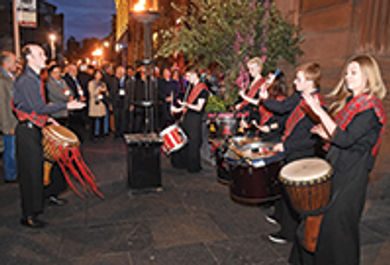 Glasgow has bolstered its efforts
to incorporate a Meeting Design
approach into its offerings
Glasgow has bolstered its efforts
to incorporate a Meeting Design
approach into its offeringsAs part of the five-day conference, the Glasgow City Marketing Bureau (GCMB) worked with the Montreal-based conference organizer to stage an event to raise public awareness of prostate cancer in a highly trafficked shopping center.
"Our innovative service, You First, provides organizers like SIU with a unique opportunity to realize their ambitions by creating a conference first," says Aileen Crawford, head of conventions at GCMB. "We bring together resources and expertise from across the city to make this happen and we're always prepared to go the extra mile to ensure success. Most importantly, we tailor the service to suit each conference partner, creating a first to achieve their particular goals."
Venue Selection
The same is true of individual venues. Rather than simply finding out how much space is available, planners are seeing the value instead of asking how the space can be used. While the environment can place limits on what's possible, the focus should be first on how it can be used to reach a group's goals.
"Venue owners don't want to be in the space business, they want to be in the experience business," Nawn says.
This makes flexibility essential. Kevin Hoffman, author of the forthcoming Meeting Design: For Managers, Makers, and Everyone (2016, Rosenfeld Media), describes this in terms of different layers of interactions, from casual receptions, to intensive one-on-ones, to broader speaker sessions.
"You can think about it as different layers of sediment, from the loose soil to the gravel to the solid rock," says Hoffman. "You want to create a physical space where people can move like water between these different layers."
That means ensuring breakout rooms are connected or in close proximity to the main meeting room, if that's something you expect attendees will want to take advantage of. Or that furniture can be easily shifted into a different layout should that be called for.
"Larger meetings can struggle with assuming people want to do the same thing at the same time," he says. "You want to give attendees the ability to move from one format to another without having to go through a gauntlet."
Denise Boe, manager of client procurement for Aimia, has seen Meeting Design impact venue selection in other ways. This includes the incorporation of alternate seating styles for meetings, as well as unusual or alternative venues that better serve the needs of particular meetings. For example, rooms that are rentable by the hour or day, or that are in a restaurant or private meeting room, provide a meeting experience that is different from a typical conference room.
When implementing Meeting Design, it is important to think about the particular sector to which the event relates, according to Boe. For events relating to the high-tech industry, it may be more crucial than usual to select a hotel and convention center with appropriate technological infrastructure.
"Make sure it has the bandwidth to handle the needs of the meeting, including running the general session, breakouts, exhibits, demonstrations, hands-on workshops, and general participant use of multiple devices," she says. "In some cases, it is necessary to partner with hotels and convention centers to implement upgrades in infrastructure."
Aimia recently held a general session for a high-tech group, in which it included colored bands in the arena to highlight the various business groups. These bands would light up when that group was recognized during the session.
Boe also gives an example from a different industry -- automotive -- for which Aimia researched scenic drive sites for attendees to test-drive a new car model. That meant ensuring the property where they were staying sat near driving areas with appropriate rest stops and meeting places along the way.
"Hotel properties need to have adequate parking and prep areas for the vehicles," she adds. "Stop areas and meeting places require appropriate eating places or catering delivered."
Aimia recently used personal information about attendees, collected in advance, to customize meeting content -- with quizzes, games, and other relevant details to give the gathering a more personal touch. This allowed attendees to get to know one another in small-group settings. Additionally, alternate seating allowed guests a better view, while organizing the room using the flexible seating approach that is gaining interest in office design strategies allowed for more collaboration.
When energy and healthcare company Siemens was seeking a venue that would create an inspiring venue for its client events, it sought for something that would be memorable for attendees while providing flexibility. It found just the venue in Chicago's Willis Tower, with its 99th floor boasting 360-degree views of four states.
"We typically receive post-event feedback from our meeting planners that they did not have to do too much programming other than F&B," says Randy Stancik, general manager of Willis Tower. "In other words, the space, views, and Ledge combined with the intimacy of 'owning' the floor for a few hours make a huge impact."
Camille D. Jamerson, president and CEO of event and crisis management company CDJ & Associates, followed a Meeting Design approach in creating an executive retreat and board meeting outside of London at the Sopwell House property in St. Albans. The goal of the event was to get attendees thinking "outside of the box" about the organization and its opportunities for growth.
With that in mind, Jamerson and her team sought to create a relaxed, casual atmosphere, which would be conducive for business but "allow the participants to drop their executive guard down," as she puts it. To this end, suits and ties were "banned" from the meetings -- a significant change for executives used to formal dress. Each attendee was given a "relax basket" that included lavender-scented sachets, oils, a shower bomb, and CD of relaxing music. Breaks were scheduled throughout the day and an on-site spa also encouraged attendees to fully take advantage of their downtime.
"Aside from the meeting itself, we needed to be clear on what the 'experience' should be like for the participants," says Jamerson.
But plenty of business was discussed as well, including a visit to the company's St. Albans offices, introducing attendees coming from throughout the world to a part of the organization's operations with which they were largely unfamiliar.
Jamerson took a similar tack with a mountain-climbing team-building event for an international group of executives, from the U.S., U.K., Asia, and India. A major goal of the event was to design the gathering to foster connection between these far-flung members of the organization.
With this in mind, each phase of the gathering was designed to enhance this interaction and teamwork. The planner created a blog for participants to share tips. She also created a theme, logo, and customized email for updates and the latest information. At the gathering itself, the climbing not only presented challenges that helped participants to bond, it also disconnected them from the day-to-day of the office.
"It eliminated the worry of detaching from work," says Jamerson. "It was impossible to email and text while participating as well as having limited reception."
Questions or comments? Email [email protected]
This article appears in the November 2015 issue of Successful Meetings.
Meeting Design Do's and Don'ts
Tips From Aimia Client Procurement Manager Denise Boe
DO look at the overall purpose of the meeting. Does the venue match that purpose (i.e. business meeting to discuss strategy of major corporations should be done in a business environment, not in an all-inclusive sun/fun destination)?
DO ask: does the function space hold the right appeal? Some meetings require natural sunlight or the utilization of outside space.
DO be sure the venue fits the budget.
DO consider alternate approaches to how people learn. This means having a venue that's open to alternate set ups and lots of technology. Instead of a general session, bring in a teambuilding activity that supports the messaging that will be delivered, or run the general session as a TV talk show with guests being interviewed.
DO consider how guests get to the venue: proximity, parking, close to local attractions.
DON'T limit yourself to traditional locations or set ups.
DON'T be afraid to try to do something completely different (one client proved that they could serve thousands a lunch from arena food outlets within a short timeframe to get attendees back to the content quickly).
Venue Selection
The same is true of individual venues. Rather than simply finding out how much space is available, planners are seeing the value instead of asking how the space can be used. While the environment can place limits on what's possible, the focus should be first on how it can be used to reach a group's goals.
"Venue owners don't want to be in the space business, they want to be in the experience business," Nawn says.
This makes flexibility essential. Kevin Hoffman, author of the forthcoming Meeting Design: For Managers, Makers, and Everyone (2016, Rosenfeld Media), describes this in terms of different layers of interactions, from casual receptions, to intensive one-on-ones, to broader speaker sessions.
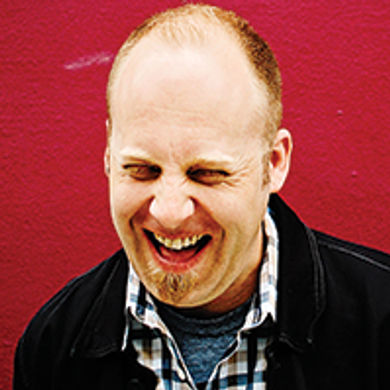 Kevin Hoffman,
author of Meeting Design
Kevin Hoffman,
author of Meeting Design"You can think about it as different layers of sediment, from the loose soil to the gravel to the solid rock," says Hoffman. "You want to create a physical space where people can move like water between these different layers."
That means ensuring breakout rooms are connected or in close proximity to the main meeting room, if that's something you expect attendees will want to take advantage of. Or that furniture can be easily shifted into a different layout should that be called for.
"Larger meetings can struggle with assuming people want to do the same thing at the same time," he says. "You want to give attendees the ability to move from one format to another without having to go through a gauntlet."
Denise Boe, manager of client procurement for Aimia, has seen Meeting Design impact venue selection in other ways. This includes the incorporation of alternate seating styles for meetings, as well as unusual or alternative venues that better serve the needs of particular meetings. For example, rooms that are rentable by the hour or day, or that are in a restaurant or private meeting room, provide a meeting experience that is different from a typical conference room.
When implementing Meeting Design, it is important to think about the particular sector to which the event relates, according to Boe. For events relating to the high-tech industry, it may be more crucial than usual to select a hotel and convention center with appropriate technological infrastructure.
"Make sure it has the bandwidth to handle the needs of the meeting, including running the general session, breakouts, exhibits, demonstrations, hands-on workshops, and general participant use of multiple devices," she says. "In some cases, it is necessary to partner with hotels and convention centers to implement upgrades in infrastructure."
Aimia recently held a general session for a high-tech group, in which it included colored bands in the arena to highlight the various business groups. These bands would light up when that group was recognized during the session.
Boe also gives an example from a different industry -- automotive -- for which Aimia researched scenic drive sites for attendees to test-drive a new car model. That meant ensuring the property where they were staying sat near driving areas with appropriate rest stops and meeting places along the way.
"Hotel properties need to have adequate parking and prep areas for the vehicles," she adds. "Stop areas and meeting places require appropriate eating places or catering delivered."
Aimia recently used personal information about attendees, collected in advance, to customize meeting content -- with quizzes, games, and other relevant details to give the gathering a more personal touch. This allowed attendees to get to know one another in small-group settings. Additionally, alternate seating allowed guests a better view, while organizing the room using the flexible seating approach that is gaining interest in office design strategies allowed for more collaboration.
When energy and healthcare company Siemens was seeking a venue that would create an inspiring venue for its client events, it sought for something that would be memorable for attendees while providing flexibility. It found just the venue in Chicago's Willis Tower, with its 99th floor boasting 360-degree views of four states.
"We typically receive post-event feedback from our meeting planners that they did not have to do too much programming other than F&B," says Randy Stancik, general manager of Willis Tower. "In other words, the space, views, and Ledge combined with the intimacy of 'owning' the floor for a few hours make a huge impact."
Camille D. Jamerson, president and CEO of event and crisis management company CDJ & Associates, followed a Meeting Design approach in creating an executive retreat and board meeting outside of London at the Sopwell House property in St. Albans. The goal of the event was to get attendees thinking "outside of the box" about the organization and its opportunities for growth.
 Every aspect of a retreat to
St. Albans, U.K., was made with
"relaxation" as the goal,
including in-room gifts
Every aspect of a retreat to
St. Albans, U.K., was made with
"relaxation" as the goal,
including in-room giftsWith that in mind, Jamerson and her team sought to create a relaxed, casual atmosphere, which would be conducive for business but "allow the participants to drop their executive guard down," as she puts it. To this end, suits and ties were "banned" from the meetings -- a significant change for executives used to formal dress. Each attendee was given a "relax basket" that included lavender-scented sachets, oils, a shower bomb, and CD of relaxing music. Breaks were scheduled throughout the day and an on-site spa also encouraged attendees to fully take advantage of their downtime.
"Aside from the meeting itself, we needed to be clear on what the 'experience' should be like for the participants," says Jamerson.
But plenty of business was discussed as well, including a visit to the company's St. Albans offices, introducing attendees coming from throughout the world to a part of the organization's operations with which they were largely unfamiliar.
Jamerson took a similar tack with a mountain-climbing team-building event for an international group of executives, from the U.S., U.K., Asia, and India. A major goal of the event was to design the gathering to foster connection between these far-flung members of the organization.
With this in mind, each phase of the gathering was designed to enhance this interaction and teamwork. The planner created a blog for participants to share tips. She also created a theme, logo, and customized email for updates and the latest information. At the gathering itself, the climbing not only presented challenges that helped participants to bond, it also disconnected them from the day-to-day of the office.
"It eliminated the worry of detaching from work," says Jamerson. "It was impossible to email and text while participating as well as having limited reception."
Questions or comments? Email [email protected]
This article appears in the November 2015 issue of Successful Meetings.