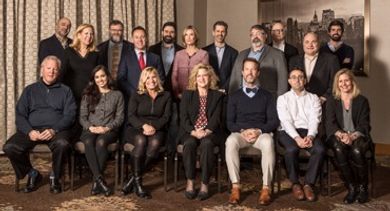
On March 10-12, 315 meeting planners, incentive planners, and representatives from tourist boards and suppliers from all over the world gathered in New York City for Northstar Meetings Group's SMU International. During the event, Successful Meetings gathered 12 tourist boards, hoteliers, DMCs, and meeting planners for a roundtable to discuss challenges facing suppliers and meeting planners when promoting and branding meetings destinations.
Jaime Schwarz, the creative director of gyro, a global branding and advertising agency, listened to the groups' challenges and offered advice from a branding perspective.
Successful Meetings will be publishing a full report on the trends discussed at the roundtable at a later date. In the meantime, here are some initial highlights from the discussion.
The idea of what constitutes a meeting or incentive experience is changing, and destinations have to adapt their brand promise to keep attendees engaged
Caroline Pidroni, director of sales & marketing, Switzerland Convention & Incentive Bureau, said,"It's no longer enough to say a destination is beautiful. The benchmark is what can the planner create there that is unique and can't be duplicated anywhere else?"
Destinations are being asked to reflect the values of the companies meeting there
According to Cindy Hoddeson, director, North America, Monaco Government Tourist Office, the luxury cache of her destination has long been used by companies looking to associate their culture and products with that quality. "But in recent years, the destination's commitment to sustainability has been attracting many companies focusing on that," she said.
Jaime Schwarz, from gyro, advised destinations to look more deeply at what their destinations have to offer beyond the more ubiquitous qualities such as beauty and luxury and find those characteristics that are more unique to them. He cautioned against the "trend of the month" syndrome where a destination that competes with Monaco might start touting sustainability just because they see that destination having success with it. "If a destination or hotel brand is not built to sell something like sustainability, and they try to sell it, it is not going to work," he said.
Storytelling is the key
Chris FJ Lynn, vice president, North America & emerging markets - business tourism, London & Partners, reported that his city has had great success developing tools that help planners tell a story about the destination that excites attendees and puts the ROE (return on event) in perspective for the decision maker.
Part of the equation in successful storytelling is for destinations to partner with the knowledge hubs in their localities such as medical centers or universities when pursuing medical meetings.
"Key influencers should also be brought into play," said Michel Couturier, managing partner, Marketing Challenges international. "One of my clients had their own Millennial staffers shoot short destination videos when they were pitching an association made up largely of millennials."
Dealing with the news cycle
The media tends to focus (or even harp) on security issues and problems, and these concerns have always been there and always will be, but the response to them often depends on the organization's culture and the planner's age demographic.
According to Doug Wheeler of the Summit Performance Group, an older, traditional-minded company exec is more likely to say "safety above all," and you won't be able to sway that person. But a younger, millennial executive will be more open to learning more before they make a decision.
Schwarz advised the group to be proactive about threats to their brands. "If you do not like the media you're getting, then create your own," he said. "Things like virtual reality tours and live video feeds."
He also noted that the younger execs and decision makers are more likely to be open to taking a second look at a destination having an image problem and are also less receptive to the traditional news media where much of the misperception is spread. "Young people are not anti-media, they are just more pro-social media," he said. "When they hear it from that source, they listen more closely."
His best advice for destinations in these situations is to be candid, acknowledge the situation but put an emphasis on education. "Virtual reality is good for conquering client fears and misperceptions of your locale and hotel."
Schwarz noted that an effective campaign van lead to an in person site visit which Gabriel Haigazian, vice president of The CTP Group, said, "was the most powerful tool toward changing a decision-makers perspective on a destination."
Gabriel also said that often the best education is about simple geography. "People have a tendency to dismiss an entire country just because an incident occurs in one corner of it," he claimed. "In almost all cases these incidents are isolated to one area. It's important to let clients realize that.
In some cases flipping the discussion can work. London's Chris Lynn reported that the hospitality community had great success with social media campaigns touting London's affordability in the wake of Brexit.
Duty of care takes center stage
As everyone becomes more security conscious, duty of care is becoming much more of an issue. Organizations want to know what measures are in place to locate and assist their attendees in the event of an incident, said Doug Wheeler of Summit Performance.
Schwarz sees that as a branding opportunity for destinations. He suggests thinking of duty of care as a characteristic of a destination's brand. "Much like those who claim sustainability and live by it, security has to be a defining characteristic of the brand, the way safety is for the auto maker Volvo," he told the group. "Otherwise, half of your time is spent trying to build trust to get clients to believe in a destination's safety. Belief in the brand allows those like-minded clients to not to question it every time you hold an event."