While the Caribbean has faced a harrowing hurricane season this year from which it continues to recover, it comes amid a time of continued growth in many destinations throughout the region. Few brands are helping drive this regional growth more than Marriott, whose regional arm, Marriott Caribbean & Latin America (CALA), currently has more than 250 properties across over 30 brands under its umbrella (46 of those specifically in the Caribbean) -- with more than 115 more in the pipeline through 2025.
Successful Meetings spoke with Steve Contos, senior vice president of Marriott Caribbean and Luxury Portfolio Latin America, who oversees all properties and brands in the Caribbean, about these reasons and what the brand expects to offer meetings groups in the years ahead. [NOTE: This interview was conducted before the developments related to Hurricane Irma and Maria. Eight of Marriott's dozens of Caribbean properties currently remain closed until further notice and a spokesperson for the brand said that "Marriott hotels were well prepared going into the storms and able to operate during the direct aftermath of the storm, taking care of guests and associates. Currently damages are being repaired as quickly as possible."]
Marriott CALA has been doing some significant expansion in the Caribbean region. Why do you think now is a great time for developing in this region?
There are many reasons the Caribbean continues to be attractive for development. There is solid airlift into the region, the weather is favorable and a big draw particularly during the winter months, and the leisure component is a match for incentive travel to the islands.
We are seeing a clear recovery of performance in the Caribbean, both in terms of ADR and occupancy, and so far 2017 has been positive for most of our Caribbean destinations. In Puerto Rico, for example, leisure demand is much stronger this year, as it is in St. Thomas and Grand Cayman. We expect that trend to carry into the rest of the year.
While there are challenges to build new hotels in the Caribbean from the development perspective, we continue to invest and grow our portfolio in the region. Marriott International now operates 46 properties across 14 brands there and we are able to gain greater market share by providing a wide variety of product and Marriott service.
What are the challenges you have faced or foresee with development here?
The main challenges are high-entry barriers, elevated project costs and limited availability of financing. On these aspects, we work with our owners and franchisees, who assist us in making the process as cost-efficient as possible. They also guide us in adapting the product to specific needs of the local market, always maintaining brand standards. Despite these challenges, we see tremendous opportunity in the Caribbean given growing demand for unique destinations that are easily accessible from the United States.
What are some Marriott properties coming on line in the Caribbean that would be of particular interest to the group/meetings market?
Marriott International has recently signed hotels in Antigua, Aruba, Dominica, Puerto Rico, Jamaica, as well as Trinidad and Tobago.
Aruba, in particular, is an attractive group destination with its idyllic weather year-round and a variety of activities that groups can enjoy -- from teambuilding on the beach to sailing and snorkeling, ATV tours, and great dining. The Courtyard by Marriott Palm Beach will be a nice addition to our local portfolio there, which already includes the Aruba Marriott Resort & Stellaris Casino and The Ritz-Carlton, Aruba.
The St. John's, Autograph Collection, in Antigua will be the first global hospitality brand to enter the local market with eco-friendly amenities and a sustainable facility design.
In Puerto Rico, one of our fastest-growing markets in the region, we have recently opened the AC San Juan and are planning to launch the Aloft San Juan and Aloft Ponce in 2018. Puerto Rico continues to be a very popular destination for groups, offering culture, natural landmarks and the perfect combination of city/beach experience. And, of course, it is highly accessible with no US passport required for entry.
As you are building these new properties, how does Marriott incorporate the unique local culture of individual Caribbean destinations into the properties opening there?
Few travel companies are better positioned than Marriott to capitalize on the rising demand for authentic experiences. Our broad portfolio and wide array of destinations allows us to cater to all types of travelers.
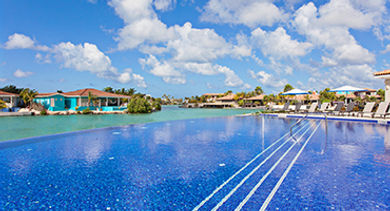
For example, the new Courtyard by Marriott in Bonaire (pictured above), the first branded hotel on the island, caters to business travelers as well as leisure guests. The hotel offers a unique, stylish design inspired by local Dutch culture, far beyond a traditional Courtyard. Drawing inspiration from the destination is a trend that Marriott is capitalizing on as more hotels are signed into our portfolio.
Our properties are also creative in introducing new experiences appealing to groups. The Ritz-Carlton in San Juan repurposed an old storage room into a space for speakeasy-style events where attendees have to walk through the back of the house to get to a secret entrance. The password is communicated daily via one of the hotel's social media channels.
Other properties are launching pop-up concepts, such as a beach shack at The Ritz-Carlton in St. Thomas where guests can enjoy mixology experiences, dinners and receptions.
Marriott International is incorporating local experiences at both existing properties and those in the pipeline to provide guests with unforgettable memories inspired by the destinations they choose to travel to.