When planners consider holding events in the Caribbean, there are a few offerings they can expect from virtually any destination: sand and sun, outings on a catamaran or Jeep, and rum-heavy tropical drinks. These are among the reason this region remains such a popular option. But for groups that have seen their share of beaches, it becomes incumbent on a planner to help demonstrate what one particular country or island offers that is distinct from the rest of the region -- to help show off its unique culture and history, and give attendees a lasting appreciation for what makes this place special.
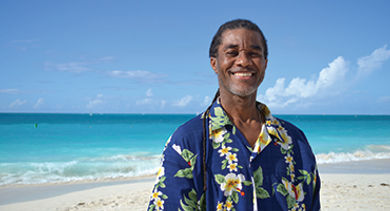
That's essentially the job description of David Bowen, director of wellness, culture, and entertainment for Grace Bay Club, a Turks and Caicos resort. A native of Turks and Caicos Islands (TCI) himself, Bowen spent much of his life as a professional dancer, choreographer, and musician working in Japan, New York City, and elsewhere, before returning home to become director of culture for TCI. In 2015, after resigning from the government, Bowen went to work with Grace Bay, originally as director of wellness and entertainment. The role has since expanded, and Bowen is now responsible for a wide range of cultural activities both on and off the property, from organizing performances, cultural tours, infusing indigenous ingredients into the resort's menus, and helping visitors understand what makes Turks and Caicos so special. Successful Meetings spoke with Bowen about his role, and how his brand of cultural teaching can enhance an event held at the property or in Turks and Caicos.
Q: Why is it important for a property like Grace Bay to have a director of culture? What benefits do you offer visiting groups?
A: A lot of people come to the islands and because we are part of the Caribbean family, they assume the culture, history, and heritage is exactly the same as any other island: steel-drum music, reggae, vast plantations, and roadside vendors. They are surprised when they come here and don't see those things. When groups come down here and want a traditional TCI experience, I help provide that experience.
We are an island destination, with 40 island keys, nine inhabited, and of that six are main island -- so there are many subcultures. I educate visitors through talks, presentations, performances about the differences of the islands and its subcultures -- how we are different from Jamaica, Haiti, or the Bahamas. It's important that they understand there is a strong TCI culture and heritage, but you might not see it as readily because there is a different lifestyle here. We are a British overseas territory, but have a U.S.-based economy. That means the best of both worlds: A great education system and great jobs. There is not as much of a gap between the haves and the have-nots, which is partly why you don't see people at the lower end of the economic spectrum having to use culture to make money from tourists. We are part of the Caribbean family, but a unique destination.
Q: What are some specific ways TCI is distinct from other Caribbean destinations?
A: People come expecting to hear reggae music, but steel-pan music comes from Trinidad. We have ripsaw music, where the performers use a handsaw as the main instrument, along with drums, triangle, accordion, and more. That's our folk music.
Conch is an important aspect of our culture -- it's a national symbol, on or flag, and we have the only commercial conch farm in the entire world [the Caicos Conch Farm]. We use it to make conch fritters, stewed conch, conch salad, and when we are growing up, the elders dry the conch the way you would a jerky or fish and use it for trade. We are a limestone-based island, so we don't grow a lot of the fruits and vegetables you find on other islands with more soil, so we trade dried conch to Haiti for these things.
We use the shells to make earrings, souvenirs, and instruments. The conch horn announces you've caught fresh fish. Each sailor has his own call (mine was two short, one long, three times) you could call his "shell-phone number."
We also have some things in common with the Carolinas of the U.S. After the War of Independence, when British loyalists couldn't live in the U.S., they came here, since we were a British colony. They brought their slaves and harvested cotton, which is why our national dish is grits and the slaves became our ancestors. We also make sweetgrass baskets (also known as fanner baskets), which can be traced to the Carolinas and back to Africa.
Q: There's so much unique culture here -- how do you convey it all to visiting incentive or meetings groups?
A: I will go out with them on excursions -- do a tour with them on the island or by boat, and explain everything about the local culture. Or we have evenings with them where [attendees] sit down for a full presentation, and I bring out all the items -- a fanner basket or conch shell -- and explain what they are. We also organize a cultural show, with local dance, storytelling, and native performances. It's not the generic fire dancing or limbo they might have seen before.
Part of my role is to work with Grace Bay's food and beverage team to create local and healthy choices for guests (including vegan, gluten free, vegetarian, and so on). We recently partnered with a local company that creates medicinal teas from local plants. Growing up here, there were no hospitals -- my grandmother made bush teas and if you got sick or caught a cold, these would help heal you. Now they're on the Grace Bay's menus.
I invite partners to come in, have a band that does ripsaw music, and I'm just always around the property blowing my conch horn and starting conversations around the pool, telling them about TCI in a very relaxed, fun way.