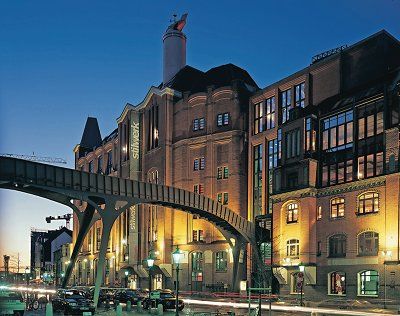
The beautiful and prosperous Free and Hanseatic City of Hamburg is Germany’s second largest city. Situated on the Elbe River, Hamburg has been a thriving port and trade center for hundreds of years. Today, numerous publishers, internet companies, advertising firms, and other media businesses make their headquarters there. Amply endowed with first-rate meeting facilities, hotels, and a well-oiled infrastructure, somehow Hamburg has remained off the radar as a meetings destination for North American groups. But not for much longer.
“There’s a simple reason why Hamburg is not well known to the American market,” says Matthias Rieger, executive director of the Hamburg Convention Bureau. “After World War II, all the American troops were stationed in Bavaria, but the British were in Hamburg. As a consequence, Americans still know the South better, but we’re doing a lot to change that.”
“I knew nothing about Hamburg when I went there last May,” says Shawna Suckow, founder and president of SPIN (Senior Planners Industry Network) in Eagan, MN. “I went after IMEX Frankfurt and didn’t realize how convenient it was to get to—just a one-hour flight.
“I was part of a group of about 20 planners who were also new to Hamburg. The Hamburg Convention Bureau was just formed last year and we had the honor of being their first FAM group. They went out of their way to ensure everything was well-organized and memorable. I didn’t hear one complaint from the group and these were all hard-to-impress senior-level planners who’ve been around the block.
“Also, the people blew me away with their warmth and not just the ones who were supposed to be nice. To sum up the city in three words, it was charming, warm, and welcoming.”
Not only is Hamburg welcoming, the price is right. “For the last several years planners haven’t been able to afford high-profile European cities,” Suckow says. “In Hamburg you have a cosmopolitan city full of old-world charm for half the price of many better-known destinations.”
“One of our advantages for conventions is our infrastructure,” says Rieger. “Hamburg is a city of short waits. The airport is only 20-25 minutes from the center of the city either by taxi or public transportation (which can be integrated into the badge for the whole visit). You can get many places in the city by walking—hotels, shopping areas, venues—so attendees do not have to go everywhere by bus.”
Hamburg’s two main convention facilities, the Hamburg Messe und Congress (936,000 square feet) and CCH–Congress Center Hamburg (12,500 seats, plus 107,600 square feet) share the same central location next to Planten un Blomen park, one of Hamburg’s numerous green spaces. Together they’ll be welcoming the Lions Club International Convention in 2013. With an anticipated 25,000 attendees, it will be Germany’s largest convention to date.
High-speed ICE trains stop at the railway station across the street from the Messe and CCH and there are numerous hotels of all categories within two miles.
“Unlike the US where groups are used to staying in one very large hotel, Hamburg has more mid-sized hotels,” Rieger says. “If a group is very large, we are easily able to spread people out. We have a lot of varied and individual hotels to choose from.”
The following sampling gives an idea:
Fairmont Hotel Vier Jahreszeiten (157 rooms, 7,000 square feet of meeting space): Sumptuous old-world hotel on the shore of the Inner Alster Lake in a chic, central location. A favorite for U.S. and U.K. board meetings and product launches.
Radisson Blu Hotel (556 rooms, 22,600 square feet of meeting space): Stylish and modern tower hotel with direct access to the CCH.
Grand Elysee Hotel (511 rooms, 25,000 square feet of meeting space): Solid five-star in affluent Rotherbaum neighborhood with the largest ballroom in Hamburg.
Hotel Atlantic Kempinski (244 rooms, 16,100 square feet of meeting space): Favored by rich emigres to the States 100 years ago, this luxury property retains all its historic flavor. A major guestroom renovation is underway.
Moevenpick Hotel Hamburg (228 rooms, 6,100 square feet of meeting space): Early 20th-century brick water tower reinvented as a contemporary hotel, successfully blending the historic with the modern.
Beyond the Basics
There’s been a lot of buzz lately about Hamburg’s new landmark-to-be, the Elbphilharmonie concert hall, currently under construction on the waterfront at the point where the city meets the harbor. When it opens in 2013, it’s anticipated to become a symbol of Hamburg on a par with the Eiffel Tower in Paris or the Sydney Opera House. The building’s base, which will house the concert hall, is an old brick storage warehouse, but it’s the undulating glass facade—resembling an enormous crystal ship—of the top half that will really dazzle. Inside will be a 244-room Westin hotel. Private tours of the site may be arranged through the convention bureau.
The Elbphilharmonie sits at the tip of HafenCity (Harbor City) an innovative and ambitious mixed-use urban development, the largest of its kind in Europe. It comprises 388 acres of reconverted warehouses and sustainable new construction (Hamburg has been named Green Capital of Europe for 2011) along Hamburg’s working harbor front.
A new Cruise Center has just opened in HafenCity next to the existing one since Hamburg is expanding as a cruise destination. Last year around 100 ships, including the Queen Mary 2 and MS Europa, called at Hamburg.
There are numerous ways for groups to experience maritime Hamburg. Harbor cruises depart from the Landungsbrucken, for touring or to transport attendees to waterside venues, such as the historic Fish Market or the Alt Hamburger Yacht Club.
Hamburg is also a city of lakes and canals. (Fun fact: the city has more bridges than Venice or Amsterdam.) Smaller groups can hire sailboats and there are two interesting boats that are perfect for incentives or team-building: one that uses solar panels and cruises silently and another old-fashioned coal-powered steam vessel—but there are other options as well.
In fact there are options galore in Hamburg: the lively street life around the ornate gothic-style Rathaus (town hall), spectacular venues such as the Hamburg Stock Exchange, the new Beatlemania Hamburg exhibit, perhaps even a tour of the city’s red light district around the notorious Reeperbahn. The list goes on.
In Suckow’s considered opinion, “Hamburg has finally come into its own and is now ready for our business.”