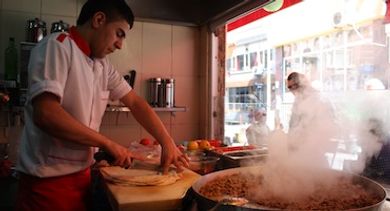
Istanbul is, without a doubt, a world-class meeting and incentive destination. It has incredible convention spaces -- seven major convention centers and three exhibition centers, to be exact. It has the hotels to match, from the historic Pera Palace Hotel Jumeirah and group-friendly Swissôtel Bosphorus, Istanbul, to the luxurious Ciragan Palace Kempinski. Locals are warm and inviting, and getting there is easy, thanks to great air carriers like Turkish Airlines. And the sights, from the Blue Mosque and Hagia Sophia museum to the Grand Bazaar? Well, many are beyond compare.
One other thing that makes the city a standout is the cuisine. The food culture in Istanbul is truly unique. Like the city itself, it's an amalgam of different cultural and historical influences, East and West, past and present.
For any visitor to Istanbul, whether you're a conference attendee or incentive winner, one of the most rewarding experiences you can have is an authentic taste of all that Istanbul has to offer on a plate -- or in multiple bites, as I discovered.
One of the best ways to do this is to book a guided culinary walk with Culinary Backstreets, a global food tour operator that initially got its start as an award-winning food blog, Istanbul Eats back in 2009. Since then, the two founders -- Ansel Mullins and Yigal Schleifer -- have expanded their culinary walks to Athens, Barcelona, Rio de Janeiro, Mexico City, and Shanghai.
In Istanbul, Culinary Backstreets offers a total of eight different small-group experiences, most of which can accommodate two to seven people, or up to 10, at a time. One activity involves a hands-on cooking experience. Another consists of an evening "Kebab Krawl," and yet another delves into the winding streets and alleyways of the Bazaar Quarter.
I was lucky enough to experience the "Two Markets, Two Continents" walk, which took our group from the European side of the city (Karaköy) to the Asian side (Kadiköy) for an unforgettable day-long feast. Five-and-a-half hours later, two scenic ferry rides, 12 meals, and countless snacks in, my stomach was full (maybe overly so) -- but I didn't want the experience to end.
Your meeting attendees and incentive winners need not be seriously committed foodies to appreciate an experience like the one offered by Culinary Backstreets. The walks operate on a simple, but universally true premise -- that one of the best ways to understand a culture, a history, and a people is through their food.
I did just that, and much more. If Istanbul's cuisine is akin to a multi-layered "stew" of cultures, as suggested on the Culinary Backstreets website, it's most definitely a delicious one.
Without giving too much away regarding the exact itinerary, I can tell you that there were many, many highlights. One included sharing a serene cup of iron wort tea, handpicked by our guide, Benoit Hanquet, in an Ottoman-era caravanserai, or roadside inn, that's since been converted into a hardware haven. Another was feasting on a platter of meze (appetizers) in the middle of a bustling market in Kadikoy, followed by a lovely cup of Turkish coffee down the street.
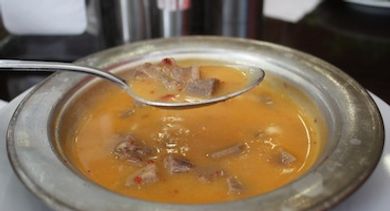 Kelle paça, a soup made from a stock of sheep's head and feet and topped off with bits of beef tongue.
 My absolute favorite dish, if I had to pick? Well, there were two. One was a rich, savory soup called kelle paça, made from a stock of sheep's head and feet and topped off with bits of beef tongue. (I know, it sounds a bit strange but trust me, it's great! My fellow travelers loved it, too.) Turks often consume it in the early morning hours -- right before work, or immediately following a night of a bit of debauchery, Benoit told us.
The other memorable dish? It was a dessert, similar to baklava but better, in my opinion. Katmer, a specialty from the Gaziantep region of Turkey, consists of flaky, buttery layers of semolina pastry filled with kaymak (Turkish clotted cream) and pistachios, all served warm.
Beyond the incredible tastes we had, however, some of my favorite moments from the tour were the unexpected. Like when we saw a crowd of men gathered near the waterfront in Karaköy, trying to help an injured bird escape from the tangled and twisted branches of a tree. Or when we got a chance to peek inside a 19th-century Greek Orthodox church in Kadiköy. Or watching a local restaurateur assemble a spear's worth of chicken döner kebab by hand -- a not-so-usual sight anymore. Each of these unplanned moments gave our group an authentic feel for what the local culture and history are really all about.
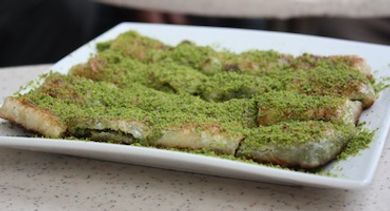 Katmer is a pastry from Gaziantep.
 It also helped that our guide, Benoit, was so knowledgeable, and quick to adapt to any requests or questions that we had. He's been a guide for the past two years, but has lived in Istanbul for more than 20. His wife and sister-in-law run the cooking school that offers hands-on cooking classes for Culinary Backstreets. In short, he knows his stuff.
And so do Ansel and Yigal. They are more than happy to work with planners to book meeting attendees on their culinary walks, which range in price from $75 to $125 per person. They also offer a custom food itinerary service, called Eatinerary, which creates bespoke culinary guides for travelers or groups based on their specific preferences. Each one costs $125.
A culinary walk through Istanbul with Culinary Backstreets is a more than worthwhile experience. It gives you a genuine taste of Turkish culture and cuisine that would otherwise be difficult to do on your own. It leaves you very, very full (don't forget to pack your eating pants). And like any meaningful travel experience, it left me hungry for more experiences -- and desperately hoping for a return visit.
Read more about Istanbul here.